
2026-11-02
Warehouse Lighting: Can a Rental Property Benefit from Permanent Outdoor Lighting?
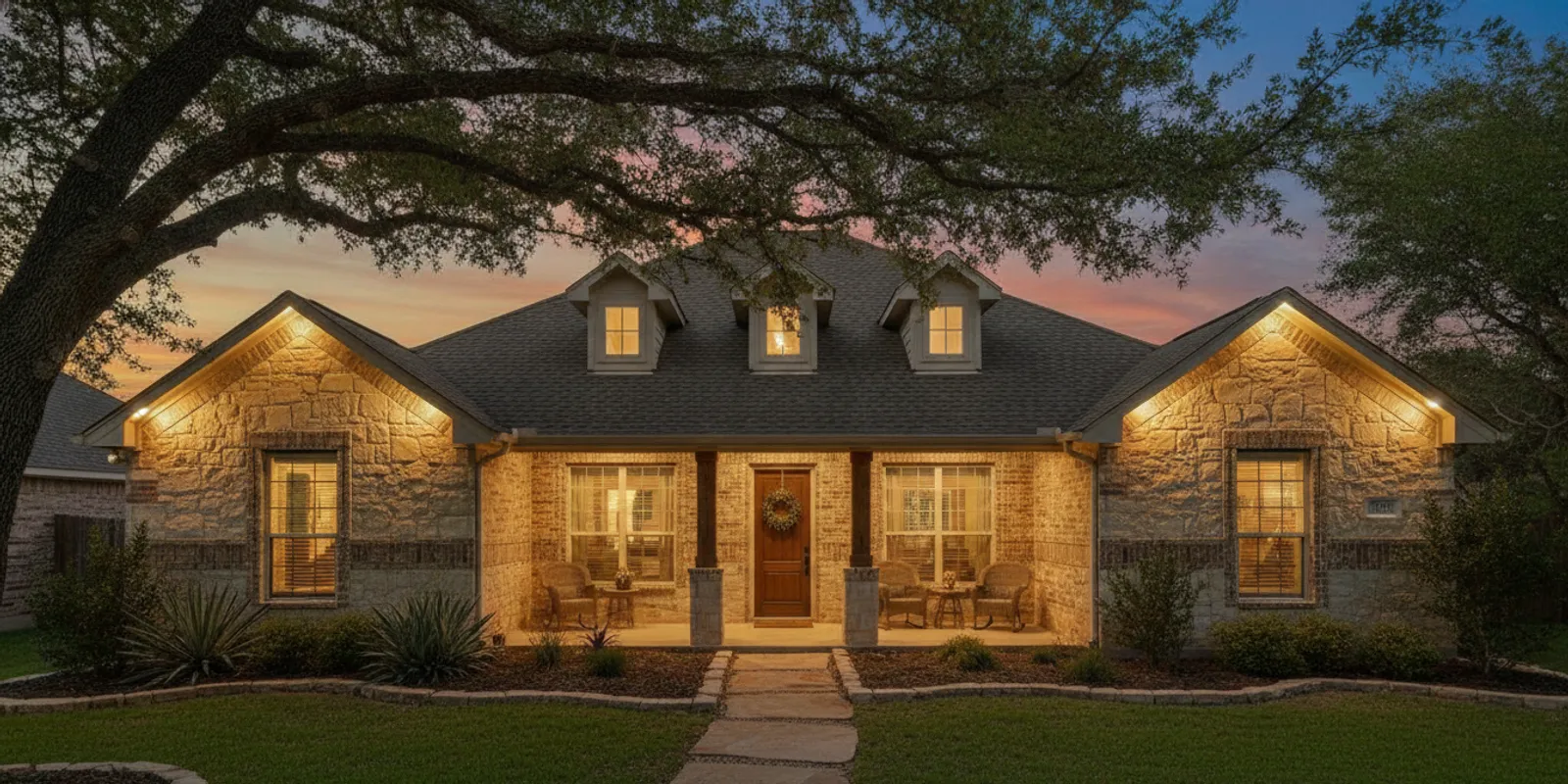
Warehouse lighting usually brings to mind illumination inside a large work building. But an owner searching that phrase may also be weighing an exterior upgrade for a rental property. Permanent outdoor lighting can be worth considering when a rental has a visible roofline, a clear use for year-round accent lighting, and an owner prepared to approve and manage the work. The right decision depends on the property and its residents, not the search phrase alone.
Request a site-specific lighting quote
Can a rental property benefit from permanent outdoor lighting?
It can. A professionally installed permanent soffit and roofline system stays in place instead of being hung and removed for each holiday season. One installed roofline can support holiday color, game-day displays, everyday accent lighting, security visibility, and patio ambiance. For a rental owner, that may mean one planned exterior improvement can serve several purposes rather than requiring a new temporary display each year.
That does not make the system a fit for every rental. A compact home with little visible roofline may have other priorities. A multi-unit property may require approval from an HOA or shared owner group. Residents may not want prominent seasonal displays. Before treating lighting as an upgrade, identify the specific exterior area, the use it is meant to serve, and who will make decisions about operation.
For LIT365, the relevant service is professional installation of a low-profile LED system along soffits and rooflines for homes and businesses in Austin, San Antonio, and Dallas. The intended use may include holiday color, game-day displays, everyday accents, security visibility, and patio ambiance. The company quotes from the property address and elevations the customer wants lit; it does not publish a citywide price. A property-specific conversation is more useful than assuming the same plan or cost applies to every rental.
What does warehouse lighting mean for a rental home?
The phrase warehouse lighting generally describes lighting inside an industrial or commercial building: work areas, storage aisles, loading zones, or other functional spaces. Those needs differ from a home's exterior roofline. A warehouse may need task or area illumination based on how people use the building. Permanent roofline lighting is an exterior accent option, not a replacement for work lighting or a complete facility-lighting plan.
Some property owners manage both residential rentals and commercial buildings. Others may be searching broadly while considering a rental home. In either case, separate the projects before comparing options. Ask whether the need is to illuminate an interior work area, make an exterior approach easier to see, or add a year-round architectural accent. The answer determines what type of provider and scope to discuss.
If your actual project concerns a rental home's roofline, the permanent lighting overview is a more relevant starting point than an industrial fixture guide. If you need functional warehouse illumination, define that need separately and do not assume a decorative roofline system will address it.
Which rental properties are more likely to be a fit?
Start with the building and how people use it. Permanent roofline lighting is easier to evaluate when the property has a visible roofline and a specific area where accent lighting matters. A street-facing elevation may be the main priority. A patio or outdoor gathering area may also be relevant. These features can make a project worth discussing, but they do not guarantee that installation is practical or appropriate.
- Single-family rental: Consider the front roofline, side elevations visible from shared approaches, and patio areas that residents actually use. Decide whether the goal is restrained everyday accent lighting, seasonal use, or both.
- Higher-value rental home: Consider whether a clean, consistent exterior presentation fits the property's overall upkeep and resident experience. Do not treat lighting as a promise of higher rent or a particular resale outcome.
- Multi-unit property: Determine whether each unit has a distinct roofline or whether common ownership controls the exterior. A consistent plan across buildings may need more coordination than a single-home project.
- HOA-governed rental: Review exterior-change rules before requesting a final scope. The property owner may need to obtain approval even when a tenant welcomes the idea.
- Commercial rental: Clarify whether the goal is exterior accent lighting or functional illumination for operations. Those are separate requirements and may call for separate project scopes.
Use the service-area information to check the markets LIT365 names: Austin, San Antonio, and Dallas. Address qualification comes before assumptions about a radius, travel policy, or local project availability.
What practical benefits might an owner be weighing?
The most direct potential benefit is convenience. Temporary holiday strings require a recurring cycle of planning, installation, removal, and storage. A permanent system remains in place, so the owner is not arranging a fresh temporary installation each season. This can be relevant for a rental where the owner does not live nearby or where access must be coordinated with residents. It does not eliminate all future decisions: the owner and residents still need to agree on how and when the lighting is used.
A second consideration is flexibility of use. A roofline plan may be intended for holidays, game days, a low-key everyday accent, or a patio setting. The best scope starts with a short list of intended uses instead of an assumption that every possible display will be used. LIT365's content describes customizable colors, patterns, and schedules; confirm what is included and how those options work in the specific proposal rather than assuming a particular controller or feature.
A third consideration is curb presentation. Consistent roofline lighting can make a building's outline more noticeable after dark. This may fit an owner who wants an exterior feature that can be used across the year. The effect depends on placement, the roofline, surrounding light, and how the residents choose to use it. No lighting choice guarantees a change in rent, occupancy, or property value.
Security visibility is another possible goal, but it needs careful wording. Exterior lighting can contribute to visibility around selected areas; it is not a security system and should not be treated as a replacement for locks, alarms, cameras, or good property-management practices. If safety is the primary concern, identify the exact dark areas and consider whether other lighting or security measures are also needed.
When might permanent lighting be the wrong first step?
It may be premature when no one has decided which areas should be lit, when authority to change the exterior is unclear, or when the primary need is functional interior or site illumination. A landlord who mainly wants to light a warehouse work area should pursue a plan suited to that interior use. Likewise, a rental with no meaningful roofline use or an owner who does not want an ongoing exterior feature may be better served by a different approach.
Also reconsider the timing if residents have concerns that have not been discussed, if an HOA review is pending, or if the owner cannot coordinate site access. Moving directly to installation without resolving these items can create avoidable confusion. First clarify the purpose, permissions, and project responsibilities; then decide whether a quote is the next useful step.
Finally, do not expect a roofline system to replace functional route, emergency, task, or parking-area lighting. It is a defined exterior lighting option, not a complete lighting plan for every part of a property.
How should you define the lighting goals?
Write down what success would look like before speaking with an installer. A plain-language goal can prevent an open-ended conversation from turning into a vague request to “light the property.” Pick a primary use and, if needed, one or two secondary uses. Then identify which elevations matter for each use.
- Choose the main purpose. Examples include a seasonal roofline display, a simple everyday accent, visibility near a front approach, or ambiance around a patio.
- Mark the areas. Note whether you are considering the front only, both visible sides, a rear patio-facing roofline, or more than one structure. A front-only plan and a full perimeter plan are different scopes.
- Describe desired restraint. Explain whether the intended everyday look is subtle or whether seasonal color and event use are important. This helps make the conversation specific without prescribing unverified technical settings.
- Separate different needs. List interior work lighting, parking needs, and decorative roofline goals separately. One exterior accent installation should not be assumed to solve every lighting problem.
- Identify who benefits and decides. Note whether the residents, visitors, property manager, or owner will use or control the lighting and who can approve changes.
For instance, an owner may decide that the front elevation is the priority for everyday appearance, while patio-facing roofline sections are a secondary option. That is more actionable than asking for “all-around lights” before deciding whether side and rear areas matter. The owner can ask for the core scope first and then determine whether extra elevations are worthwhile.
What should you check before asking for a quote?
Walk the property or review it with the manager before requesting a scope. The goal is not to perform a technical inspection yourself. It is to collect context so the installer can assess the correct address and the areas you care about.
- Record the full service address and the type of rental property.
- Identify the roofline sections and structures to consider, such as a main house, detached garage, or shared building.
- Note visible roofline changes, additions, covered patios, or areas where access may need review.
- Take clear photos from ground level if useful for explaining the locations. Photos are context, not a substitute for a site assessment when one is needed.
- Ask the property manager or residents about practical access windows and any concerns they want considered.
- Check lease, owner, management, and HOA processes for exterior work before promising a date.
- List questions about the system's operation, included work, and responsibilities so they can be answered in the proposal.
A property owner should avoid guessing at installation details from photographs or from a neighbor's project. Different rooflines and access conditions can affect the scope. The installation gallery can help you consider the general appearance of roofline lighting, but another property's images do not establish what your rental needs or what its proposal will include.
What approvals and resident conversations matter?
Ownership does not always mean one person can make every exterior decision. A rental may be subject to an HOA, a management agreement, shared ownership, or other project-approval steps. Find out who must authorize the work before booking or telling residents that installation is certain. If the property is part of a multi-unit community, ask whether rules address visible exterior changes, colors, timing, or construction access.
Include residents in the conversation early enough to learn about access and use. Explain which parts of the building are being considered and why. Ask whether the proposed uses—such as seasonal color, everyday accents, or patio ambiance—fit the household. A tenant may value simple exterior visibility but not want frequent decorative displays. Another household may welcome event use. Avoid assuming all tenants have the same preference.
Agree on basic responsibilities in advance. Who will request or select seasonal settings? Who will tell the property manager if there is an operational question? Who will coordinate access for any follow-up? Do not promise a particular schedule, color choice, remote-control feature, or maintenance arrangement unless it has been confirmed in the proposal. A written communication plan can be useful even if the scope is limited to one front roofline.
For a landlord with multiple units, it may help to establish a consistent policy: whether lighting is owner-operated, whether residents can request certain occasions, and whether displays are limited to agreed periods. This is a management decision, not an assumed capability of the lighting hardware. Resolve the policy before installation so no one mistakes a general lighting option for a specific operating commitment.
What changes a site-specific estimate?
LIT365 does not publish a citywide price or a verified per-foot rate. A quote starts with the property address and the elevations the customer wants lit. That is why an online price guess is not a dependable way to budget a particular rental. The same owner can request very different scopes for the same building, and two buildings with similar street views may have different layouts or access conditions.
| Scope detail | Why it can matter | What to provide or ask |
|---|---|---|
| Property address | The quote is based on a particular site and must be qualified. | Provide the complete service address and property type. |
| Elevations included | A front-only plan differs from multiple sides, rear areas, or added structures. | List each roofline area you want considered. |
| Building layout | Roofline shape and transitions affect how the proposed scope is planned. | Point out additions, covered areas, or separate buildings for review. |
| Access conditions | Site access and work conditions may change the installation plan. | Describe known access constraints and ask how they are reflected. |
| Intended use | Holiday, event, everyday, visibility, and patio goals can influence placement discussions. | State the primary goal and any secondary use. |
| Approvals and coordination | Rental, management, or HOA requirements can affect authorization and timing. | Identify who approves the work and who coordinates access. |
| Written inclusions | Clear scope makes it possible to compare proposals fairly. | Ask for included areas, assumptions, exclusions, and responsibilities. |
Use the same address, requested elevations, and goals when asking more than one provider for a proposal. If one estimate covers only the front and another includes the front, sides, and patio-facing sections, the totals describe different work. Compare what is included and how access is handled, not just the first number shown. A dependable comparison begins with equivalent scopes.
How can you compare two proposals fairly?
Put the proposals side by side and check the scope before judging the totals. A useful comparison should answer whether each provider understood the same property, intended uses, elevations, and access needs. Ask for clear language if an important detail is missing. Do not fill gaps with assumptions about the equipment, operating features, product life, warranty, or future service.
- Match the property. Confirm that each proposal names the correct address and building or unit.
- Match the coverage. Check each roofline section, structure, or patio-facing area included. Note any area that appears in one scope but not the other.
- Match the purpose. Verify that each provider understands whether the goal is everyday accent, seasonal color, event use, or selected exterior visibility.
- Review access assumptions. Ask whether the proposal is based on the same site conditions and whether any access-related exclusions are stated.
- Read inclusions and exclusions. Identify what work is included, what remains the owner's responsibility, and what requires separate approval.
- Confirm operation details. Ask how colors, patterns, schedules, or day-to-day decisions are handled, and rely only on answers confirmed for the offered system.
- Clarify follow-up responsibilities. Ask whom the owner or manager contacts with questions after installation and what is or is not covered.
Suppose Proposal A covers the front roofline, while Proposal B covers front and side elevations plus a detached garage. Proposal B's total alone does not show whether it is a better value: the scope is larger. Ask for an alternate version of Proposal B that matches the front-only scope, or ask Proposal A for the additional elevations if they matter. The goal is to compare equivalent work or to make an intentional choice between different coverage levels.
Likewise, suppose two proposals both say “permanent lighting” but one does not describe operation or exclusions. The phrase is too broad to serve as a complete scope. Request a written explanation of the relevant work before signing. For more information about the company and its offering, review LIT365's company information and the service overview. Those pages do not replace the details that should be confirmed for a specific job.
How can you plan a sensible first phase?
A rental owner does not have to treat every visible roofline as equally important. If the budget or approval process calls for a smaller initial scope, define a first phase around the most useful area rather than asking for an arbitrary portion. A front elevation may be the logical starting point if it is the main view from the street. A patio-facing elevation may matter more if residents use that outdoor space regularly.
Before deciding, compare the first-phase plan with the complete concept. Ask what the reduced scope leaves out, whether the omitted areas can be considered later, and whether starting with one area affects the visual result or work plan. Do not assume a phased installation costs less overall or can be expanded without additional work; those are questions for the provider to answer for the specific site.
A practical decision note might read: “Consider the front roofline for everyday accent and seasonal use. Treat the rear patio-facing section as optional. Do not include the detached garage unless the site review shows it is part of the intended view.” That note helps the provider discuss alternatives without implying a technical plan before the site is assessed.
How do different rental scenarios change the decision?
Scenario one: a single-family home with a prominent front roofline. The owner wants a year-round accent and does not want to coordinate temporary holiday lights. The first questions are whether the front elevation alone meets the goal, whether the residents welcome seasonal use, and who approves exterior changes. If those answers align, a site-specific proposal can define the actual scope. The owner should still compare included areas and any access assumptions rather than extrapolating from another house.
Scenario two: a rental with a well-used patio but a modest street view. A plan based only on curb appearance may miss the residents' primary interest. Ask whether roofline lighting near the patio is appropriate and how the intended ambiance differs from functional task lighting. If the goal is to illuminate a table or a walking route, a roofline accent may not supply the right kind of light. Separate those functions and ask a qualified provider what the proposed system is intended to do.
Scenario three: a multi-unit rental under an HOA. The visual consistency of several buildings may matter, but approval and resident coordination are more complex. Find out who has authority, whether a consistent exterior plan is required, and how access would be arranged across units. Do not request an installation date until the approval path is understood. A phased or shared property plan should be described in writing so every proposal covers the intended buildings.
Scenario four: a leased warehouse or commercial building. The tenant may want better lighting inside work areas, while the owner is considering exterior presentation. Treat these as distinct needs. Permanent roofline lighting could be discussed as an exterior feature, but warehouse task, aisle, loading, or emergency needs require a suitable functional-lighting evaluation. Do not use a roofline quote as a substitute for that work.
What is useful to include in a project brief?
A concise project brief can make the first conversation more productive. Include the full property address, whether it is a home or commercial rental, the roofline areas under consideration, the intended use, and the name or role of the person who approves work. Add known access considerations and any HOA or management review that applies.
For example, a brief could say: “This is a single-family rental in Austin. Please consider the front roofline for everyday accent and holiday use. The owner will approve the work, and the property manager will coordinate access. The tenant uses the rear patio, but that elevation is optional. Please identify the scope and assumptions in the proposal.” This is not a request for a guaranteed design or a price estimate from generic measurements. It gives the provider enough context to begin a property-specific discussion.
Photos can show which elevation you mean, especially when the property has multiple roofline sections. Label them in your own notes as front, side, or rear so your requests stay consistent. The installer still needs to assess the project conditions and explain what is included. The more precise the initial scope, the easier it is to notice when a proposal answers a different question from the one you intended.
What should you clarify before approving work?
Before accepting a proposal, make sure the written scope aligns with the approval and resident plan. Verify the address, elevations, intended uses, and access assumptions. Confirm who is responsible for obtaining HOA or owner approval, who will make the property available, and who can answer resident questions. Ask the provider to explain any technical or operating details that matter to your decision, but do not infer product specifications from general marketing language.
For a rental, document any agreed boundaries around use. If displays are expected to change for holidays or events, define who will request or authorize changes. If the owner prefers a consistent everyday appearance, say so. If the residents will not operate or select settings, communicate that clearly. The agreement between owner and tenant is separate from the installation scope, but both should be aligned before the system is put into use.
It is also sensible to ask what the proposal does not cover. A project should not be assumed to include other building lighting, interior fixtures, electrical work outside the stated scope, or a security system. Clear exclusions help avoid an expectation mismatch after work begins.
How can a property owner take the next step?
When the property, purpose, approvals, and likely elevations are clear, share the address and project details for a site-specific discussion. LIT365's quote form requests contact information, the service address, and whether the request is for lighting, gutters, or both. LIT365 handles permanent lighting; gutter-only projects are routed to its sister brand, TX Gutter Solutions. The company names Austin, San Antonio, and Dallas as its markets, but the specific address must still be qualified.
Before sending the request, check that the project brief includes the primary use, the elevations to consider, and the person who can approve and coordinate work. You can also browse the guide to permanent outdoor lights for broader context, then return to the property-specific questions that determine whether a rental is a sensible fit.
Share the rental address and request a quote
Frequently asked questions
Does permanent outdoor lighting make sense for every rental?
No. It is most worth evaluating when the property has a useful roofline, the owner has a clear purpose, and required approvals can be obtained. A property with little relevant roofline, unresolved resident concerns, or a different primary lighting need may not be a fit.
Can roofline lighting replace warehouse or work-area lighting?
No. Permanent roofline lighting is an exterior option for selected uses such as accent lighting, seasonal color, event displays, visibility, and patio ambiance. It is not a substitute for functional illumination inside a warehouse or other work area.
How much does permanent lighting cost for a rental?
LIT365 does not publish a citywide price or a per-foot rate. A quote starts with the address and elevations requested. The layout, scope, access, and intended use should be discussed for the actual property rather than estimated from a generic figure.
Should residents be involved in the decision?
Yes, at least enough to discuss access, practical use, and any concerns. The owner or manager should also establish who approves displays and handles questions. Do not promise particular settings or operating capabilities until they are confirmed for the proposed system.
What is the best first step?
Define the primary use, list the roofline areas to consider, confirm who can approve exterior work, and provide the complete address when requesting a site-specific discussion. That gives the provider a concrete basis for assessing fit.
In short, a rental property may benefit from permanent outdoor lighting when its roofline and residents' needs support a clear year-round use, and when ownership, approvals, and scope are settled. Treat warehouse interior lighting as a separate project, compare proposals on equivalent written scopes, and base the decision on the specific property rather than assumptions.