
2026-09-16
Warehouse Lighting: Compare Types, Specs, and Costs
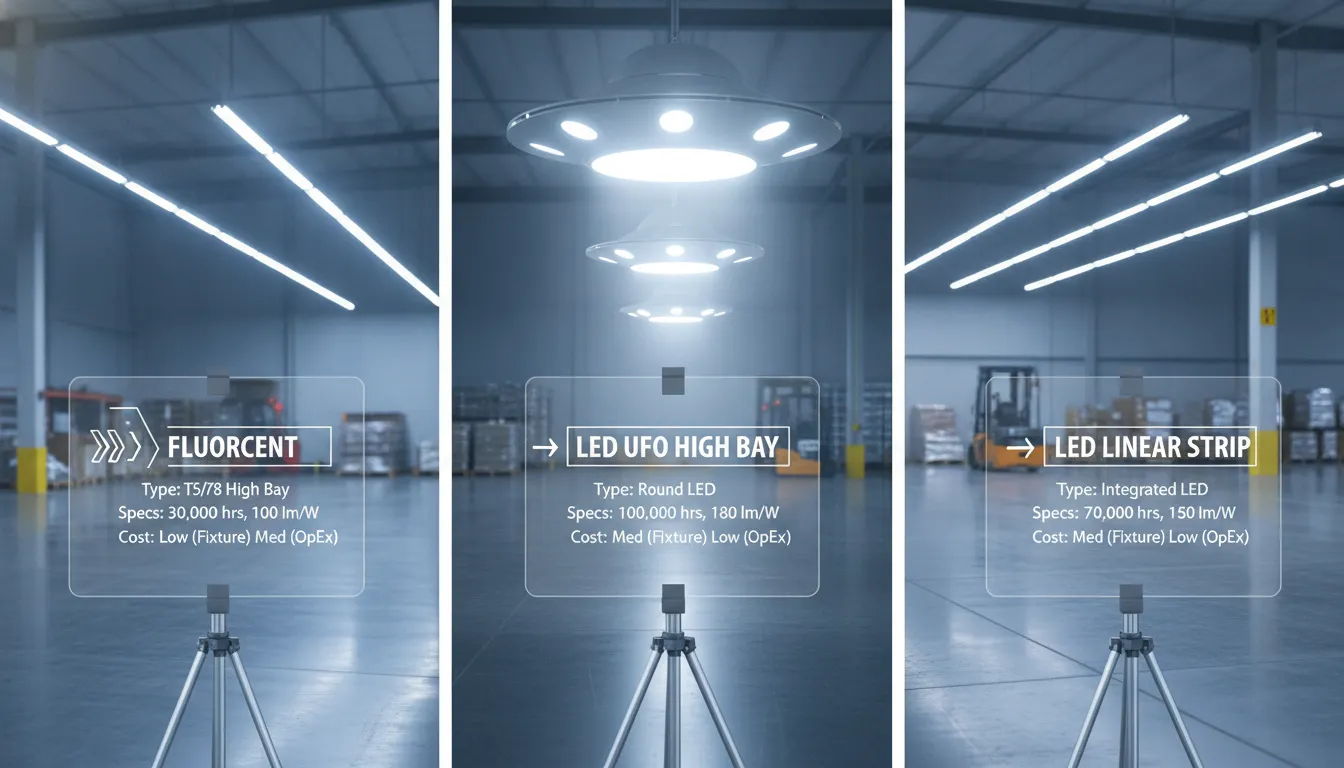
Good warehouse lighting starts with the layout, not the product catalog. Racks can block light. Equipment can create shadows. Daylight can change throughout the day. A fixture that works well in an open distribution center may perform poorly above narrow aisles or busy packing stations. Before purchasing anything, divide the building into zones and identify the tasks performed in each area. Then consider ceiling height, rack placement, floor surfaces, operating schedules, and environmental conditions. The right plan can improve visibility without wasting energy. Learn how to select fixtures, set lighting targets, compare specifications, and prepare your facility for installation.
Key Takeaways
- Design lighting around each warehouse zone: Match fixtures to ceiling height, rack placement, work tasks, loading areas, outdoor spaces, and future layout changes.
- Evaluate long-term value, not just price: Compare photometric plans, light levels, glare, efficiency, rated life, certifications, warranty coverage, installation costs, and replacement needs.
- Prioritize safe, professional installation: Use qualified installers, commission controls, test emergency systems, maintain fixtures regularly, and keep decorative Lit 365 exterior lighting separate from safety, security, and task lighting.
Which Warehouse Lighting Fits Your Facility?
The best warehouse lighting depends on more than ceiling height. Consider the work your team performs, the height and layout of your racks, the amount of daylight entering the building, and the conditions around loading docks, parking areas, and storage yards. A fixture that works well in a small storage facility may leave dark spots in a high-ceiling distribution center.
Start by dividing the property into zones, such as storage aisles, packing stations, receiving areas, offices, loading docks, entrances, and outdoor workspaces. Each area may need a different fixture type, light distribution, and level of protection. A lighting plan can help you compare coverage before installation, identify shadows, and avoid placing fixtures where racks or equipment will block the light.
The plan should also account for future changes. New racks, additional workstations, or expanded loading areas can affect light levels and fixture placement. Reviewing the entire facility before purchasing products makes it easier to choose a system that performs well now and continues to support your operations as the warehouse changes.
LED high bays for tall ceilings
LED high bays are designed for warehouses, manufacturing spaces, and distribution centers with tall ceilings, often around 20 feet or higher. They deliver high light output across large floor areas, making them useful for open spaces, tall racks, and facilities with heavy equipment.
Modern commercial LEDs can provide high lumens, wide coverage, and targeted distribution patterns that outperform many older lighting technologies. However, performance depends on mounting height, beam angle, lens design, and spacing. Review LED high bay performance rather than comparing fixtures by wattage alone.
UFO-style high bays work well in open floor plans, while linear high bays are often a better fit above long aisles. A photometric layout can show whether the selected fixtures provide consistent coverage and help reduce shadows between racks.
LED low bays, strips, and panels
LED low bays suit facilities with lower ceilings, generally below 20 feet. They provide focused illumination without the excessive output or glare that can occur when high bays are installed too close to the floor. Low bays work well in smaller warehouses, workshops, retail back rooms, and storage areas.
LED strip fixtures are useful for long aisles, shelving, packing benches, and production lines. Their linear shape can create consistent illumination along narrow work zones. LED panels are another option for offices, inspection rooms, and areas where employees need even, comfortable light.
Energy use and maintenance should also factor into your decision. LEDs typically consume less energy than older systems and last longer, which can reduce utility bills and replacement work over time. This overview of LED energy and lifespan benefits explains why many facilities replace fluorescent fixtures with LED products.
Fluorescent and legacy systems
Fluorescent fixtures and metal halide systems remain common in older warehouses, especially when businesses have delayed a full lighting upgrade. These systems may still operate, but aging lamps, ballasts, and wiring can lead to more service calls. They may also take longer to reach full brightness or perform inconsistently as components wear out.
Older technologies can be sensitive to temperature changes, causing flickering or delayed startup in cold and hot spaces. LEDs are available for many demanding environments, but the selected product still needs an appropriate temperature rating, enclosure, and driver.
A retrofit may involve replacing lamps, rewiring fixtures, or installing new units. Have a qualified electrician inspect the existing system, electrical connections, mounting points, and controls before selecting an approach. A lower purchase price may not represent the best value if the system requires frequent repairs or replacement parts.
Canopy, flood, area, and wall-pack fixtures
Warehouse lighting should cover more than the main interior. Canopy fixtures work beneath loading dock overhangs, covered walkways, and drive-through areas. They provide downward illumination where employees and drivers need to see packages, equipment, vehicles, and walking surfaces clearly.
Floodlights and area lights can illuminate parking lots, truck yards, building perimeters, and wide outdoor work zones. Wall-pack fixtures mount to exterior walls and provide light near doors, service areas, and emergency access points. Product collections may include high bays, canopy lights, wall packs, floodlights, and vapor-tight fixtures, helping you match fixtures to each part of the property.
For exposed areas, check the fixture’s ingress protection rating, housing material, mounting method, impact resistance, and temperature range. Lit 365’s permanent exterior lighting can add a polished look to entrances and façades, but decorative lighting should remain separate from required safety, security, and emergency systems.
Match fixtures to aisles, racks, docks, and work areas
Fixture placement should follow the warehouse layout rather than the existing electrical grid alone. In racked storage areas, lights are generally centered over aisles so shelving casts fewer shadows across walking and picking paths. This arrangement can improve visibility without requiring excessive brightness throughout the entire ceiling.
Review aisle width, rack height, forklift routes, picking locations, and task surfaces before finalizing fixture spacing. Packing and inspection stations may need more focused, higher-quality light than general storage areas. Loading docks often require durable fixtures that can handle moisture, dust, impacts, and temperature changes.
A preliminary lighting study can identify effective fixture locations and reduce rack-related shadows, as explained in this guide to warehouse lighting layout and fixture placement. Include daylight patterns, emergency paths, doors, and planned storage changes in the design so the system continues to support safe, efficient work as the facility evolves.
Is LED Warehouse Lighting Better Than Fluorescent?
For most warehouses, LED lighting is the better long-term choice. LEDs use less electricity, last longer, start instantly, and provide more consistent illumination across aisles, racks, loading areas, and workstations. These advantages matter even more in facilities that operate for long hours or run multiple shifts.
Fluorescent fixtures may still be practical when a business needs to limit upfront costs or continue using an existing system. However, older fluorescent lighting often requires more frequent lamp and ballast replacements. It may also flicker, lose brightness over time, and perform inconsistently in cold areas.
The best choice depends on your ceiling height, current fixtures, electrical system, operating schedule, and lighting goals. Compare the total cost of ownership rather than looking only at the purchase price. Include energy use, installation, maintenance, lift rentals, replacement parts, and potential downtime. A lighting professional can also determine whether a simple retrofit will work or whether a complete fixture replacement makes more sense.
Compare energy use and operating costs
LEDs typically use less electricity than fluorescent lamps while producing comparable or better illumination. That difference can lower utility costs in warehouses with high ceilings, long operating hours, or multiple shifts. Savings may be greater when LEDs work with occupancy sensors or dimming controls that reduce output in unoccupied areas.
Electricity is only one part of the calculation. Include lamp replacements, ballast repairs, labor, lift rentals, recycling, and the disruption caused by maintenance. The U.S. Department of Energy’s LED lighting guidance explains how LED systems can reduce energy consumption and maintenance demands over their service life.
A fluorescent system may cost less initially, but its total cost can become higher over several years. Ask your supplier for a comparison that includes purchase, installation, energy, and maintenance expenses.
Reduce maintenance and replacements
Warehouse lights are often installed above racks, aisles, and loading areas, making repairs difficult. Each replacement may require a lift, a temporary work zone, and scheduled downtime. High-quality LEDs can reduce these interruptions because many have rated lives of up to 50,000 hours or more, depending on the product and operating conditions. Greenlite Group discusses LED service life, though actual performance depends on the driver, heat management, and environment.
Fluorescent systems use replaceable tubes and ballasts. When either component fails, an area may become dim or unlit. Aging lamps can also create uneven color across a row of fixtures.
When comparing LEDs, review rated life, warranty coverage, driver quality, and the manufacturer’s replacement process. LEDs still require inspections, but they generally reduce routine replacements.
Improve brightness, color, flicker, and startup performance
Modern LED warehouse fixtures can provide bright, even illumination with controlled beam patterns. High-bay fixtures direct light toward floors, aisles, and work surfaces instead of wasting it on the ceiling. This can make labels, inventory, equipment, and walking paths easier to see. Commercial LEDs can provide high lumens and targeted distribution.
LEDs also reach full output almost immediately. Fluorescent lamps may start slowly after a power interruption, particularly in cold conditions. Aging fluorescent lamps and ballasts can flicker, which may cause discomfort or visual fatigue for some workers.
Choose a color temperature and lumen output that suit the work being performed. A neutral white range of approximately 4000K to 5000K is common in warehouses because it supports visibility without feeling excessively harsh. For detailed tasks, also review flicker performance and color rendering.
Handle cold and demanding warehouse conditions
Temperature can affect lighting performance in unheated warehouses, refrigerated areas, loading docks, and spaces with frequent door openings. Fluorescent lamps may start slowly or produce less light in cold conditions. Their output can also change as temperatures fluctuate.
Modern LED fixtures can operate efficiently across a wide temperature range, making them suitable for many warehouses, outdoor areas, freezers, and manufacturing spaces. EcoLED Mart explains LED performance in cold environments.
Do not assume every LED fixture is appropriate for every location. Check the operating temperature range, IP rating, housing material, and driver specifications. Refrigerated or washdown areas may require sealed fixtures that resist moisture and condensation.
Dust, vibration, humidity, and chemicals can also affect service life. Tell your lighting supplier about the conditions in each zone so the recommended fixtures match the environment.
Confirm retrofit and installation needs
Replacing fluorescent lighting with LEDs does not always require new fixtures throughout the building. LED tubes, retrofit kits, and direct replacement fixtures may work with some existing housings. ELED Lights explains LED compatibility with traditional fixtures, but compatibility must be confirmed before ordering.
Some LED tubes use the existing ballast, while others bypass it and connect directly to line voltage. These options have different wiring, labor, and safety requirements. Installing an incompatible lamp can cause poor performance or create an electrical hazard.
A complete fixture replacement may be preferable when housings are damaged, reflectors are outdated, or the current layout creates uneven coverage. Have a qualified electrician review the wiring, mounting points, circuit capacity, and emergency lighting requirements before work begins.
Correct common LED lighting misconceptions
LED lighting is not automatically harsh or uncomfortable. Products are available in different color temperatures, lumen outputs, beam angles, lenses, and dimming options. Proper spacing and fixture selection can create clear, comfortable illumination while limiting glare. Diffusers and frosted lenses may also help soften light at floor level.
Another misconception is that every LED fixture performs the same way. Quality varies considerably. A low-cost fixture may have a weak driver, poor thermal management, inconsistent output, or limited warranty support. Compare photometric files, test reports, certifications, rated life, and warranty terms instead of choosing by wattage alone.
LEDs also cannot compensate for a poor layout. Incorrect spacing can still create shadows and dark areas. Plan around ceiling height, rack placement, aisle direction, task requirements, and future changes to the facility.
Which Warehouse Lighting Specifications Matter?
The right warehouse lighting system depends on more than fixture wattage or the number of LEDs in the housing. A reliable design should provide enough usable light for each task, distribute it evenly, limit glare, and continue performing in the facility’s temperature and operating conditions. A fixture that appears bright in a product photo may still leave dark areas between racks or create uncomfortable reflections on equipment.
Start by identifying the work performed in each zone. Then compare the specifications that affect visibility, energy use, maintenance, and installation. Review photometric data, color temperature, rated life, driver quality, thermal performance, and environmental ratings before comparing prices. This process helps you avoid paying for unnecessary output or choosing a fixture that cannot meet the demands of the space.
It is also important to separate general illumination from specialized requirements. Emergency lighting, illuminated exit signs, hazardous-location fixtures, and security lighting may require different products and compliance documentation. A qualified lighting professional can help confirm that your plan meets applicable codes and provides suitable light levels throughout the facility.
Compare lumens, lux, and foot-candles
Lumens measure the total visible light produced by a fixture. They do not show how much light reaches a work surface. Lux measures light falling on a surface using the metric system, while foot-candles measure the same concept using the imperial system. One foot-candle equals approximately 10.76 lux.
This difference matters because a high-lumen fixture may still provide poor visibility when mounted too high, spaced too far apart, or aimed incorrectly. Review the light levels shown in a photometric layout instead of relying on lumen ratings alone. The layout should show average and minimum illumination across aisles, storage areas, workstations, and other occupied spaces.
OSHA requirements may apply to workplace and exit conditions, but warehouse lighting needs can vary by task and facility design. Review OSHA’s workplace requirements, then confirm applicable building, electrical, fire, and local requirements with a qualified professional.
Set lighting targets for each zone and task
A warehouse does not need the same light level everywhere. Open storage areas may require less illumination than picking aisles, packing stations, inspection benches, or maintenance areas. Employees who read labels, scan barcodes, or handle small parts typically need more consistent light than employees working in areas used mainly for storage.
Create lighting targets for each zone before selecting fixtures. Consider the task, the size of the items being handled, the speed of the work, and whether employees need to distinguish colors or fine details. Account for rack height, surface reflectance, equipment, and expected changes in inventory or layout.
Avoid choosing the brightest fixture available for every area. Overlighting can create glare, waste energy, and make working conditions uncomfortable. Underlighting can make it harder to identify obstacles, labels, and hazards. Industrial lighting guidance can provide a starting point, but your final targets should reflect the facility’s actual work and applicable regulations.
Plan for ceiling height, beam angle, spacing, and distribution
Ceiling height affects how light travels through the facility. High-bay fixtures are designed for taller ceilings, while low-bay fixtures suit shorter mounting heights. Beam angle also matters. A narrow beam can send light deeper into a tall space, but it may create bright spots and dark areas if fixtures are spaced too far apart. A wider beam can provide broader coverage at lower mounting heights.
Your layout should account for mounting height, aisle width, rack height, fixture spacing, and workstation locations. Place fixtures over or along aisles so racks do not block light from reaching lower shelves. Centering fixtures in aisles can help reduce shadows, according to this warehouse lighting design guidance.
Ask for a photometric plan before installation. It should show average light levels, minimum light levels, and uniformity across the space. This step can reveal coverage problems before they require costly changes.
Choose a 4000K to 5000K color temperature
Color temperature describes the appearance of white light. A 4000K fixture produces a neutral white tone, while a 5000K fixture appears cooler and crisper. Both are common choices for warehouses because they support clear visibility without the yellow cast associated with warmer lighting.
The best choice depends on the work environment and employee comfort. A 4000K system may feel more comfortable in areas where employees spend long periods working. A 5000K system can create a crisp appearance in aisles, loading areas, and inspection zones. Ask employees to review samples when possible, especially if the facility operates for long shifts.
Do not use Kelvin ratings as a substitute for brightness measurements. Light output, optics, mounting height, and spacing determine how bright a space appears. Some modern systems also offer dimming or tunable white features, which provide control over lighting tone and intensity. Learn more about these options through LED lighting information.
Evaluate CRI, uniformity, glare, and eye comfort
Color rendering index, or CRI, indicates how accurately a light source shows the colors of objects. Standard storage areas may work well with a moderate CRI, while product inspection, printing, sorting, or quality-control areas may benefit from a higher rating. Accurate color can help employees distinguish labels, wiring, packaging, and product variations.
Uniformity is equally important. Large differences between bright and dark areas can strain the eyes and make it harder for employees to adjust as they move through the facility. Review the minimum-to-average light ratio in the photometric plan, not just the fixture’s maximum output.
Control glare by selecting suitable optics, using diffusers when appropriate, and avoiding direct views of intense LED sources. Reflective floors, shrink wrap, metal shelving, and equipment can make glare worse. High output is not always better near machinery or workstations. As lighting professionals explain, intense, focused light may be unsuitable for operating equipment.
Compare lumens per watt, wattage, and energy use
Lumens per watt, written as lm/W, shows how efficiently a fixture converts electricity into visible light. A higher rating can indicate better efficiency, but it should not be the only factor you consider. A highly efficient fixture with poor distribution may require more units to cover the same space, reducing the expected savings.
Compare the complete system load, including drivers, controls, and the number of fixtures required for the layout. Then estimate annual energy use based on operating hours and utility rates. Include different schedules for receiving areas, storage aisles, offices, and loading zones if they do not operate continuously.
LED systems typically use less electricity than older fluorescent or metal-halide systems while delivering comparable or higher usable light. Ask for a project-specific calculation rather than relying on a generic savings claim. This LED energy guidance explains how efficiency affects utility costs and why fixture selection should include the full system design.
Check rated life, driver quality, and thermal performance
Rated life indicates how long a fixture is expected to operate before its light output falls to a stated level. Look for an L70 rating, which estimates when the fixture will produce 70% of its initial light output. A long rating is useful only when the fixture also has a dependable driver, durable housing, and adequate heat management.
Review the fixture’s operating temperature range, driver warranty, surge protection, and thermal design. Heat can shorten the life of LEDs and electronic components, particularly in high-ceiling areas that are difficult or expensive to service. Ask whether the rated life applies to the complete fixture or only to the LED chips.
Quality LED fixtures may provide up to 50,000 hours of service, but actual performance depends on installation conditions, operating temperature, voltage, and component quality. This LED durability overview explains why fixture construction matters as much as the LED chips themselves. Also confirm that replacement drivers and compatible fixtures will remain available when maintenance is required.
How Can Warehouse Lighting Improve Safety and Efficiency?
Warehouse lighting affects much more than visibility. It helps employees move safely through aisles, read labels accurately, identify hazards, and operate equipment with greater confidence. A well-designed system can also reduce wasted energy and limit the maintenance interruptions caused by frequent lamp replacements.
Begin by dividing the facility into zones, then match each area with the appropriate fixture, light level, control system, and protection rating. Picking aisles, packing stations, loading docks, cold storage rooms, offices, and equipment areas may all have different requirements. Emergency lighting, exit signs, and applicable building codes should be included in the plan from the start.
Professional design and installation can help prevent common problems, such as glare, dark spaces, poor sensor coverage, and overloaded circuits. A qualified contractor can review ceiling height, rack placement, electrical capacity, and work tasks before recommending a layout. Businesses should also compare their plans with OSHA’s warehousing resources and confirm local requirements before installation.
Provide even coverage and reduce shadows
Uneven lighting can leave dark areas beneath racks, between aisles, and around corners. Shadows may hide spills, damaged packaging, uneven flooring, or moving equipment. They can also make it harder for employees to read barcodes and product labels.
Use a layout that distributes light across the entire work area instead of creating bright spots directly below fixtures and dim areas between them. Mounting height, beam angle, fixture spacing, rack placement, and ceiling obstructions all affect coverage. Photometric software can help predict how light will reach floors, shelves, and vertical surfaces before installation.
Review the layout after the warehouse is stocked. New racks, signs, mezzanines, and inventory can change light distribution. Routine light-level checks can identify areas that need additional fixtures or repositioning. Safe Choice explains the importance of reducing shadows when planning a safe warehouse lighting system.
Choose IP ratings for dust, moisture, and temperature changes
An IP rating indicates how well a fixture resists solid particles and moisture. The first number describes protection from dust and other particles, while the second addresses water exposure. A warehouse with cardboard dust may need different fixtures than a refrigerated room, washdown area, or open loading dock.
Consider humidity, condensation, cleaning methods, airborne particles, and outdoor exposure when selecting a fixture. Sealed products can protect internal components in demanding areas, but the rating should match the actual environment. A higher rating is not automatically the right choice for every space.
Temperature is another important factor. Freezer rooms, unconditioned buildings, and areas exposed to summer heat require fixtures and drivers rated for those conditions. LEDs can operate across a broad temperature range when properly specified. Temperature-rated LED systems can suit cold storage and other challenging environments when selected for the application.
Add motion sensors, dimming, and daylight harvesting
Lighting controls can reduce energy use while keeping active areas properly illuminated. Motion and occupancy sensors can dim or switch off fixtures when aisles, storage zones, or offices are unoccupied. This works especially well in overflow storage and receiving areas that see activity only during certain shifts.
Dimming allows businesses to adjust light levels based on the task and time of day. Daylight harvesting uses photosensors to reduce artificial lighting when windows or skylights provide enough illumination. Controls should be commissioned carefully so fixtures respond smoothly and do not switch off while employees are still working.
Sensor placement also matters. Tall racks, partitions, forklifts, and traffic patterns can affect detection. Use overlapping coverage where necessary, and provide manual overrides in areas that require consistent control. Kardex recommends motion sensor lighting to reduce unnecessary operation and the risk of lights being left on overnight.
Install emergency lighting and illuminated exit signs
Normal warehouse lighting cannot replace emergency lighting. If a power failure, fire, or other event shuts down the main system, employees still need clear routes to exits and safe gathering areas. Emergency fixtures should illuminate aisles, stairs, ramps, changes in elevation, and other areas where low visibility could cause confusion or falls.
Illuminated exit signs should remain easy to see from the intended approach when normal lighting is unavailable. Battery backup, central emergency power, and self-testing systems are common options. The appropriate system depends on the building, occupancy type, and local fire code.
Emergency systems also require routine testing. A documented schedule can confirm that batteries, charging equipment, lamps, and signs operate correctly. A bright warehouse does not necessarily have adequate emergency coverage, so review the design with a qualified professional. Emergency lighting guidance explains how emergency fixtures and clear exit signs support safe evacuation.
Verify UL, ETL, DLC, and electrical safety certifications
Safety certifications provide important information about how a lighting product was tested. Look for recognized marks such as UL Listed or ETL Listed, and confirm that the listing applies to the complete fixture rather than only one component. These certifications can help verify compliance with applicable electrical and fire safety standards.
DLC qualification serves a different purpose. It generally relates to energy efficiency and eligibility for certain utility rebate programs, rather than acting as a complete electrical safety certification. Check the current listing and confirm that the exact model, wattage, and configuration qualify.
Ask manufacturers or distributors for certification records, test reports, installation instructions, and operating limits. Do not rely only on a logo or marketing statement on a product page. Commercial lighting safety guidance recommends confirming recognized certifications before purchasing and installing fixtures.
Check hazardous-location requirements when applicable
Some facilities handle flammable liquids, combustible dust, gases, vapors, or other materials that can create a hazardous location. Standard warehouse fixtures may not be suitable in these areas because a spark or overheated component could create a serious risk.
First determine whether the space has been classified as hazardous and identify the applicable class, division, zone, or group. The classification depends on the material, its concentration, and how often it may be present. A qualified electrical professional should confirm this assessment before fixtures are selected.
Choose products specifically approved for the identified location, and follow requirements for wiring, conduit, mounting, seals, and maintenance. A high IP rating does not automatically make a fixture safe for explosive atmospheres. Commercial property safety guidance explains why overlooking hazardous-location requirements can contribute to fires, injuries, and property damage.
Meet OSHA, IES, fire code, and local requirements
Warehouse lighting should meet more than a general preference for brightness. OSHA requirements, local building and fire codes, electrical regulations, and project-specific standards may affect the design. The Illuminating Engineering Society, or IES, also publishes guidance used by lighting professionals when evaluating light levels, uniformity, glare, and visual tasks.
Requirements can vary by area. Picking aisles, packing stations, offices, stairs, loading docks, battery-charging rooms, and hazardous zones may each need different treatment. A lighting plan should document expected light levels, fixture locations, emergency coverage, controls, and product certifications.
Have a licensed electrician or qualified lighting designer review the project before installation. This professional can coordinate with the authority having jurisdiction and identify issues that might delay inspection. Keep product documentation, test records, and commissioning notes for future maintenance. OSHA’s warehouse resources provide a useful starting point, while local officials and qualified professionals can confirm the requirements for a specific facility.
How Can Businesses Compare Warehouse Lighting Products?
Comparing warehouse lighting products requires more than checking wattage and purchase price. The right fixture must suit your ceiling height, rack layout, work tasks, operating schedule, and environmental conditions. A product that performs well in an open storage area may create glare, shadows, or uneven coverage in narrow aisles.
Request the same information from each supplier so you can make a fair comparison. Ask for photometric files, warranty terms, test reports, installation requirements, and estimated operating costs. Then compare the complete system, including fixtures, controls, wiring, lift equipment, labor, maintenance, and future replacements.
It also helps to assess how each product will perform over several years. A fixture with a lower upfront price may require more frequent repairs, while a higher-quality system may reduce maintenance interruptions. Consider how easily your team can access replacement parts, whether the supplier has experience with similar facilities, and whether the proposed lighting plan supports safety and productivity.
Before making a purchase, have a qualified lighting professional or electrician review the proposal. They can identify electrical requirements, code concerns, mounting limitations, and areas that may need additional lighting. A careful comparison at the planning stage can prevent costly changes after installation.
Review photometric files, beam patterns, and layouts
Photometric files show how a fixture distributes light across a space. Use them to compare light levels, spacing, shadows, and uniformity before ordering products. Your lighting plan should account for ceiling height, aisle width, rack position, dock doors, and areas where employees inspect, pick, pack, or ship products.
Look closely at the beam angle. Narrow beams can concentrate light in tall-rack aisles, while wider beams may work better in open storage or staging areas. Ask suppliers to create a layout using your facility’s dimensions instead of relying on a generic illustration. Photometric planning can help match fixtures to the size and arrangement of a logistics facility.
Compare warranties and rated-life guarantees
A fixture’s rated life indicates how long its LED system is expected to operate under specified conditions. It does not mean every component will perform perfectly for that entire period. Compare rated life, lumen maintenance, driver warranty, and terms for labor or replacement parts.
A high-quality LED system may offer a rated life of up to 50,000 hours, which can reduce replacement frequency compared with older lamp-based systems. However, warranty length and coverage matter just as much as the headline rating. Ask whether the warranty covers the complete fixture, including the driver, and whether the manufacturer provides a replacement or repair. Confirm who handles claims and how quickly replacements are shipped. LED lifespan guidance can help clarify what rated-life claims mean.
Evaluate drivers, housings, and components
The LED chips are only one part of a warehouse fixture. The driver regulates power, while the housing, lens, seals, heat sink, wiring, and mounting hardware affect performance and durability. Ask for the driver manufacturer, operating temperature range, surge protection, dimming compatibility, and replacement process.
Inspect the housing for corrosion resistance and adequate heat management, especially in facilities with dust, humidity, temperature swings, or frequent door openings. A fixture that runs too hot may lose light output sooner than expected. Check whether the lens resists impact and whether replacement lenses or drivers are available separately. Because energy efficiency and safety should be considered together, review the fixture’s heat output, electrical protection, and operating conditions before making a purchase. Commercial lighting safety guidance offers useful criteria for evaluating these components.
Verify certifications, test reports, and code documents
Ask suppliers for current certification labels and supporting documents, not just marketing claims. Depending on the product and location, you may need to verify UL or ETL listing, DLC qualification, power quality data, photometric files, and installation instructions. These documents help your electrician confirm that the fixtures are suitable for the intended application.
Check whether the product is approved for damp or wet locations, includes the correct voltage range, and meets requirements for emergency or hazardous-area use. Certification alone does not replace a site review, but it provides evidence that the product has been tested against recognized standards. UL’s certification resources can help explain how safety listings support product evaluation. Keep copies of all documents with your project records for inspections, maintenance, and future replacements.
Check reviews, references, service, and replacement options
Product reviews can reveal recurring issues that are difficult to spot in a specification sheet, such as premature driver failures, poor customer service, difficult mounting hardware, or inconsistent color. Look for feedback from businesses with similar ceiling heights, operating hours, and environmental conditions.
For a larger project, request references from warehouses that have used the same fixtures for at least a year. Ask about installation, light quality, warranty claims, delivery, and replacement availability. Confirm whether the supplier keeps common models and parts in stock. A compatible replacement can reduce downtime when a fixture fails. Bulk lighting guidance explains why dependable access to lighting products can help prevent operational disruptions.
Compare total ownership costs with purchase prices
The lowest fixture price may not produce the lowest cost over time. Compare the initial product price with installation labor, controls, wiring changes, lift rental, shipping, maintenance, energy use, and expected replacements. Include costs associated with disposing of existing lamps or modifying the electrical system.
Request a written quote that separates equipment from installation and identifies every included component. Volume pricing can reduce per-unit costs, with some commercial purchases receiving discounts of 10% to 35% compared with individual acquisitions. However, a discount should not outweigh poor warranty coverage or limited parts availability. Review the full proposal and compare equivalent products, since one quote may include sensors, mounting hardware, or commissioning while another does not. Bulk-order pricing considerations can help frame this part of the comparison.
Calculate energy savings and projected payback
Estimate energy savings by comparing the proposed LED system with your current fixtures. Gather each fixture’s wattage, quantity, operating hours, utility rate, and expected maintenance cost. Include controls in the calculation if sensors or dimming will reduce the time fixtures operate at full output.
A simple payback estimate divides the project’s added cost by its expected annual savings. Use conservative assumptions, and run separate estimates for energy, maintenance, and both combined. Ask the supplier to show the calculation so you can adjust it for seasonal schedules, utility-rate changes, or planned operating-hour changes. LED systems can reduce electricity use and maintenance, but actual results depend on fixture selection, controls, installation, and how the warehouse operates. LED energy savings information provides additional context when reviewing projected payback claims.
How Can Businesses Buy Warehouse Lighting at the Best Value?
The lowest purchase price does not always offer the best value. Warehouse lighting affects energy use, maintenance, employee comfort, safety, and daily operations, so businesses should compare the full cost of ownership before choosing a product or supplier.
Start by defining the project. Document ceiling heights, operating hours, work areas, existing fixtures, environmental conditions, and future expansion plans. Then ask suppliers for comparable proposals that include fixture specifications, controls, installation, warranties, shipping, and projected operating costs. This makes it easier to compare complete solutions instead of fixture prices alone.
Bulk purchasing can reduce the cost per fixture, improve product consistency, and help prevent replacement delays. However, buying too much of the wrong product can create storage and compatibility problems. Use a lighting plan and photometric layout to determine the required quantities before placing an order. Resources on bulk commercial lighting purchases also recommend comparing suppliers and negotiating according to project volume.
Compare manufacturers and electrical distributors
Request proposals from several manufacturers, electrical distributors, and commercial lighting specialists. Compare equivalent products by lumen output, wattage, color temperature, beam angle, rated life, controls, certifications, and warranty terms. A lower-priced fixture may not provide the same light level, durability, or service life as a better-documented option.
Electrical distributors may offer local support, product access, and faster replacement options. Manufacturers may provide project pricing, customization, or direct technical assistance. Ask each supplier for product data sheets, IES files, installation instructions, and a written quote listing every included cost.
Also evaluate the supplier’s experience with warehouses similar to yours, response time, replacement policy, and ability to support future phases. Consistent product availability can simplify expansions and maintenance, particularly when the same fixture model remains available for several years.
Review contractor-supplied lighting packages
A lighting contractor may offer a complete package that includes design, fixtures, controls, installation, lift equipment, commissioning, and disposal of old equipment. This can simplify project management because one company coordinates the technical and installation details.
Ask the contractor to separate material, labor, equipment rental, permitting, and disposal costs in the proposal. Confirm the exact fixture models and specifications instead of accepting a general description such as “LED high bay.” The package should identify lumen output, wattage, color temperature, controls, certifications, warranty coverage, and expected delivery dates.
Compare the package with at least one supply-only option and one competing contractor proposal. A low quote may leave out electrical upgrades, sensor commissioning, ceiling repairs, or after-installation testing. A detailed scope helps you compare the actual value of each option and avoid unexpected charges during installation.
Request wholesale, volume, and project pricing
Ask suppliers whether they offer wholesale, volume, contractor, or project pricing. Even a modest warehouse upgrade may qualify for a lower unit cost when fixtures, controls, and accessories are purchased together. Larger projects may provide additional room for negotiation, especially when the order includes multiple fixture types or several locations.
Provide useful project details when requesting a quote. Include the estimated fixture count, preferred specifications, delivery location, installation schedule, and whether additional phases are planned. Suppliers can price the order more accurately when they understand the complete scope.
Request a line-item quote showing unit pricing, discounts, freight, taxes, accessories, and minimum order quantities. Wholesale lighting guidance explains that larger purchases can lower the cost per fixture. Confirm that any discount does not depend on accepting products that fail to meet the lighting plan.
Plan bulk orders for expansions and replacements
Use current and future needs to determine how many fixtures to purchase. If the facility will add storage racks, extend operating hours, or build another warehouse section, ask whether the same lighting system can serve those areas later. Planned purchases can support consistent illumination across the property.
Set aside replacement fixtures, drivers, sensors, and other components for critical areas. This does not require excessive inventory. Instead, identify the parts most likely to cause downtime if they become unavailable. Keep records of model numbers, mounting details, electrical requirements, and installation dates.
Bulk planning also helps the design team select consistent wattage, lumen output, spacing, and beam angles. Commercial LED purchasing guidance recommends using the facility layout to determine product quantities and placement. Confirm storage conditions and product shelf life before placing a large order.
Negotiate warranties, payment terms, and delivery schedules
Price is only one part of a lighting agreement. Ask suppliers to explain fixture warranties, driver coverage, labor coverage, exclusions, claim procedures, and expected response times. Confirm whether the warranty begins at shipment, installation, or commissioning.
You can also negotiate payment milestones tied to delivery, installation, inspection, or final acceptance. For a large project, staged payments may align cash flow with completed work. Ask about deposits, cancellation terms, change orders, and storage fees before signing.
Delivery timing deserves the same attention. Agree on shipping dates, partial deliveries, damaged-product procedures, and responsibility for unloading and inspection. Larger purchase commitments may provide leverage for improved terms, according to bulk purchasing recommendations. Put every negotiated detail in the written agreement.
Research utility rebates and efficiency incentives
Check for utility rebates, energy-efficiency programs, tax incentives, and local grants before finalizing the lighting design. Eligibility may depend on fixture efficiency, controls, certification, installation date, project size, or preapproval. Some programs require an application before equipment is ordered or work begins.
Ask the supplier or electrical contractor to estimate available incentives, then verify the requirements directly with your utility provider or program administrator. Keep invoices, product specifications, disposal records, installation documents, and commissioning reports. These records may be necessary when submitting a rebate claim.
Do not choose a fixture solely because it qualifies for an incentive. The product still needs to provide suitable light levels, reliable performance, and manageable maintenance costs. Efficient lighting can support sustainability goals and reduce operating expenses, as warehouse efficiency guidance explains.
Compare shipping, installation, and operating costs
Calculate the complete project cost, including freight, unloading, lifts, labor, wiring changes, controls, permits, disposal, and future maintenance. A fixture with a low purchase price may cost more to install if it requires unusual mounting hardware or extensive electrical work.
Next, estimate ongoing expenses. Review wattage, operating hours, energy rates, expected service life, cleaning needs, and replacement labor. Compare these figures with the existing system and consider whether controls could reduce energy use in areas that are not occupied continuously.
Make sure the design provides enough light without creating glare or unnecessary energy use. Overlighting can cause discomfort and waste electricity, while underlighting can create safety concerns. Industrial lighting guidance emphasizes the importance of balancing adequate illumination with visual comfort. Ask the supplier for a layout showing coverage, shadows, and expected light levels.
Confirm lead times, replacement parts, and availability
Before ordering, confirm the lead time for fixtures, controls, mounting hardware, emergency components, and replacement parts. Ask whether products are stocked locally, made to order, or imported. A long lead time may affect installation plans, especially when the project depends on lifts, electricians, or facility shutdowns.
Request a written statement about product availability and future support. Find out whether the manufacturer plans to discontinue the model, substitute components, or revise the design. If a model changes, verify that future fixtures will match the existing system in appearance, performance, controls, and mounting.
Keep a small inventory of essential replacements for high-use areas, but avoid storing more than the facility can reasonably use. Maintaining adequate stock can prevent operational delays and preserve consistency across the warehouse, a benefit also noted in wholesale lighting supply recommendations. Record where replacement products are stored and who can authorize their use.
How Can Businesses Install and Maintain Warehouse Lighting?
Warehouse lighting should support the facility’s layout, daily tasks, and safety procedures. A fixture that appears suitable in a product catalog may still create glare, shadows, or dark areas once racks, equipment, and inventory are in place. Plan the system around how employees move and work in each zone, then verify the finished installation under normal operating conditions.
A qualified lighting contractor can assess existing fixtures, calculate electrical loads, prepare a photometric layout, and recommend practical upgrade options. Use OSHA’s warehousing guidance as a starting point for workplace safety planning, then confirm electrical, fire, and building requirements with a licensed professional and the local authority having jurisdiction.
Create a lighting plan for each warehouse zone
Start by dividing the facility into zones, including storage aisles, picking areas, packing stations, receiving docks, offices, stairways, and equipment paths. Each space may require a different lighting approach. Tall shelving may need high-bay fixtures with a focused beam, while packing tables often benefit from even, task-focused illumination.
Document ceiling heights, rack locations, aisle widths, work surfaces, doors, sprinklers, ventilation equipment, and other obstructions before selecting fixture locations. Centering fixtures over aisles can reduce shadows from shelving, but the best arrangement depends on rack height, fixture spacing, and beam angle. A photometric plan can help show how evenly light will reach the floor and work areas.
Set target light levels for each task and measure them after installation. This comparison can identify dark spots that are easy to miss during a quick walkthrough. It can also prevent overlighting, which may increase energy use and create uncomfortable glare.
Plan electrical loads and hire professional installers
A warehouse lighting upgrade involves more than removing old fixtures and connecting new ones. The electrical plan should account for total wattage, circuit capacity, voltage, emergency equipment, controls, and possible future expansion. Dimming systems and occupancy sensors may also require compatible drivers, wiring, or control components.
Have a qualified electrician inspect panels, circuits, junction boxes, disconnects, and existing wiring before work begins. Professional installation helps reduce wiring errors, supports code compliance, and provides a safer process for working at height. It is especially important when the project includes new circuits, controls, emergency lighting, or areas with moisture and dust.
Request a written scope of work covering fixture removal, mounting hardware, controls, testing, cleanup, and disposal of old lamps. Ask for product certifications, warranty information, installation records, and recommended replacement parts. Commercial lighting safety guidance can help property owners prepare questions for contractors.
Choose mounting methods and prioritize lift safety
Warehouse fixtures may be surface-mounted, suspended from aircraft cable, attached to unistrut, or installed on specialized brackets. The correct method depends on the ceiling structure, fixture weight, vibration, air movement, and future access requirements. Mounting hardware should be rated for the application and installed according to the manufacturer’s instructions.
Keep fixtures clear of sprinkler heads, ventilation equipment, storage racks, and overhead doors. Poor placement can create shadows, interfere with inspections, or expose fixtures to impacts from forklifts and stored materials. In areas with dust, moisture, or changing temperatures, choose housings and seals designed for those conditions.
Installation may require scissor lifts, boom lifts, or other elevated work platforms. Trained employees should operate this equipment, and the work area should be separated from foot and vehicle traffic. Follow OSHA aerial-lift requirements, including equipment inspections, fall protection, and controlled access.
Position sensors and commission lighting controls
Occupancy sensors can reduce unnecessary operating hours by turning lights down or off when an area is empty. They are often useful in low-traffic aisles, storage rooms, restrooms, and secondary work areas. In busy zones, however, a sensor that cannot detect movement may switch lights off while employees are still working.
Position sensors where they have a clear view of the intended space. Avoid locations behind racks, near obstructions, or beside heat-producing equipment that could cause false activation. Set time delays based on actual work patterns, then test the system with employees, forklifts, and inventory in place.
Controls should be commissioned after installation rather than left at factory settings. Check occupancy detection, dimming levels, daylight response, manual overrides, and restart behavior after a power interruption. Motion-sensor lighting can help prevent lights from remaining on overnight, but the results depend on accurate sensor placement and settings that match the facility’s schedule.
Clean fixtures, inspect systems, and survey light levels
Dust and residue can collect on lenses, reflectors, and housings, reducing the light that reaches the floor. Set a cleaning schedule based on the warehouse environment. Facilities with cardboard dust, manufacturing residue, vehicle exhaust, or airborne particles may need more frequent service than clean, climate-controlled buildings.
During inspections, check for flickering, dark sections, damaged lenses, loose mounting hardware, discolored wiring, water intrusion, and unusual heat. Inspect sensors and control components at the same time. A fixture that still turns on may be losing output or showing signs of driver failure.
Use a calibrated light meter to measure levels at consistent locations and working heights. Compare the readings with the original lighting plan and the requirements of each task. Maintain a log of inspection dates, failed components, repairs, and measured readings. Regular warehouse lighting maintenance helps identify problems before they affect an entire zone.
Test emergency lighting and plan replacements
Emergency lighting should be managed separately from standard warehouse illumination. It must provide visibility when normal power fails and help employees reach exits safely. Include emergency fixtures, illuminated exit signs, backup batteries, and related controls in the facility’s inspection schedule.
Test emergency systems according to local fire code, manufacturer instructions, and the requirements that apply to the building. Document every test, record failed units, and address problems promptly. Keep exit signs visible along required viewing paths, without obstruction from racks, stored goods, or equipment. Emergency lighting guidance can help teams identify key inspection considerations.
Plan routine replacements before failures become urgent. Record fixture models, driver types, batteries, lenses, and mounting hardware so the correct parts are easy to order. Standardizing products across similar zones can simplify training and reduce spare-parts requirements. Account for lead times, lift access, seasonal demand, and planned maintenance shutdowns when scheduling replacement work.
Choose Permanent Exterior Warehouse Lighting From Lit 365
A warehouse needs more than bright interior fixtures. Exterior lighting can define entrances, improve visibility around key areas, highlight architectural features, and give the property a finished appearance after dark. Lit 365 provides professionally installed permanent LED lighting for commercial buildings, loading areas, entrances, façades, and surrounding exteriors.
Permanent lighting stays in place throughout the year, giving your business one dependable system for everyday use, seasonal displays, and special events. Instead of buying, storing, installing, and removing temporary lights, your team can choose a setting and schedule that fits the property. The system can remain subtle during normal operations, then change colors or patterns for holidays, company events, and community celebrations.
A successful warehouse lighting plan should account for both appearance and function. Decorative roofline lighting should complement, rather than replace, the fixtures responsible for loading dock visibility, parking areas, emergency routes, and security. Commercial lighting safety guidance can help property owners identify where separate lighting systems may be needed.
Add low-profile LED lighting to entrances and façades
Your entrance is often the first part of your facility that customers, employees, drivers, and visitors see. Low-profile LED lighting can outline doors, rooflines, signage, and architectural features without creating a cluttered appearance. A carefully planned system gives the building a polished look while keeping attention on the structure and your brand.
Modern commercial LEDs are designed to deliver strong output, broad coverage, and targeted distribution. Fixture placement and beam direction matter just as much as brightness, since poorly aimed lights can create glare or bright spots. This commercial LED lighting guide explains why distribution and fixture design deserve close attention.
Lit 365 can help create a low-profile design that follows your warehouse’s roofline and façade. The result is a consistent exterior appearance that works for everyday operations, customer visits, and scheduled events.
Coordinate loading docks, parking areas, perimeters, and exteriors
A warehouse exterior includes several areas with different lighting needs. Loading docks require clear visibility for deliveries and employee movement. Parking areas should be easy to access, while entrances and walkways should feel welcoming and visible. Perimeter lighting may also support general property awareness, but it should be coordinated with dedicated security equipment when necessary.
A permanent system can bring these areas together visually while allowing each zone to serve its intended purpose. Exterior decorative LEDs can frame the building and create a consistent appearance, while task, security, and safety fixtures provide the illumination required for daily operations.
LEDs also produce less heat and generally consume less energy than older lighting technologies. Read this commercial lighting safety guide for considerations related to fixture placement, electrical work, and exterior property lighting.
Schedule programmable colors and patterns for holidays and events
Your warehouse can look professional every day and still take part in seasonal celebrations. Programmable colors, patterns, and schedules let you use a soft white setting for regular operations, then switch to brand colors, holiday tones, or event-specific patterns when needed.
A scheduled system can turn on and off automatically, which helps maintain a consistent display without assigning the task to an employee. You can plan lighting for Christmas, Halloween, company anniversaries, community events, sports celebrations, and other occasions. If your facility hosts an event, a temporary color change can make the property feel more intentional and welcoming.
For larger buildings, it helps to plan the lighting as one complete project instead of purchasing disconnected products over time. Reviewing commercial bulk lighting options can help businesses compare quantities, product compatibility, and project pricing before installation begins.
Create year-round commercial appeal without seasonal installation
Seasonal lighting can make a property feel welcoming, but temporary installation often involves ladders, lift equipment, storage, weather delays, and repeated labor. Permanent exterior lighting removes much of that annual disruption. Once installed, the system remains in place and can provide a clean, understated appearance throughout the year.
This approach is useful for warehouses that receive customers, vendors, employees, and visitors after dark. Choose a simple everyday setting, then adjust the colors or pattern for a holiday or company event. You can also schedule the lights to operate only during selected hours, helping the property maintain a consistent appearance without leaving the system on continuously.
Permanent lighting also reduces the need to purchase and store large quantities of temporary products each season. Planning supply needs as part of a broader property project can simplify purchasing, as this overview of wholesale lighting supplies explains.
Rely on professional installation, clean workmanship, and customer support
Commercial exterior lighting should be installed with the building, weather, and long-term maintenance in mind. Professional installers can evaluate rooflines, access points, dock areas, façades, and mounting locations before recommending a layout. They can also help ensure that wiring, connections, and fixtures are installed correctly for the property.
Clean workmanship matters on a warehouse because visible cables, uneven spacing, or poorly aligned fixtures can make an otherwise attractive building look unfinished. A professional installation should keep components secure and discreet while providing consistent coverage across the selected areas.
Lit 365 focuses on quality products, professional installation, clean results, and customer support throughout the process. An experienced installer can also help identify when decorative lighting must remain separate from regulated safety systems. This commercial lighting safety resource provides additional guidance on installation risks and local safety requirements.
Separate decorative lighting from safety, emergency, and security systems
Permanent decorative lighting can improve your warehouse’s appearance, but it should not replace the systems responsible for safety, security, or emergency response. Emergency lighting, illuminated exit signs, loading-area fixtures, security lights, and task lighting all have different functions and may be subject to separate codes or inspection requirements.
Keep decorative roofline and façade lighting separate from fixtures used to illuminate evacuation routes, loading operations, parking hazards, or emergency exits. Decorative controls should not interfere with emergency circuits, backup power, or required exit visibility. Emergency lighting is specifically intended to provide illumination when the normal power supply fails, so it requires its own planning, testing, and maintenance.
Before changing an existing safety or electrical system, consult a qualified electrician and review local requirements. This guidance on warehouse emergency lighting explains why emergency systems need dedicated attention rather than being treated as part of a decorative lighting installation.
Frequently Asked Questions
What type of lighting is best for a warehouse?\ The right fixture depends on ceiling height, rack arrangement, work tasks, and environmental conditions. LED high bays typically suit tall ceilings, while low bays, strip fixtures, panels, canopy lights, wall packs, and floodlights may work better in specific zones. A photometric layout can help determine the best combination for your facility.
How do I compare LED warehouse lighting products?\ Look beyond wattage and purchase price. Compare light distribution, lumen output, color temperature, CRI, rated life, driver quality, operating temperature, IP rating, certifications, warranty coverage, and replacement-part availability. Include installation, energy, maintenance, and lift costs when evaluating the total investment.
Can LED lighting improve warehouse safety?\ Yes. Properly designed LED lighting can provide more consistent visibility across aisles, picking areas, packing stations, docks, and walkways. It can reduce dark spots, glare, and shadows, making it easier to identify hazards, read labels, and move equipment safely. Emergency lighting and exit signs still require separate planning and testing.
Do warehouse lighting upgrades qualify for rebates?\ Some utility providers and efficiency programs offer rebates for qualifying LED fixtures, controls, or complete lighting upgrades. Requirements may include product efficiency, DLC qualification, preapproval, installation dates, and project documentation. Check with your utility or program administrator before ordering equipment.
Can permanent exterior lighting improve a warehouse property?\ Permanent LED lighting can give entrances, façades, rooflines, and selected exterior areas a polished appearance throughout the year. Lit 365 can install low-profile systems with programmable colors, patterns, and schedules for everyday use, holidays, and company events. Decorative lighting should remain separate from required safety, emergency, loading dock, and security systems.