
2026-10-15
Permanent Soffit Lighting Cost in Austin
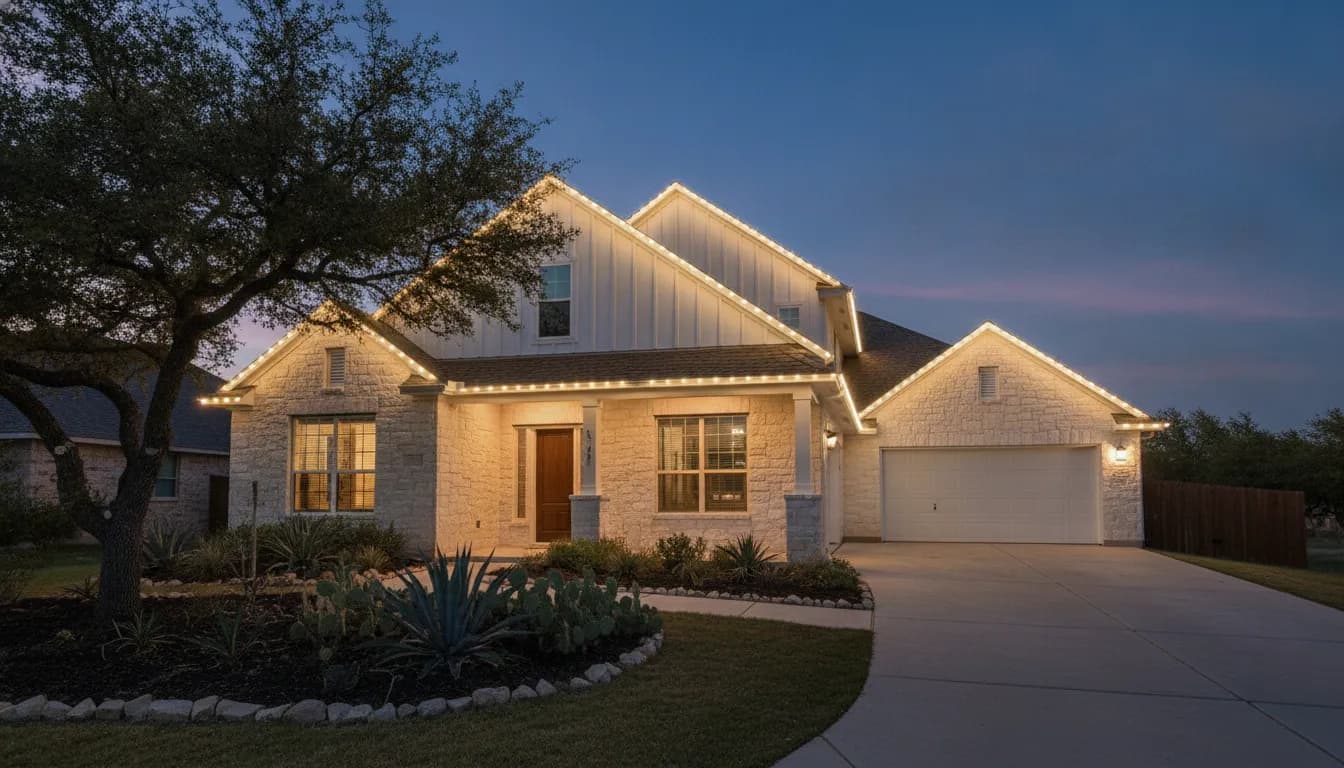
Permanent soffit lighting cost in Austin is not a citywide price you can copy from a neighbor. LIT365 does not publish a dollar range or a per-foot rate. The estimate follows the eaves you want lit, how hard those eaves are to reach, and what the written scope includes. Two homes on the same street can look alike and still need different plans. This guide shows what to name, what to ask a provider to itemize, and how to compare two proposals before you request a site-specific quote.
Request a lighting quote with your address and the elevations you want lit.
What changes permanent soffit lighting cost in Austin?
The roofline path changes the quote more than the square footage of the house. A compact home with several front gables can take more layout work than a larger home with one long, simple eave. The installer is pricing a path along the soffit, plus the corners, peaks, and power connection that path needs.
Austin lots add their own constraints. A one-story house with a clear driveway is a different job from a two-story home tucked against live oaks, a steep side yard, or a narrow side setback. Height, landscaping, and where a ladder or lift can stand all change the time on site. None of that shows up in a generic per-foot number you found online.
The look you want matters too. A short front outline answers a different question than a continuous line around the sides and the patio. Holiday color, a game-day pattern, brighter security visibility, and a softer patio setting can all live on one permanent system. The proposal should still say which elevations are included. If the scope is vague, the price is not comparable to anyone else's.
Roofline length is only the first input
Length is the easiest number to talk about and the easiest one to misuse. Ask which eaves, returns, and peaks are in the count. A front-only plan and a whole-house outline can both be called "the roofline," and they are not the same project.
You do not need a tape measure before the first call. Name the sections instead: front eave, garage eave, each front gable, left side, right side, and rear patio. That list is enough for a provider to tell you whether photos can start the quote or whether someone needs to see the house.
Corners, peaks, and access change the work
Every turn, dormer, and change in eave height is a place the lighting line has to be planned, not just extended. A straight run and a run that steps up and down a gable do not take the same care, even when the total footage is close.
Access is the other half. Clear ground under a low eave is simpler than a tall gable over a sloped bed or a fence. If part of the house is hard to reach, say so early. Hiding that detail does not lower the price. It makes the first number less useful.
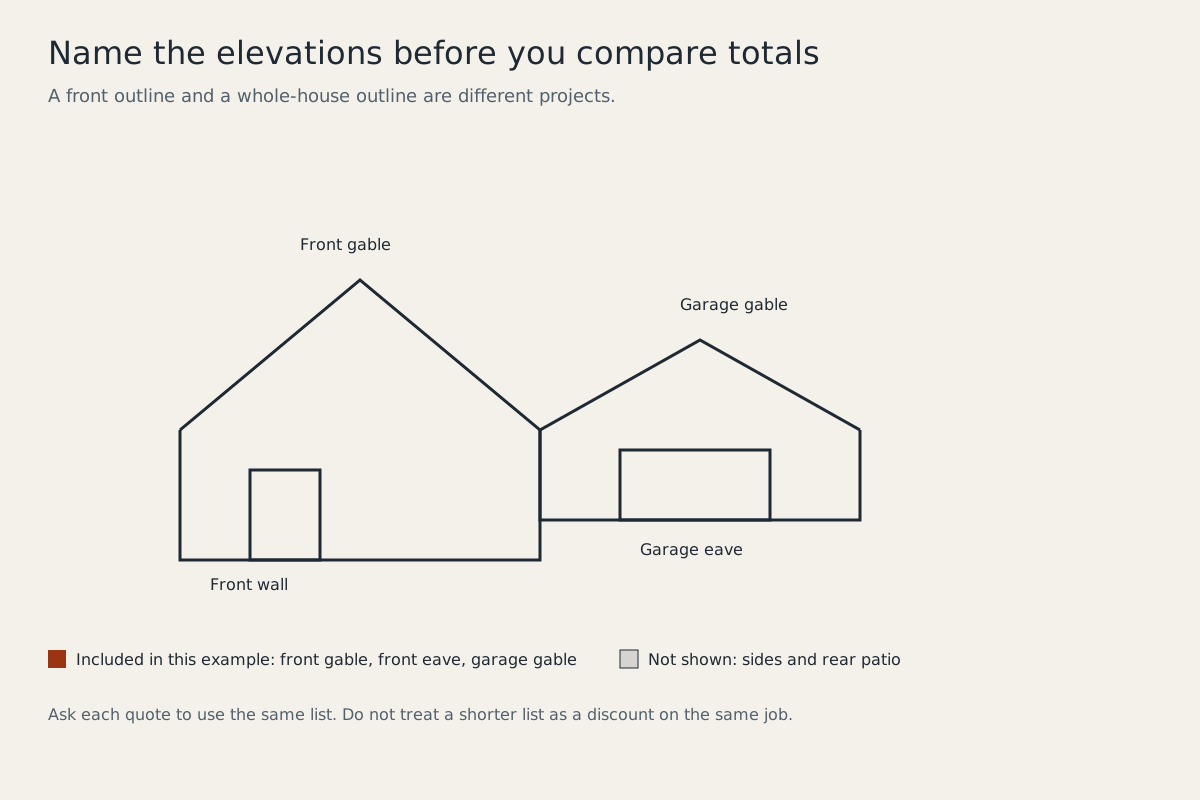
Name each elevation in the request. A shorter list is a different project, not a discount on the same one.
Why is there no published Austin price?
LIT365 quotes from the property, not from a city average. The live site says every quote starts with the property address and what you want to light. It does not list a package price, a per-foot rate, or a typical Austin total. A page that invented those numbers would be guessing at your eaves.
That is also why a neighbor's invoice is a poor budget. Their peaks, trees, and included elevations are not a template. A larger house is not automatically a larger lighting project. A smaller house with several gables is not automatically cheap. Square footage is a weak stand-in for soffit length and height.
Use other cost articles as a list of questions, not as your number. A national per-foot formula describes someone else's assumptions about straight runs, easy access, and a full outline. Your proposal is the budget document for this house. If a figure cannot say which eaves it covers, it is not ready to compare.
What a site-specific estimate is allowed to say
A useful first figure can be preliminary. Photos sometimes support that kind of start. The note should say so. It should also say which sides were visible and which sides were assumed. A figure after someone has looked at the property is further along. Neither one is wrong if the notes match the evidence.
Ask what would change the number. Adding a side run, including a tall gable, or finding a difficult power path should be named as a change in scope. It should not show up as a surprise after you have already lined the bids up.
What should the quote spell out?
A useful quote is a description of work, not only a total. Read it as if you had to explain it to someone who has never seen the house. If you cannot tell which walls are lit, what stays in place, and what is excluded, ask for a clearer version before you compare it with another bid.
LIT365 installs permanent soffit and roofline lighting for homes and businesses in Austin, San Antonio, and Dallas. The system is meant to stay up. You can switch among holiday color, game day, security visibility, and patio ambiance without a seasonal install and takedown. A quote from this team should still name your property and your elevations. A city name alone is not a scope.
| Quote line | What to confirm | Why it changes the comparison |
|---|---|---|
| Elevations covered. | Front, sides, peaks, garage, and patio. | A smaller map is a different project, not a discount on the same one. |
| Roofline features. | Corners, gables, dormers, and height changes. | Turns and peaks add layout work that a straight-foot price hides. |
| Access assumptions. | Stories, slopes, trees, fences, and lift needs. | Hard-to-reach eaves can change time and equipment. |
| What stays installed. | Fixtures, controls, and the power connection as written. | You need to know what remains after the crew leaves. |
| Exclusions. | Repairs, painting, gutter work, and extra electrical. | A low total can omit work another quote includes. |
| Basis of the number. | Photo review or a visit, and what was seen. | A photo estimate and a measured plan are not equal yet. |
Read the scope before the total
Put the two proposals side by side and copy their words, not your memory of the call. Check that each one names the same eaves and peaks. If one says "front roofline" and the other lists the garage return and both front gables, those totals are answering different questions.
Then look at exclusions. Gutter repair, painting, and extra electrical work are easy to assume and easy to leave out. On this site, gutter projects route to sister brand TX Gutter Solutions through the same contact flow. Do not treat a lighting total as a price for gutter work unless the page says both.
A lower number is not automatically the better scope
When one quote is much lower, recheck coverage, access, and what the price is based on. A photo-only figure can be a starting point. A figure after someone has walked the property is further along. Ask the lower bid which sections it left out before you call it the better deal.
How do you compare two Austin proposals?
Fair comparison starts with the same map of the house. If you want only the street-facing eaves, say that in both requests. If you want the patio side too, say that too. Changing the wish list between calls makes the prices impossible to read.
Use one sheet with a column for each provider. Rows that earn their keep are elevations, roof features, access notes, controls as described, exclusions, and whether the figure follows photos or a visit. Leave a row for questions you still have. A bid you cannot explain is not ready to accept.
- Write the elevations you want lit, using the same words in every request.
- Send wide photos of each side, plus closer shots of peaks and tight access.
- Ask each provider which sections the price includes and which it leaves out.
- Compare scope, access, and exclusions before you compare totals.
- Request a revised figure only after the two scopes match.
The permanent soffit lighting page shows the year-round use of one roofline: holiday color, game day, security, and patio zones. Use that as a picture of outcomes, then bring the conversation back to your elevations. Product modes do not replace a written scope.
If you are still deciding between a seasonal crew and a system that stays up, read the guide to holiday light installation costs. That page covers install, takedown, and storage for temporary lights. This page stays on the permanent soffit quote. It does not price a one-season hanging display.
For a wider look at permanent outdoor lighting types, the permanent outdoor lights guide covers product categories and buying questions. Come back here when the decision is what an Austin soffit quote should list.
What should you send before the estimate?
A clear first message beats a perfect design. Include the property address so coverage can be confirmed, and say whether you want lighting, gutters, or both. The service area page is address-first. Exact radius and travel rules are not published there, so do not assume a ZIP code alone qualifies the house.
Photos do most of the early work. Take one wide shot of the front from across the street or the driveway. Then take closer shots of gables, the garage eave, and any side you care about. Repeat that for the patio if it is in the request. Note trees, fences, slopes, and anything that would block a ladder. Mention whether the home is one story or two.
Say what you want the lights to do. "Make it brighter" is hard to price. "Outline the front gables and the garage, and leave the rear for later" is easy to scope. If a phased plan is acceptable, say which phase is first. If you want one complete outline now, say that so both providers bid the same job.
The installation gallery is the place to see finished rooflines. It is not a price list. A photo of a fully outlined stone house can show peaks and turns. It cannot tell you what your side yard will require.
According to the U.S. Department of Energy, LED lighting offers the highest luminous efficacy of current light-source technology, and controls can deliver light only when it is useful. That supports leaving a permanent LED line in place for more than one season. It is not a price for your house. See the Department of Energy's LED basics for the efficiency point, then use your own quote for the dollars.
How should Austin homeowners plan the budget?
Plan the budget around decisions you control. Choose the elevations first. Decide whether a phased outline is acceptable. Ask what the first figure assumes about access and power. Those choices move the quote more honestly than shopping for a citywide average.
Keep the service area in view. LIT365 confirms Austin, San Antonio, and Dallas addresses before a quote. If you are comparing a provider who has not asked for the address, you are comparing a guess. Phone is a fine way to start if the address and the elevation list are ready.
Call LIT365 in Austin at 512-988-3110. San Antonio and Dallas numbers are listed on the service-area page for those markets. Have the address ready so the call can qualify the property instead of inventing a range.
Which comparison mistakes cost you time?
The most common miss is treating two totals as equal when the maps differ. Front-only versus front plus sides will not land on the same number, and it should not. Write the map down and make both bids use it.
The second miss is ignoring exclusions. A price that leaves out a difficult gable, a lift, or an electrical path is not a bargain until those lines are back in. Ask the question in writing and keep the answer with the quote.
The third miss is using a national cost article as your budget. Brand averages can teach you which questions to ask. They cannot tell you what your soffit run will require. For this house, the proposal is the budget document.
The fourth miss is mixing two projects into one total. Lighting and gutter work can share a roofline conversation, but they are not the same line item. If you need both, say so on the form. If you need lighting only, keep the quote on the soffit path.
Request a lighting quote once your elevation list and photos are ready.
Frequently asked questions
How much does permanent soffit lighting cost in Austin?
LIT365 does not publish a citywide price, a package price, or a per-foot rate. The estimate depends on which eaves and peaks you include, how hard they are to reach, and whether the figure is based on photos or a visit. Send the address and the elevation list for a site-specific quote.
Can a photo produce a final permanent soffit lighting price?
Photos can start the conversation and sometimes support a preliminary figure. A final price should say whether it is based on photos only or on a look at the property. Ask which eaves were visible and which were assumed.
Should I price the whole roofline or only the front?
Price the map you actually want. A front outline is a complete project if that is the goal. Adding sides later is a new scope, not a small edit, so say up front if you might phase the work.
Do I need the footage before I ask for a quote?
No. Name the sections and send clear photos. The provider can talk about length after seeing the house. A made-up footage number is less helpful than an honest list of elevations.
Does a permanent system mean no future attention?
It means you are not reinstalling seasonal strings every year. You should still know what the quote covers after installation, and you should ask what is excluded. Permanent describes the mounting, not a promise that the house never changes.