
2026-10-28
Lit-365 Guide 03: Permanent Outdoor Lights
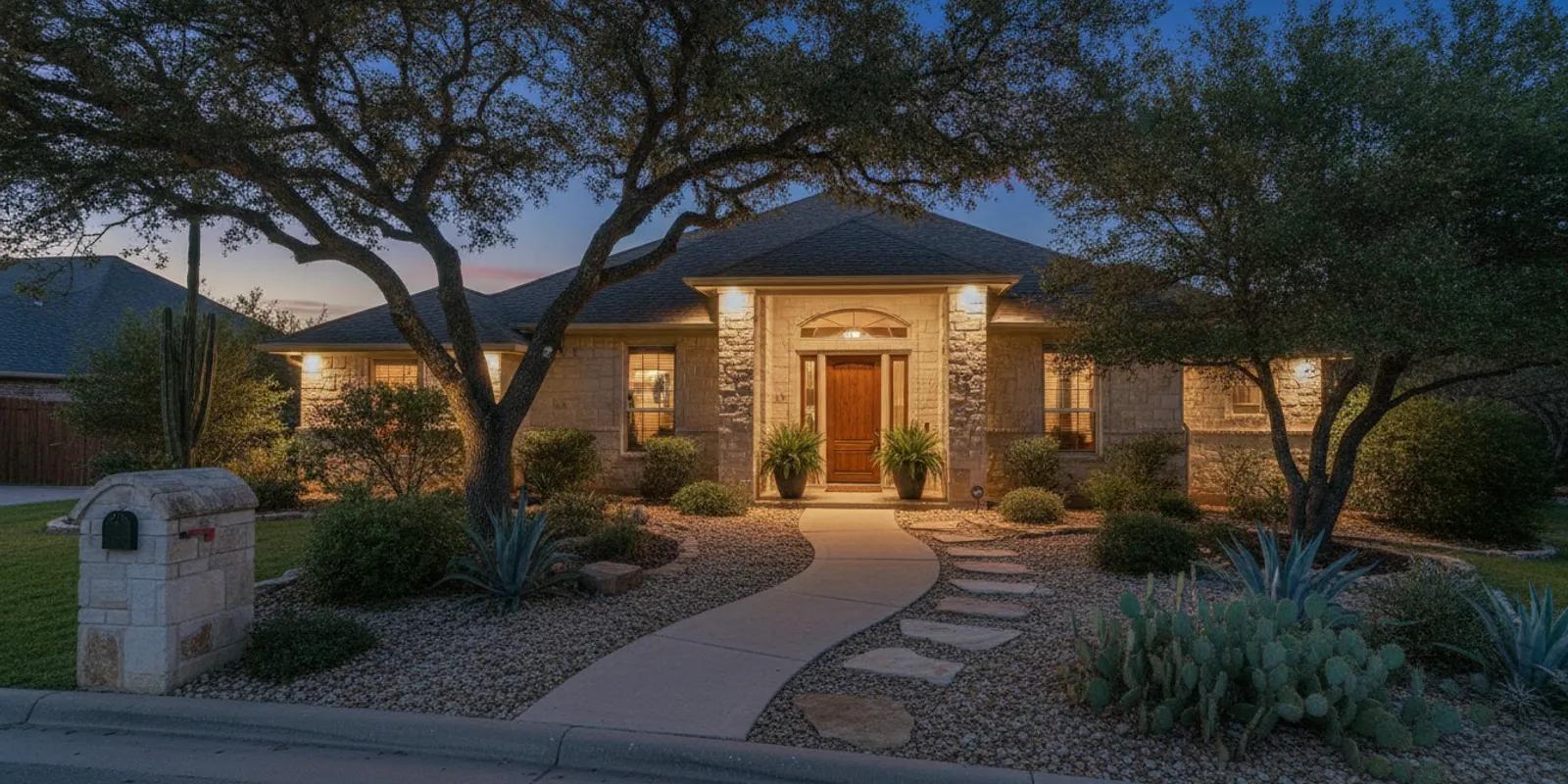
Permanent outdoor lights can help make an approach, doorway, or outdoor gathering area easier to see after dark. For an accessibility-minded plan, the goal is not simply to make a property brighter. It is to make the spaces people use easier to understand, while avoiding glare, confusing shadows, and the assumption that lighting solves every access challenge. This guide explains what to assess and what to discuss with a professional installer.
Request a site-specific lighting quote
What does accessibility mean in an outdoor lighting plan?
Accessibility is not one lighting setting or a single fixture type. It begins with the people who use a property and the routes they need to take. Someone arriving at a front door, moving from a driveway to a porch, visiting a shared building, or using a patio after sunset may need to see edges, changes in direction, door hardware, and other details clearly. A useful lighting plan considers those real activities instead of treating the entire exterior as one uniformly lit surface.
Lighting can support visual orientation by making an approach and destination easier to distinguish. It can also help a household use outdoor areas in the evening without putting up and taking down temporary strings every season. Permanent soffit and roofline lighting is one option for year-round exterior use. It can be planned for holiday color, everyday accent lighting, and patio ambiance as well as visibility. Its value depends on the property, the chosen layout, and the way people use the space.
Accessibility is broader than visibility. A light cannot widen a narrow walkway, repair an uneven surface, add a handrail, remove a step, or make a door easier to open. Nor should decorative lighting be treated as a replacement for lighting required by applicable building rules or for purpose-designed pathway, stair, or emergency lighting. If a project involves a public accommodation, shared property, or a required accessible route, consult the appropriate design professional or authority about the standards that apply. Treat permanent exterior lighting as one possible part of a thoughtful environment, not a certification or guarantee of accessible conditions.
Which routes and destinations should you assess first?
Start with the path of travel rather than with a lighting product. Walk the property after dark, or ask the people who use it regularly to describe where they feel unsure. Consider the route from the public sidewalk or parking area to the entrance, then the transitions from the entrance to the rooms or outdoor spaces used in the evening. For a business or shared property, consider how visitors approach, identify an entrance, and move between commonly used areas.
- Arrival point: Note where a person leaves a vehicle, reaches the walk, or turns toward the building.
- Route changes: Identify turns, narrow sections, surface changes, steps, ramps, gates, and places where a path crosses another area.
- Destination: Mark the door, gate, patio, or other place people need to locate. A visible destination can help the whole approach feel easier to follow.
- Task areas: Consider where someone may need to find a lock, handle, intercom, house number, or other feature.
- Obstacles and edges: Record low walls, planters, changes in level, and objects that can be difficult to notice in shadow.
- Neighbors and windows: Note nearby homes, bedroom windows, streets, and other places where unwanted glare or spill could matter.
Do not assume every user experiences the property in the same way. Ask household members, tenants, employees, or regular visitors what would make the route clearer for them. A person with low vision may want different visual cues from someone who mainly needs to identify a doorway or avoid a dark transition. A family may also have visitors whose needs are not known in advance. The practical objective is to identify the specific locations where seeing the route or destination becomes difficult.
For a shared or commercial property, ask who is responsible for reviewing access needs and applicable requirements. A lighting installer can discuss a lighting scope, but a site may also need input from an architect, accessibility consultant, electrician, property manager, or local authority. Make that distinction early so a lighting proposal is not mistaken for a complete accessibility review.
How can permanent roofline lighting help people read an approach?
A roofline can provide a consistent visual reference for a building after dark. A low-profile LED system installed along the soffit or roofline can outline the home and contribute to an everyday exterior-lighting plan. That visual frame may help a visitor identify the building or its general orientation, especially when the lighting design relates coherently to the entrance and the rest of the property.
However, roofline lighting is above the walking surface. It does not automatically reveal every edge, step, or change in grade along a path. The light may be too indirect for a specific task, and a building outline by itself does not explain which door is the correct entrance. Think of it as one layer in the overall scene. Ask how the roofline plan relates to existing entry, path, porch, and landscape lighting, and whether other dedicated fixtures or physical changes are needed.
Permanent lighting can also remove the recurring task of installing and removing seasonal strings at roof height. That convenience can be meaningful for households that want a year-round option and prefer not to handle temporary decorations each season. The system can support different occasions, including holidays, game days, and everyday use. The exact placement and available controls should be confirmed for the proposed system rather than assumed from a photo or a general description.
Explore the company's description of permanent soffit lighting for homes to understand the type of roofline installation being considered. Then connect that roofline concept to the actual walking routes and tasks on your property. A clean-looking outline is not enough if it leaves an important approach or entrance hard to distinguish.
How can you reduce glare, shadows, and visual confusion?
More light is not always better. A bright source in a person's line of sight can be uncomfortable, and a strong contrast between a brightly lit wall and a dark path may make the path harder to interpret. Reflections from glass, glossy paving, or wet surfaces can also change the appearance of an outdoor space. Look at the scene from the viewpoints of people walking toward the building, not only from the street or from the place where a fixture is installed.
Ask how the plan will keep light directed toward useful areas and avoid unnecessary spill toward neighbors, windows, or drivers. Discuss whether the chosen brightness and color appearance will make the approach easy to read without creating a harsh focal point. The suitable result depends on mounting position, nearby surfaces, existing fixtures, and the distance between the light source and the person using the route. Do not select a setting based on a product image alone.
Shadows deserve equal attention. A planter, column, deep porch, tree, or projecting roof can interrupt illumination and create a dark pocket. A single bright source may also cast a long shadow across a path. Walk the route after installation or during a demonstration if available, and inspect it from more than one angle. If a feature disappears into a shadow, ask whether a different position or a supplemental fixture is appropriate.
Color and changing patterns affect how the space feels and how clearly it communicates. A holiday effect can be appropriate for a celebration, while a calmer everyday appearance may be easier to interpret for ordinary arrivals. If the system supports customizable colors, patterns, or schedules, ask how to set a steady everyday scene and how quickly the household can switch between occasions. Confirm the available options and controls with the installer. Avoid a fast-changing or visually busy effect on a route where people need stable cues to move safely.
Schedules are useful only if they fit the way a property is occupied. Consider when residents or visitors normally arrive, whether the entry is used at different hours, and how the lights will behave when plans change. Do not assume a feature will operate in a particular way; have the installer explain what the proposed system supports, how it is configured, and what the owner needs to do. A simple, understandable routine is more useful than a complicated setup no one remembers how to use.
What can roofline lights not do?
Permanent outdoor lights do not correct physical barriers. If a route is blocked, uneven, too narrow, or difficult to use, address that condition directly with the right professional. Light can make a feature more visible; it cannot make the feature itself accessible. The same principle applies to stairs, ramps, railings, door thresholds, gates, and accessible parking. Make a list of any physical changes needed alongside the lighting request.
Nor does a general roofline system necessarily provide the focused illumination needed for every task. Locating a keyhole, reading a sign, using a keypad, seeing a stair edge, and navigating a long path are different activities. A lighting plan should not promise that one installation will meet every need across the property. Ask whether the scope is limited to the roofline or whether it includes any other lighting, and get each included area clearly identified.
Lighting also cannot guarantee that a person will avoid a fall, that a route meets a legal standard, or that a property is secure. Avoid claims of guaranteed safety or accessibility. If the property needs a formal accessibility assessment, use qualified professionals for that work. The installer can still be a useful partner in planning the lighting portion by understanding the route, desired use, and areas the customer wants included.
How should you compare a roofline plan with other outdoor lighting?
Different lighting approaches address different parts of an exterior. Comparing them by purpose helps prevent a mismatch between the requested work and the visibility problem you want to solve. The table below is a planning aid, not a product specification or a promise about what any one installation includes.
| Approach | Potential role | Questions to ask |
|---|---|---|
| Permanent soffit or roofline lighting | Creates a year-round visual outline and supports everyday accent, holiday, and other occasion lighting. | Which elevations are included? How does the outline relate to the entrance and walking routes? What controls and scenes are available? |
| Entry or porch lighting | Can help identify a specific door and the immediate area where people arrive or use hardware. | Is the doorway clearly distinguished? Are there shadows, reflections, or glare at eye level? |
| Path or step lighting | May provide more direct visual cues along a walking surface or at a change in level. | Are the path edges and transitions visible? Does the arrangement need a qualified design review? |
| Motion-activated lighting | Can add light when movement is detected in a particular area, depending on the product and setup. | Will the trigger area and timing suit the people using it? Is there a steady-light option for regular arrivals? |
These approaches can coexist. A roofline system may make the building easier to identify, while a focused entry or path fixture handles a specific task. If an area is important to navigation, describe it explicitly rather than assuming that a general roofline scope will cover it. The right solution may be a combination, a change in placement, or work outside the scope of a lighting installer.
To see examples of completed roofline work, browse the permanent lighting installation gallery. Use photographs as a starting point for discussion, not as evidence that the same layout or result will fit your address. Building shape, roofline details, landscaping, and site access differ from home to home.
What information should you prepare before asking for a quote?
A site-specific quote starts with the property and the scope. Before contacting an installer, write down the address, the elevations or roofline sections you want lit, and the way you expect to use the lighting. If your main concern is access after dark, explain the route and the specific point where visibility becomes difficult. A few clear observations are more helpful than a broad request for the brightest possible setup.
- Property address: This lets the company check whether the property can be considered for service. Do not assume every address in a named city qualifies.
- Areas to include: Identify the front, sides, rear, porch, patio, or other elevations you want considered. Separate must-have areas from optional ones.
- Route and purpose: Describe where people arrive, where they go, and whether the priority is wayfinding, an everyday accent, a gathering area, a holiday scene, or several uses.
- Existing conditions: Mention current fixtures, trees, overhangs, nearby windows, difficult shadows, and any physical access issue that needs separate attention.
- Users and timing: Explain when the area is used and any preferences about steady illumination, colors, patterns, or schedules.
- Access for installation: Point out known site constraints that could affect how the roofline can be reached. Ask the installer what information or site visit is needed to assess them.
Photos can help explain the request, particularly if you include a wide view of the building and closer views of the entry and route. Take them from the direction a visitor would approach. If possible, include a dusk or nighttime photo showing the current conditions, while recognizing that a photograph may not capture glare or depth accurately. Do not climb a ladder or enter an unsafe area to take pictures.
For an accessibility-focused request, distinguish between the lighting work and any building changes. Tell the installer if another professional has identified a route, step, or entrance issue. Ask which requested work is included in the lighting proposal and which items require a different provider. Clear boundaries help everyone understand what the quote does and does not cover.
How do you evaluate a permanent outdoor lighting proposal?
Read the proposal for scope before comparing totals. A quote should make it possible to understand what is being considered at your address, what is excluded, and what questions remain. LIT365 does not publish a citywide price or a standard per-foot rate; estimates are site-specific and begin with the property address and the elevations the customer wants lit. A figure from another property, a general online estimate, or a product price is not a reliable substitute for your own project scope.
Use these questions when reviewing the plan:
- Which sections are included? Confirm the elevations and roofline areas rather than relying on a vague description such as “whole house.”
- What is the lighting intended to do? Ask the installer to relate the proposed layout to your stated everyday, seasonal, or access-oriented goals.
- How will it look from the route? Discuss glare, shadows, nearby windows, and whether the entrance can be distinguished.
- What does the project require at this property? Ask how roofline access, building shape, site conditions, and requested scope affect the estimate. Do not assume a factor is included unless the proposal says so.
- What controls or scenes are part of the proposed system? Ask about the specific available colors, patterns, and schedules, and how an everyday setting differs from a holiday display.
- What is outside the quote? Confirm whether path lights, entry fixtures, electrical work beyond the described installation, repairs, or accessibility improvements are excluded.
- What happens next? Clarify what information or site review is needed before the scope and estimate can be finalized.
When comparing two proposals, make a side-by-side list of included elevations, intended uses, installation assumptions, controls, and exclusions. A lower figure may reflect a smaller scope; a higher figure may include areas or work that the other proposal omits. Ask each provider to explain differences rather than treating unlike scopes as equivalent. Avoid accepting a verbal promise about accessibility, performance, or a warranty unless it is documented and supported by the company's stated terms.
Professional installation is also about fit and finish. Ask how the proposed layout will relate to the home and what workmanship details the estimate covers. The customer should be able to understand what is being installed and where, without needing to infer it from an image. If a particular finish, control feature, or outcome matters to you, state it clearly and ask for confirmation in the written scope.
What local details matter for Austin, San Antonio, and Dallas?
LIT365 serves Austin, San Antonio, and Dallas, but a city name alone does not confirm that a particular property can be quoted. Address qualification comes first. Exact service radius, exclusions, and travel policies should not be assumed. Share the complete address and let the company confirm whether the project is in scope.
Local site conditions still matter to the plan. The building's roofline, nearby trees, the position of neighboring homes, existing exterior fixtures, and how the property is used all affect the conversation. Rather than assuming that every home in a city needs the same layout, describe the exact elevations and routes you want considered. The service-area information can help you understand the named markets, while an address-specific conversation establishes whether the property is a fit.
For HOAs or commercial properties, also consider shared expectations. Residents, visitors, staff, and property managers may use the exterior at different times and have different preferences about color, brightness, or schedules. Agree on the ordinary everyday scene and the person responsible for changing special-event settings. Ask whether the proposed work needs approval from an association, landlord, property manager, or another decision-maker before scheduling.
How can you plan for different household and visitor needs?
A plan that works for one person may not work equally well for everyone who uses the property. Invite household members to describe the route from their own perspective. A child may notice a dark corner; an older visitor may be concerned about a step; a person with low vision may need a clearer distinction between the approach and the destination. Listen to those observations without assuming that age or disability alone tells you what lighting is needed.
If visitors are unfamiliar with the property, simple visual organization can help. A clearly identified entrance, a consistent approach, and a calm everyday lighting scene are easier to understand than a display that changes continually. If the property has several doors, clarify which entrance guests should use. Where appropriate, pair lighting decisions with clear signs, unobstructed routes, and other access improvements.
Think about times when the household's routine changes. A regular schedule may not cover a late arrival or an outdoor gathering that runs longer than expected. Ask what adjustment is possible, who can make it, and whether the proposed controls are manageable for the people who need them. Keep instructions accessible to the household and do not rely on one person's memory to maintain a setting that others depend on.
Finally, consider the effect of event scenes on the normal route. A colorful holiday arrangement can be enjoyable, but people still need to recognize the door and walking area. Agree on a stable setting for ordinary use and decide when decorative patterns should be active. If changing patterns feel distracting or make an entry hard to read, choose a simpler scene for that occasion.
What should you review after installation?
Review the property at the times and from the angles that matter. Walk from the arrival point to the entrance, then move between any outdoor areas included in the plan. Check the view at normal walking pace, not only from a stationary position. Look for bright sources in the line of sight, dark gaps, confusing reflections, and places where the route appears to end or change direction unexpectedly.
Ask the people who use the route whether the result addresses the original concern. If something is unclear, describe the exact location and condition: for example, a shadow at the turn, glare from a window, or an entry that blends into the rest of the building. Specific observations are easier to discuss than a general statement that the property is too dark. Do not alter electrical equipment yourself; raise installation or control questions with the appropriate professional.
Review the everyday and special-event settings separately. Confirm that the household understands how to select the intended scene and schedule. If the route is used by visitors or staff, make sure the normal setting remains understandable to them as well. A lighting plan should be judged by how it works during ordinary use, not only by how it looks in a showcase photo.
Frequently asked questions
Can permanent outdoor lights make my home accessible?
They can contribute to visibility and orientation, but they do not by themselves make a property accessible or guarantee safe movement. They do not remove physical barriers or replace any required accessible-route features. Identify the specific issue and involve the appropriate design or accessibility professional when a formal assessment is needed.
Are roofline lights enough to illuminate a walkway?
Not necessarily. Roofline lights create an overhead outline, but a particular path, stair, or entrance task may need a dedicated lighting approach. Have the installer review how the proposed roofline scope relates to the walking surface and ask whether other fixtures or professional input are needed.
Can I use permanent lighting for both everyday use and holidays?
Permanent roofline lighting can be planned for year-round use as well as holiday color and other occasions. Ask which colors, patterns, and schedules are available for the specific proposed system, and decide what steady setting will make sense for ordinary arrivals and outdoor use.
Does LIT365 publish a standard price for a home in Austin?
No citywide price or standard per-foot rate is published. A quote is specific to the property address and the elevations the customer wants lit. Share the address and requested scope to start that conversation.
Share your address and lighting priorities
Start with the route people actually use, identify what they need to see, and keep the limits of lighting clear. A well-defined scope makes it easier to discuss whether permanent roofline lighting belongs in a broader plan for your property.