
2026-11-05
Permanent Lights on House vs Strings
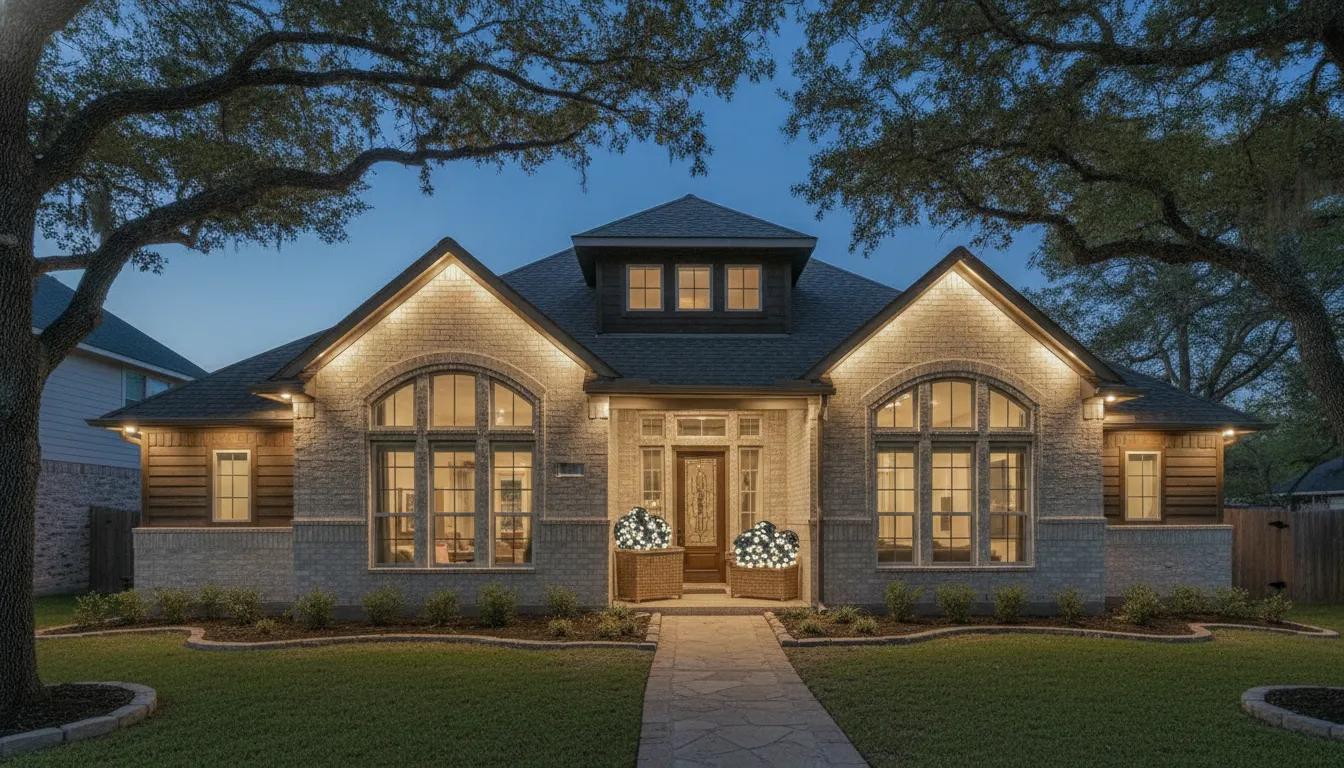
If you are comparing permanent lights on house eaves with string lights, start with the job you want the lighting to do. A seasonal string-light display can be changed, expanded, or stored after a holiday. A professionally installed permanent roofline system stays in place and can support everyday accent lighting, holidays, game days, and other occasions. For Texas property owners, the better choice depends on the parts of the home you want to light, how often you decorate, and whether recurring setup is worth keeping in your routine.
Call (512) 988-3110 to discuss your lighting project, or request a site-specific quote online.
Permanent roofline lights and string lights solve different problems
These two options overlap around holiday decorating, but they are not interchangeable products. String lights are temporary lighting that you place where you want it for a selected season or event. A permanent system is a planned installation along selected soffits or roofline sections. Its hardware remains on the home, so the design, daytime appearance, access, controls, and included elevations all matter before the work begins. You can review LIT365's permanent outdoor lighting service as a starting point, then compare the scope with your own property and routine.
That distinction is useful because “lighting the house” can mean several different things. One homeowner may want a front roof outline for December. Another may want the home to look finished on ordinary evenings and change colors for celebrations. Someone else may want to wrap trees, railings, windows, or a walkway, areas that a permanent roofline scope may not include. Define the outcome first, then compare the approach that actually covers it.
Quick comparison: permanent lighting vs string lights
The table below is a planning comparison, not a promise about what every product or installation includes. A proposal should identify the actual scope for your address.
| Consideration | Permanent roofline lighting | String lights |
|---|---|---|
| Installation routine | Installed once for the selected roofline areas, then operated and cared for according to the system and installer guidance. | Placed, checked, removed, and stored whenever the homeowner or installer chooses to use the display. |
| Best fit | Homeowners who want a consistent roofline option for more than one season or occasion. | People who enjoy changing the display or lighting different areas for a particular event. |
| Where it can go | Planned around selected soffits, eaves, and roofline elevations. | Can be arranged along a roof edge, porch, railing, tree, window, or other suitable location, subject to safe installation. |
| Appearance in daylight | Important because the installed hardware remains on the home year-round. | Usually absent after removal, though attachments or storage considerations may remain. |
| Changing the layout | The installed layout is a planned foundation; ask what colors, patterns, and schedules the proposed system supports. | The layout can be redesigned or expanded each season using the lights and accessories available. |
| Quote process | Should be based on the property address, requested elevations, access, and project scope. | May be self-planned or purchased as a seasonal installation service with a chosen display scope. |
When permanent lights on house eaves may fit better
A permanent roofline system may fit your routine if the same parts of the home matter throughout the year. You might want a restrained everyday appearance, a holiday display in December, a different look for game days, or a welcoming glow when using an outdoor area. Because the system remains installed, you are planning an exterior feature rather than buying a decoration for one date.
You want to reduce recurring roofline setup
Seasonal decorating can involve finding the lights, testing strands, planning the layout, arranging safe access, securing the display, checking it after installation, taking it down, and storing it. Some homeowners enjoy that ritual. Others find that a busy family schedule, a tall roofline, or the same setup every year turns it into a chore. Permanent lighting changes the recurring task for the roofline areas it covers. It does not eliminate every decision or every care question, but it avoids rehanging and removing the primary installed system each season.
Think about the last few holiday seasons rather than an idealized routine. Did you decorate the areas you intended to? Did you postpone installation because of time, weather, access, or storage? Did you hire someone for installation and removal? Those answers help you judge whether convenience is a meaningful part of the project.
You want the roofline to have a role beyond one holiday
Permanent lighting can be relevant when the roofline should contribute to more than a December display. A homeowner may want an everyday accent, a game-day color scheme, extra visibility around the home, or a patio-related evening atmosphere. The exact result depends on the installed system, placement, and controls, so ask the installer to explain the proposed capabilities instead of assuming that every permanent-lighting system behaves the same way.
The distinction between a roofline and the rest of the property still matters. Permanent soffit lighting does not automatically replace pathway lighting, entry lighting, landscape fixtures, or focused task lighting. Describe the areas you want to use and the view that matters. A front roofline may make the home recognizable from the street while doing little to illuminate a rear patio or a step.
You value a planned, consistent appearance
String lights give you freedom to redraw the display. That is useful when variety is the point. Permanent roofline lighting starts with a defined installation, so the home has a consistent outline and the inactive daytime appearance is part of the decision. Review the roofline in daylight and at night. Consider trim, soffits, corners, transitions, windows, and the way the building is viewed from the street, driveway, front walk, or patio.
Use the LIT365 installation gallery as a conversation starter about roofline placement and finished appearance. Photos show possibilities, not a guarantee that another home's layout will fit your property. Roof shapes, elevations, landscaping, access, and the parts of the home visible from neighboring views all differ.
When string lights may be the better fit
String lights may be the better primary approach when temporary flexibility matters more than a fixed roofline plan. You may enjoy creating a new holiday display each year, lighting trees and railings in addition to the house, or deciding from season to season whether you want to decorate at all.
You want to change the design substantially
Temporary strings can support a different layout, color mix, or collection of decorated areas each year. That freedom is valuable for homeowners who treat decorating as a creative project. It also makes it easier to concentrate the display on a party, a particular holiday, or a small area without committing to a permanent installation.
There are tradeoffs. A new layout requires new planning, and the available result depends on the lights, clips, extension equipment, mounting surfaces, and safe access. If you use a professional seasonal installer, ask whether the service includes design, installation, removal, storage, repairs, and the areas you want decorated. “Whole house” can mean different things from one provider to another.
You want to light areas beyond the roofline
A temporary display can extend to trees, porch railings, columns, windows, fences, and yard features when those areas are suitable for safe decoration. A permanent roofline installation is more focused. That focus can create a clean architectural outline, but it should not be mistaken for coverage of every place where you might want a holiday light.
Make a list of must-have areas and optional areas. If the roofline is the main problem you want to solve, a permanent plan may address it while temporary decorations continue to handle trees or a front-walk feature. If you want the entire yard redesigned every year, string lights may remain an important part of the plan even after a permanent system is installed.
You prefer to defer a permanent exterior change
A permanent system is an improvement to selected parts of the home, not simply a box of decorations. Before deciding, consider whether you are comfortable with the proposed daytime appearance, the installation scope, and the way the lighting will fit with future exterior changes. If you are still experimenting with the look or expect to change the home soon, a seasonal approach may give you more flexibility while you clarify your long-term priorities.
How to compare appearance and coverage
Begin with a simple property map. Mark the front, side, and rear elevations; roofline transitions; porch or patio areas; trees; pathways; and the viewpoints that matter. Then label each item as must include, nice to include, or not part of this project. That stops you from treating a front-roofline plan and a display that also covers trees and the walkway as the same scope.
For permanent lighting, ask which elevations are included and where the installation will sit in relation to trim and soffits. Ask how the system looks when it is not displaying holiday colors. If you care about a rear patio or a side view, say so. A front-only proposal will not automatically address those areas.
For string lights, record where the display will attach and how you will reach those locations safely. Note whether the plan includes trees, railings, windows, or only the roof edge. If a professional will install the lights, ask how the provider handles access, weather, removal, storage, and a failed section during the season. These questions reveal the real difference between a small decorative project and a full seasonal service.
How to compare effort without inventing a payback
There is no universal cost or payback calculation that fairly compares every permanent-lighting project with every string-light display. A homeowner may reuse existing strings and do the work personally, while another may buy new materials and hire installation and removal. A permanent project also varies by address, requested elevations, access, and scope. Comparing unlike projects with a made-up average can be less useful than recording what each option actually includes.
For your current seasonal routine, write down:
- Which lights, clips, cords, or replacement supplies you buy or already own.
- How many hours you spend planning, installing, checking, removing, and storing the display.
- Whether you pay for any installation, removal, repair, or storage help.
- Which elevations and outdoor features the display covers.
- How often you use the lights outside the main holiday period.
For a permanent proposal, ask what is included at your address, which elevations are covered, what site conditions affect the work, and what the owner should know about operation and care. Lit-365 does not publish a citywide price or a standard per-foot rate. A quote should start with the property address and the elevations you want considered. You can review the company’s permanent outdoor lighting service and then provide the project details needed for a site-specific discussion.
Texas planning questions for Austin, San Antonio, and Dallas
Texas homes can have different roof forms, exterior materials, covered patios, mature trees, and exposure conditions. A photo or a city label is not enough to establish the right scope. Share the complete address and let the provider confirm whether the property can be considered for service. LIT365 names Austin, San Antonio, and Dallas as its markets, but exact property qualification and project scope still come before assumptions about service radius or travel.
If you live in an HOA or a neighborhood with shared standards, check any rules that apply before selecting colors, operating periods, mounting locations, or visible exterior changes. A commercial property may have its own operating expectations. Ask how your preferences show up in the proposed plan. Do not assume a generic app feature, schedule, brightness level, or color effect is included until it is confirmed for that system.
Texas weather and seasonal conditions also make safe planning important. Do not climb or reach an unsafe roofline to take measurements or install a display. Tell the provider about access limitations, existing fixtures, trees, gutters, and any area that may affect the proposed installation. The goal is not to predict a result from an internet photo. It is to give the installer enough context to discuss the real property.
A practical decision checklist
Use these questions before choosing one approach or combining both:
- What area do I want lit? Identify the elevations and features, not just “the house.”
- How often will I use the lighting? Include ordinary evenings, holidays, game days, parties, and patio time.
- Do I want the layout to change? A permanent roofline offers a planned foundation; strings offer seasonal redesign.
- How do I feel about recurring setup? Count your actual preparation, access, installation, removal, and storage work.
- What should the home look like in daylight? Review the permanent installation area before approving a plan.
- Which view matters most? Note the street, driveway, front walk, windows, side elevation, or patio.
- What will the proposal exclude? Confirm whether trees, pathways, entry fixtures, electrical work, and removal are included.
- Do I need both? A permanent roofline can provide a consistent base while string lights add temporary features elsewhere.
Can you use permanent lights and string lights together?
Yes. Choosing permanent roofline lighting does not require you to stop decorating. A homeowner may use the installed roofline as a consistent foundation, then add temporary lights to a tree, railing, wreath, or yard feature for a specific celebration. This combination can be useful when you want to simplify the most difficult roofline work but still enjoy changing parts of the display.
The important step is to plan the two layers together. Decide which elements should be calm and consistent, which should change seasonally, and how the displays will look from the main viewpoints. Ask the permanent-lighting provider to identify the included elevations and any considerations that affect the temporary additions. The result should match the way you actually use the property, not an assumption that one lighting type must replace the other.
Call (512) 988-3110 or request a site-specific LIT365 lighting quote with your property address and the roofline areas you want to discuss.
Frequently asked questions
Are permanent lights on house eaves the same as string lights?
No. String lights are temporary decorations that can be placed and removed for a season or event. Permanent roofline lighting is planned and professionally installed on selected areas of the home, then left in place for year-round use. They may serve similar holiday purposes, but they differ in installation routine, daytime appearance, coverage, and flexibility.
Are permanent roofline lights only for Christmas?
No. A permanent system may be used for everyday accent lighting, holidays, game days, security visibility, or patio ambiance, depending on the proposed installation and its controls. Ask the installer which uses, colors, patterns, and schedules are supported by the specific system rather than assuming every product offers the same features.
Will permanent lighting cover my whole property?
Not automatically. A roofline proposal may cover the front, selected sides, the rear, or another defined set of elevations. It may not include pathways, trees, entry fixtures, landscape areas, or a patio. List the areas that matter to you and confirm what the proposal includes and excludes.
How should I request a quote for permanent lighting in Texas?
Provide the property address, the elevations or roofline sections you want considered, the occasions you want to support, and any access or appearance concerns. LIT365 serves Austin, San Antonio, and Dallas, but address qualification and site-specific scope come first. A complete request gives the provider a better basis for discussing the project than a generic price question.
Is it reasonable to keep string lights after installing permanent roofline lighting?
Yes. Permanent roofline lighting can handle a consistent foundation while temporary strings add a tree, railing, wreath, or other seasonal feature. The choice depends on the look you want and the areas each layer covers. Discuss the permanent scope clearly so you know which roofline work the installation is intended to replace and which decorations you still want to add.