
2026-10-21
How to Schedule Permanent Holiday Lights for Every Celebration
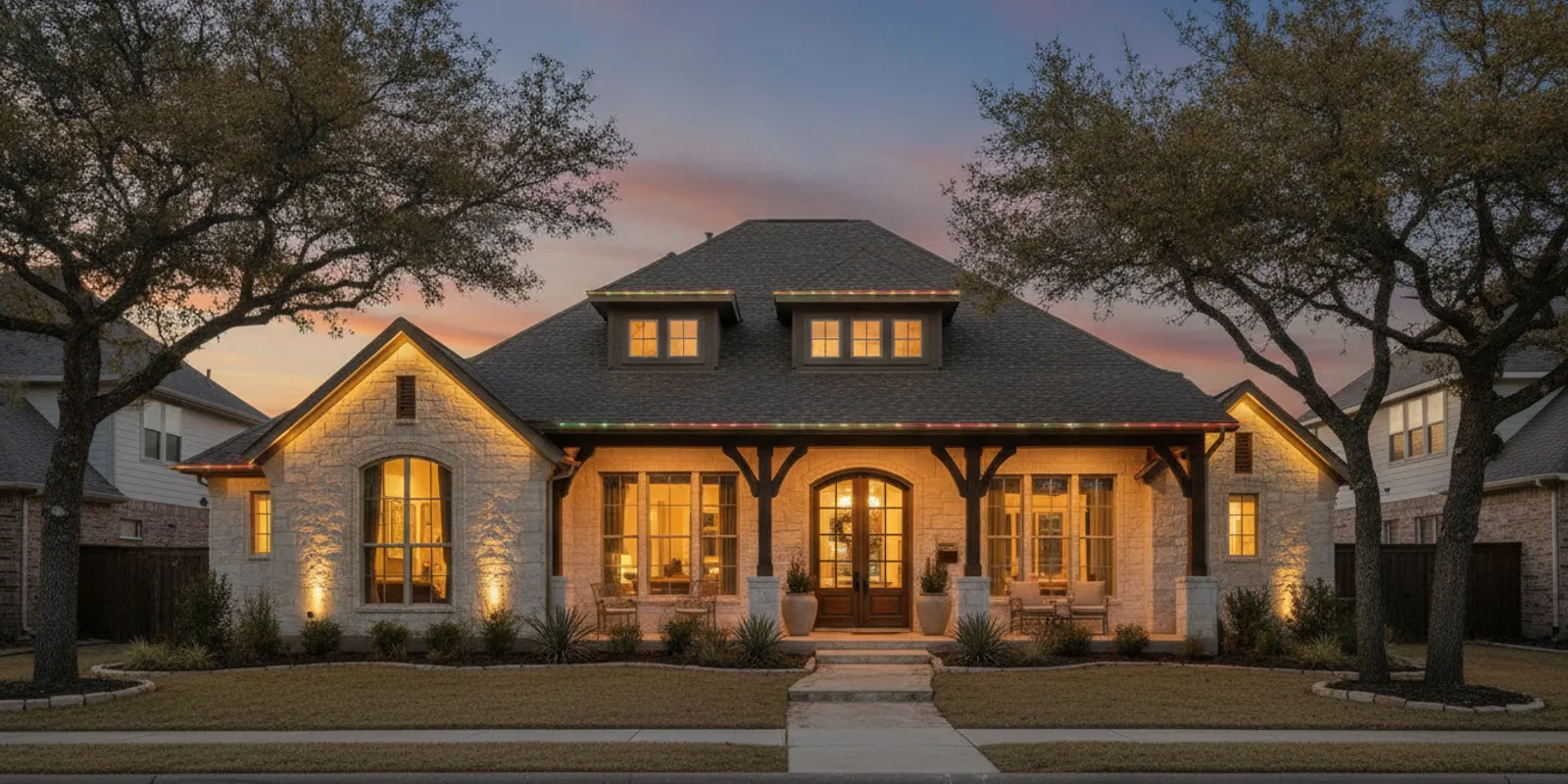
Permanent holiday lights can make it easier to mark Christmas, birthdays, game days, and other celebrations without hanging and removing temporary strings each season. The best schedule starts with how you want the home to look on ordinary evenings, then adds special occasions without turning every night into a holiday display.
Ask for a lighting quote for your home
What should a good year-round lighting schedule do?
A useful schedule gives each occasion a purpose. Christmas may call for a familiar seasonal look, a birthday could be a short celebration, and game day might be a color scheme that shows team spirit. On other nights, a more restrained accent can suit the home without making it feel as if a holiday is underway.
Think of the schedule as a set of choices rather than one setting that has to work all year. The choices include the occasions you care about, the appearance you prefer for each one, and when each look should be used. A clear plan helps you communicate what you want when you discuss a professionally installed system. It also helps avoid a common planning problem: choosing many effects before deciding when and why you will use them.
For a household, convenience matters as much as appearance. You may want a seasonal look during a defined part of the year, a special display for a party, and a quieter everyday option between events. A plan that is easy to understand and maintain is more likely to fit family routines than an elaborate calendar full of one-off changes.
It can help to define what success looks like before selecting the occasions. For one household, success might mean the house looks welcoming from the street on ordinary evenings and festive during a few key dates. Another family may care most about being able to change the appearance when relatives visit or a team has an important game. Write down the two or three outcomes that matter most, then use them to judge each proposed schedule choice. If an option does not support one of those outcomes, it may not need its own place in the calendar.
Start with everyday use, not the biggest holiday
It is tempting to start with the most colorful Christmas display. But the system stays on the home after the holiday, so begin by deciding what you want it to look like on a typical weeknight. Consider whether everyday lighting should be subtle, visible from the street, or focused on creating a welcoming atmosphere around the property. The answer gives you a baseline for every special schedule.
Then list the occasions that genuinely matter to your household. A useful list might include a few major holidays, birthdays, an anniversary, graduation, a favorite team’s game days, and gatherings on the patio. You do not need a different look for every date. Several events can share one celebratory style, while the most important holiday or tradition gets its own treatment.
Separate recurring occasions from one-time events. Christmas returns on a predictable date, while a graduation party or family reunion may move from year to year. A simple distinction makes it easier to decide whether a look belongs in a seasonal plan or should be set up just for an event. It also keeps the calendar manageable.
Before you choose patterns, write down the intended role of each use: everyday accent, holiday celebration, game day, or gathering. This small step prevents the schedule from becoming a list of colors with no clear connection to how you live.
One practical way to make the baseline specific is to describe the view you care about. For example, describe a composed roofline appearance on regular weeknights, a more festive look for December, and a short celebration option for a birthday gathering. That sentence describes use without assuming a particular controller, feature, or technical setup. You can also note whether the primary view is from the street, driveway, or patio. This helps keep the everyday choice tied to the property and not just to a sample image.
Which occasions deserve their own look?
Give a date its own look when the occasion is meaningful enough that you will want to recognize it distinctly. Christmas, a major family celebration, or a team event may justify a separate choice. If two occasions call for much the same mood, combine them into one category instead of creating more settings than you will remember.
Try a three-level calendar. First, identify your everyday appearance. Second, define seasonal periods such as the winter holidays. Third, list special events that happen only occasionally. That hierarchy gives ordinary use priority and keeps temporary celebrations from taking over the entire plan.
- Everyday: Choose a restrained look that works on regular evenings and does not depend on a special date.
- Seasonal: Decide when a holiday look begins and when you want to return to the everyday appearance.
- Event-based: Note birthdays, game days, parties, and other dates that may call for a short-lived change.
Use the calendar to identify the occasions, not to promise yourself a complex change for every single one. The point is to make choices ahead of time so the lighting supports the event rather than adding another last-minute task. For a family, fewer clear choices can be easier to coordinate than an ambitious schedule that nobody remembers to update.
A quick test can help determine whether an event merits a separate setting: Would you remember to change the lights for this occasion? Would the display meaningfully differ from another celebration option? Would you use it again next year? If the answer is no to most of those questions, group the date with a broader shared celebration category. If a particular tradition is important and has a distinct mood, make it a named entry. This keeps the schedule personal without making it unwieldy.
How can you plan a Christmas lighting period?
Christmas often spans more than one evening. Decide whether you want a seasonal look for a defined stretch of the year, a stronger display on selected celebration days, or both. You might prefer a consistent festive appearance throughout the season, then reserve a distinct variation for a gathering. The right plan depends on your traditions and the look that suits the house.
Set the beginning and end of the seasonal period in plain language. For example, note the week you would like the Christmas look to begin and the point when you want to return to your everyday setting. There is no universal date that fits every household. Some families enjoy a longer season; others prefer a shorter window around their celebrations.
Next, decide whether every evening in that period should look alike. A single seasonal choice is simple to manage. A second choice for a party or special night adds variety without making the whole calendar complicated. If you want multiple appearances, write down when each is intended to be used rather than relying on memory.
Also consider how the display looks from the street and from inside the home. You may enjoy a bold color from outside but prefer a calmer view through the windows. This is a good reason to review the home’s roofline and intended appearance when discussing the project, rather than planning a schedule in isolation from the property itself.
For a concrete plan, make a short sequence: everyday look before the season, preferred start window, any special dates during the season, and the date or event when you want to switch back. Suppose you host a gathering in early December and prefer a different appearance on that night. Add that as a one-time note rather than changing the entire seasonal plan. After the event, identify the seasonal choice you want to resume. This short outline of the period before the event, the event itself, and the return afterward reduces uncertainty and makes it easier for everyone in the household to understand what should happen next.
How should birthdays and family celebrations fit?
Birthdays and family milestones are usually occasional rather than seasonal. Decide whether you want one flexible celebration style that can suit several events or a distinct look for a particularly important date. A shared celebration option can cover birthdays, anniversaries, graduations, and reunions without requiring a separate entry for each person.
For a child’s birthday or a family gathering, think about the timing and setting. Is the event mainly indoors, or will guests spend time outside? Will the lights be part of the welcome when guests arrive, or more of a background accent during the gathering? These questions can guide the appearance you describe, even if the lighting is not the main attraction.
Give one-time events a reminder in your calendar. If you know the date well in advance, add a note to confirm the preferred look before the event. This avoids assuming that the plan will automatically account for a date that changes from year to year. It also gives the household time to agree on a choice rather than debating it as guests arrive.
Keep the plan flexible. A celebration look should be an option, not a requirement to decorate every event. If a simple everyday appearance feels better for a small dinner, there is no need to change it. The purpose of a permanent system is to make options available, not to create more obligations.
For households with several birthdays, avoid turning the calendar into a roster of individual light settings unless you truly want that level of detail. A shared celebration category can cover most gatherings, while a milestone such as a graduation or anniversary can be called out separately. Add a reminder a few days ahead to decide whether the event calls for the shared option or the everyday look. The decision can depend on the type of gathering, not only the date. A large outdoor party may benefit from a more celebratory appearance, while a small dinner may not need a change at all.
What should you consider for game days?
Game-day lighting can be a fun way to show support, especially when family or friends gather at home. Start by identifying which teams or events matter to your household. If several people follow different teams, a general celebratory look may be more practical than attempting to represent every game on the calendar.
Decide how long the game-day look should be used. You may want it only for home gatherings, for the day of a major game, or during a broader postseason period. There is no need to put every fixture on the annual calendar. Choose the dates that are important to you and keep the rest of the schedule uncomplicated.
Consider whether the game-day appearance should be distinct from birthday or holiday lighting. If the same style works for more than one event, reusing it makes the schedule easier to manage. If you want the occasions to feel different, describe the distinction in terms of the mood you want, not just a list of colors.
Most importantly, do not assume particular color counts, effects, or control features without confirming what is available for the system under consideration. When requesting a quote, explain the kinds of occasions you want to support and ask how the proposed installation can accommodate them. This keeps expectations grounded in the actual project rather than assumptions about a generic product.
Game schedules can change, and some matches matter more to a household than others. Keep the annual plan focused on key games, gatherings, or a period such as a postseason run, then decide what to do for other dates as they arise. If you are hosting friends, note whether you want the lighting on before guests arrive and when you expect to return to your normal appearance. That makes the plan useful without requiring a detailed sports calendar. If team colors are part of the idea, describe the intended look and ask what choices the proposed system supports rather than assuming every combination or effect is available.
How do everyday and patio settings differ?
Everyday lighting is the baseline that makes the system useful outside holidays. Patio ambiance is one possible use, but the roofline and the outdoor area are not the same thing. Decide whether your priority is the home’s street-facing appearance, the feeling around a gathering space, or a combination. Explain that priority when planning placement and intended use.
If you often use a patio, think about the hours when people are likely to be outside and the mood you want. A relaxed setting for a quiet evening may differ from a more celebratory look for guests. You can include both ideas in the schedule while keeping the normal setting simple. Do not assume that a roofline installation will light every part of a yard or patio; discuss the desired area and what the proposed scope covers.
For the everyday option, take a look at the home in daylight as well as after dark. A low-profile installation is meant to remain in place, so the appearance of the roofline when the lights are not being used is part of the decision. Review the property and discuss where lighting is wanted before settling on a calendar of uses.
Lit-365 describes permanent soffit and roofline lighting for uses that include holidays, game days, security visibility, and patio ambiance. You can review the permanent soffit lighting options and consider which of those uses matter most for your home.
If you want the lights to contribute to patio ambiance, be specific about the experience you are trying to create. Is the patio visible from the street, or is the main concern how the roofline looks from the seating area? Do guests gather under a covered space or move between the patio and the front of the house? Those details help distinguish the desired outcome from assumptions about exactly how much of the property a roofline installation will illuminate. Ask the installer to discuss the areas included and whether the planned placement fits those views.
Build a calendar that people can actually follow
A schedule is only useful if the household understands it. Use a short calendar or written plan with the occasion, the preferred appearance, and the period when it should be used. Avoid vague notes such as an unclear label if people need to distinguish Christmas from a birthday or game day.
One simple planning worksheet could look like this:
- Everyday setting: Describe the normal look and when it is appropriate.
- Holiday season: Note the start and end period, plus any special dates within it.
- Family celebrations: Identify whether one shared option is enough or a milestone needs a distinct choice.
- Game days: List the events or teams that are important, rather than every possible match.
- Gatherings: Note whether you want a calmer patio mood or a more festive welcome.
- Return to everyday: Specify when you want to resume the regular appearance after an event.
Keep the worksheet accessible to the people who will make decisions about the lighting. If multiple family members have input, agree on the everyday look and the major holiday choices first. Leave less frequent events flexible. This gives everyone a say without requiring a long discussion each time a celebration comes up.
When dates shift, update the plan instead of treating it as fixed. A birthday party may happen on a nearby weekend, and a game-day gathering may depend on the schedule. Treat the calendar as a guide to your intentions, not a rigid promise that every date will be handled automatically.
Make the worksheet actionable by using three columns: occasion, preferred appearance, and timing or reminder. An example entry could read ‘family birthday; shared celebration look; confirm the choice during the week before the party.’ A Christmas calendar entry can include a start window and a planned return to everyday lighting after the season. These notes are deliberately plain. They clarify what the household wants without depending on technical language or a particular control interface.
Assign one person to maintain the calendar if the household often forgets details, but agree on the basic preferences together. The person responsible can confirm dates and communicate the choice, while others can suggest changes before a major event. If the plan is shared digitally, keep its labels short and recognizable. Avoid making a new entry every time a date moves; update the event date while preserving the underlying preference. This keeps the schedule useful over multiple years.
How should timing and quiet hours be considered?
Decide when a display should begin and when it should end for each use. A celebration schedule is more complete when it includes timing, not just appearance. Consider your household routine, neighbors, and any applicable community or local requirements. Rules can vary by location, so check the rules that apply to your property rather than assuming one schedule is suitable everywhere.
For a party, the desired timing may be tied to guest arrival and the time people are outdoors. For an everyday look, think about whether you want lighting only during the evening or at another routine time. The plan should reflect how you use the home. Avoid overcomplicating timing before you have settled on the basic looks and occasions.
If you live in a neighborhood with an HOA or shared standards, review them before finalizing the plan. Ask whether seasonal lighting, colors, operating periods, or visible changes are addressed. For a commercial property, check the property’s own operating expectations and any relevant local requirements. These checks can prevent a schedule that looks good on paper but conflicts with rules or neighbors.
Do not assume the system has a particular timer, app, automation, or scheduling interface unless the installer confirms it. Explain the timing you want and ask how the proposed system supports it. The useful question is whether it can change and how our intended schedule would be set and adjusted
Think through a normal evening as well as an event night. For example, if your household usually settles in early, decide whether you want a shorter evening period or a different routine on nights when guests are over. If the home is subject to community standards, compare the intended operating period with those rules before treating it as settled. It is useful to separate the appearance decision from the timing decision: first identify the look, then decide when it should be used. That order makes it easier to explain your preferences and verify the relevant controls without assuming an automatic feature.
What should you verify before relying on a schedule?
Before making the calendar final, confirm what the proposed system can do and what choices are included. Customer-facing descriptions may mention customizable colors, patterns, and schedules, but details can depend on the actual product and installation. Ask the installer to walk through your intended examples: an everyday look, a Christmas period, and an occasional celebration.
Ask how a change is made, who will be responsible for it, and whether the proposed controls fit the people who will use them. If one person manages the lights, a straightforward process may be enough. If several family members want to adjust the display, it is worth clarifying how access and changes work. Do not assume a particular mobile app, number of colors, or control method from a general description.
Confirm what the installation covers as well. A roofline plan should be based on the elevations you want lit and the property itself. If you have a patio or a particular view in mind, say so and ask whether it is part of the scope. This helps separate the schedule you want from areas the proposed roofline installation may not address.
Finally, ask what happens if you want to change your preferences later. You do not need to predict every future celebration, but understanding how choices are adjusted can help you decide whether your plan should include several distinct looks or a smaller set of flexible options.
Use real examples to make the discussion concrete. Rather than asking only whether a system is customizable, ask how you would select your ordinary evening appearance, switch to the holiday look, and return to the baseline after an event. Ask who can make those changes and what steps are involved. If the answer depends on a product or installation detail, have it clarified for the specific proposal. This is more useful than relying on a generic feature description, and it gives everyone who will use the lights a realistic picture of the routine.
How does the property affect your lighting plan?
A schedule is about use, but a project quote is about a real property and scope. The address, roofline, elevations, and areas you want lit all matter to the discussion. Two homes can have different layouts and desired coverage, so one household’s calendar or project assumptions should not be treated as a template for another.
Start by identifying the parts of the home you want to include. Is the priority the front roofline, several visible sides, or a broader set of elevations? Are you especially interested in the view from the street, the driveway, or the patio? The more clearly you can describe your priorities, the more useful the conversation about placement and intended uses can be.
Also consider the home’s style and how prominent you want the lights to look. The same festive plan may read differently on different architecture. Review examples of completed work in the permanent lighting installation gallery to help describe the kind of finished appearance you have in mind. Examples can help communicate taste, but they do not guarantee an identical outcome on another property.
LIT365 serves Austin, San Antonio, and Dallas, and the property address is part of qualification before a quote. Do not assume every address is covered based only on a city name. You can check the company’s permanent lighting service-area information and provide your exact address when asking about a project.
Before speaking with an installer, walk around the property at a time when you can see the roofline and the views that matter. Note which sides are visible from the street, where people usually approach the home, and whether a patio is part of the intended experience. You do not need to measure the roof or specify a technical layout. A short list of priorities and a few clear descriptions of the views you care about can make the conversation more efficient. The site and address still determine what can be included in a proposal.
How should you discuss the schedule when requesting a quote?
Give the installer a practical brief rather than a wish list of every effect you have seen. Include the property address, the roofline elevations you want considered, and your main uses. For example, explain that you want a calm everyday look, a defined Christmas period, and an option for selected game days or family celebrations. This tells the company what the installation needs to support.
It can help to rank your priorities. Identify the one or two uses you care about most, then note secondary possibilities. If the most important goal is avoiding seasonal installation and takedown, say so. If you care most about flexible appearances for several celebrations, explain that instead. A ranked brief makes it easier to have a focused conversation about the actual scope.
Ask for the quote to clarify what roofline is included, how the selected uses are addressed, and what assumptions affect the proposal. Since LIT365 does not publish a citywide price or standard per-foot rate, a site-specific estimate is the appropriate way to understand the project. Do not compare a proposal with an imagined package price that may not reflect your property or requested coverage.
Use the lighting quote form to share your address and whether you are asking about lighting, gutters, or both. Gutter requests are routed to the sister brand TX Gutter Solutions. For a lighting request, explain the scope and your intended schedule so the discussion can start with your priorities.
A useful quote brief can fit in a few sentences. Start with the service address and the elevations or views you want considered. Then list your top uses in priority order, such as everyday appearance, Christmas, and selected celebrations. Include any important timing preference and mention whether a patio view matters. Finally, note questions you want answered, such as how the selected looks are changed or what areas are part of the proposed scope. You are not expected to know the technical answers in advance; the purpose is to make your goals and questions clear.
How can you compare two proposed schedules?
If you review more than one proposal, compare the plan as well as the price. A lower or higher figure by itself does not tell you whether the installation addresses the same elevations, uses, or expectations. Read the scope and clarify differences before deciding. Every proposal should be assessed against the property and the schedule you described.
- Coverage: Does the proposal identify the roofline areas and elevations you asked about?
- Everyday use: Does the conversation account for how the system will look outside holiday periods?
- Occasions: Have you discussed the specific holidays, birthdays, game days, and gatherings you care about?
- Control and timing: Has the installer explained how the intended changes and schedule are supported, without relying on assumptions?
- Installation approach: Are the scope and expectations clear enough for you to understand what is being proposed?
- Address and access: Is the proposal based on your actual property rather than a generalized example?
Ask follow-up questions when one proposal uses broad language such as full roofline coverage or custom scheduling without defining what it means for your home. The aim is not to force every installer into the same wording. It is to make sure you understand the covered areas and how the proposed plan relates to your intended uses.
Do not assume that more settings automatically mean a better fit. A smaller, well-explained set of options may be easier to use than a complicated plan. The most useful proposal is one that matches your priorities, explains the installation scope, and answers practical questions about the schedule.
When the proposals use different terms, translate each one back into the same questions: What parts of the home are included? Which of my intended uses did we discuss? What is the everyday appearance meant to be? How are requested changes managed? What remains outside the quoted scope? Writing down the answers side by side can reveal a meaningful difference that a headline phrase would hide. If something is unclear, ask for clarification before comparing totals. The goal is an informed comparison of the actual installation and plan, not a contest between labels.
Which planning mistakes can make a schedule harder to use?
The first common mistake is designing only for Christmas. The system is permanent, so consider what you want the home to look like after the holiday season ends. A defined everyday look helps ensure that the system has a purpose through the rest of the year.
Another mistake is creating too many one-off settings. A schedule with separate choices for every birthday, game, and gathering can become difficult to remember. Combine similar events when a shared look works. Reserve distinct choices for the occasions that truly matter to your household.
It is also easy to confuse a desired outcome with a confirmed feature. A general promise of customizable scheduling does not answer how a particular change is made, what controls are used, or what is included in an installation. Ask direct questions and wait for confirmation instead of assuming a particular app, automation, color palette, or technical specification.
Finally, do not plan without considering the property. A preferred look may depend on which elevations are included and what the home’s roofline can accommodate. Provide the address and discuss the intended areas before treating an example image or another homeowner’s plan as a finished blueprint.
A further mistake is omitting the return to normal. People often decide when a holiday look begins but forget to say when they want it to end. Add a clear transition back to the everyday appearance, especially after a party or a season. Another avoidable problem is assigning the schedule to nobody: if more than one person assumes someone else will make a change, the plan may not be followed. Decide who will check dates and who can confirm the preferred appearance. Those small responsibilities make a simple calendar more dependable without turning it into a chore.
Frequently asked questions
Can permanent holiday lights be used for more than Christmas?
Yes. A permanent roofline system can be planned for seasonal celebrations, birthdays, game days, and everyday accent lighting. Discuss the occasions and desired looks with the installer, then confirm how the proposed system supports them.
Should I make a different schedule for every celebration?
Not necessarily. Many households can group similar events under one celebration option and use distinct choices only for the occasions they care about most. A smaller calendar is often easier for everyone to follow.
Can I set specific dates and times automatically?
Do not assume a particular scheduling interface or automation. Describe the dates and timing you want, then ask the installer what the proposed system supports and how those settings are managed.
Does LIT365 publish a standard price for permanent holiday lights?
No. LIT365 does not publish a citywide price or standard per-foot rate. Quotes are specific to the address and the elevations the customer wants lit, so share your property details to discuss the project.
What should I prepare before asking for a quote?
Have your property address, the roofline areas you want considered, and a short list of intended uses ready. Note your everyday preference and the main holiday or event looks you want to discuss. This gives the quote conversation a clear starting point.
Request a site-specific lighting quote
A thoughtful schedule keeps everyday lighting simple and gives the celebrations that matter a place in the plan, while leaving room to adjust as your household and traditions change.