
2026-10-26
Outdoor Light Fixtures: Planning Permanent Lighting for Pet Safety
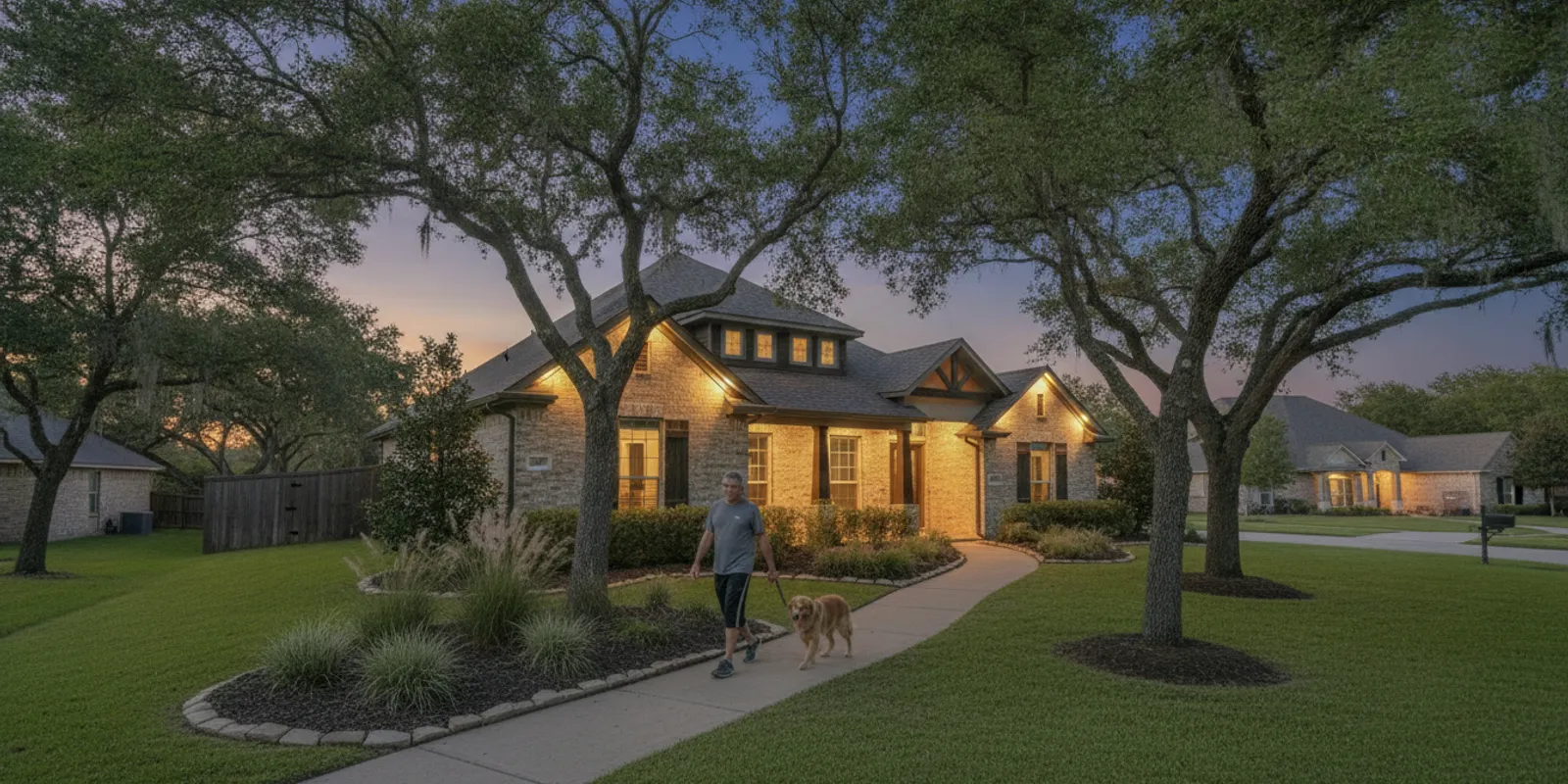
Outdoor light fixtures can help people see entrances, paths, and activity around the home, but brighter is not automatically safer for pets. A thoughtful plan begins with the route a dog or cat actually uses and the views a person needs while supervising. Permanent roofline lighting may be part of that plan, alongside existing entry or path fixtures; it should not be treated as a substitute for fencing, a leash, or attention.
Request a site-specific lighting quote
What does pet safety mean in an outdoor lighting plan?
Pet safety is not a fixture type, color, or brightness setting. It is a practical set of decisions about visibility and movement. Start by asking what a person needs to see, where they will stand, and which areas an animal uses.
Lighting can make some details easier to observe, such as a threshold, a path edge, or movement near a gate. It cannot guarantee that an animal will avoid a hazard or remain in the yard. Maintain secure gates and fences, supervision, and leash practices where appropriate. Lighting is a visibility aid, not containment or veterinary guidance.
Define better visibility in concrete terms. You may need to distinguish a step from the walkway, see whether a gate is closed, or watch a pet move from the door to a designated area. A vague goal such as making the yard brighter can lead to unnecessary light in the wrong place. A location-specific goal gives you something to evaluate later.
Which areas should you assess first?
Walk the property after dark along the route you actually use. Repeat the walk from the supervision point and the pet’s usual route. First record where visibility falls short and what you were trying to see.
- Doors and thresholds: Check the transition between indoor and outdoor surfaces, door swings, steps, and the first few feet outside.
- Stairs and ramps: Look for a change in level or direction that is difficult to distinguish.
- Walking paths: Note turns, uneven surfaces, edging, and narrow passages.
- Gates: Include the approach, latch area, and view of whether the gate is open or closed.
- Pet-use areas: Identify where the animal pauses or moves and whether a person can see it from the normal supervision point.
- Viewing points: Test sightlines from the door, window, patio seating, and places where someone stands.
- Boundaries: Note fences, neighboring windows, and places where light could spill beyond your property.
- Obstructions: Notice plants, trees, walls, furniture, parked vehicles, and stored items.
Separate a visibility problem from a maintenance problem. A dark step may be a visibility concern; a loose board or unsecured gate needs repair, not merely illumination. Make a short list of physical hazards to address independently.
Make an observation sheet with four columns: location, what you need to see, where you are looking from, and what makes it difficult. Record whether the difficulty is a dark transition, glare, obstruction, or shadow. Add the time and whether a gate, furniture, or planting was in its usual position.
Repeat the route on more than one evening if conditions change. A porch light, vehicle, or neighbor’s lighting can affect what you see. The purpose is not technical measurement; it is to understand ordinary conditions and communicate them clearly.
How can placement reduce glare and confusing shadows?
The goal is comfortable, useful visibility, not maximum brightness everywhere. A bright source in a person’s direct view can make it harder to see beyond it. A bright wall beside a dark walkway may create a sharp visual transition. Evaluate the space from where people and pets use it, not only from the street.
Look for direct views of a source from the door, path, patio, and indoor windows. Note reflective surfaces such as glass or pale walls. A beam directed toward a window or over a fence may create unwanted spill. Trees and dense planting can block a beam; overhangs and fences can create shadows.
Try a viewpoint check. Stand at the door and look toward the gate. Then stand at the gate and look back toward the house. Sit at the usual patio or window location and check whether the route can be followed visually. Finally look toward neighboring properties. Note any source directly in your eyes and any area hidden behind an object.
Describe the specific view that is uncomfortable or incomplete. “The light is too bright” is less useful than “from the patio chair, I see the source directly, and the gate behind the shrub is hard to distinguish.” That identifies viewpoint, discomfort, and obstruction.
LIT365 installs permanent soffit and roofline lighting for year-round use, including holiday color, game-day displays, security visibility, and patio ambiance. Its permanent lighting overview describes the general offering. Because placement follows the roofline, do not assume the system reaches every path or pet area.
What should you consider about schedules?
A useful schedule follows the household routine. List times when someone lets a pet outside, uses the patio, or wants a seasonal display. Separate everyday visibility from holidays or game days.
For each use, write down the intended location and duration. Ask what settings and timing controls the proposed system supports. LIT365 describes customizable colors, patterns, and schedules, but the available information does not establish a particular app, timer, sensor, or automation feature. Confirm the actual controls rather than assuming.
Consider neighbors and quiet hours. Decide when light is useful, which portions of the exterior matter, and whether it needs to operate outside those times. The Department of Energy’s LED Outdoor Area Lighting Fact Sheet offers general information about outdoor area lighting and comparisons of luminaire output and efficacy. It is not a pet-safety standard or a prescription for a particular home.
Keep the plan simple enough for household members to use consistently. Write down which setting is everyday and which is for a celebration. Ask how settings are selected and what happens when schedules overlap.
How do roofline lights compare with other outdoor fixtures?
Different fixture locations address different needs. Permanent roofline lighting can create a consistent exterior appearance and support several occasions. Entry lighting may focus on a threshold; path or landscape lighting may address a route. Existing fixtures may already solve part of the problem.
| Option | Possible role | What to verify |
|---|---|---|
| Permanent roofline lighting | Year-round accent for holidays, game days, security visibility, or patio ambiance | Which roofline sections and routes are relevant? |
| Entry or step fixture | Attention to a door, threshold, stair, or change in level | Does placement help without direct glare? |
| Path or landscape fixture | Focused attention along a walkway or yard feature | Could planting, gates, or neighboring views affect it? |
| Existing fixture | May cover an entry or part of the route | What works now, and where do dark gaps remain? |
This is a planning comparison, not a claim that one type is always safer or every property needs all types. A roofline system may not directly address a pet area far from the house. Identify that limitation before deciding on scope.
Consider a household whose back door and patio are visible but whose side gate is not. A broad roofline display might improve the building’s appearance without resolving the gate view. Ask whether proposed placement makes the approach easier to observe from the actual supervision point, and what remains outside scope.
A path may be visible from the patio but not from the kitchen window. The path may receive light, yet the person who usually supervises may lack a useful view. Record both viewpoints. The target is not merely light on the path; it is whether the intended person can observe the relevant area.
With existing wall fixtures and a dark transition near a side yard, determine whether the lights are poorly directed, an obstruction blocks the view, or the route is outside their coverage. Clearing an obstruction or discussing another fixture location may be more relevant than extending roofline lighting without a clear purpose.
What information helps an installer understand the property?
A site-specific proposal is easier to discuss when you can describe the property and intended uses. Prepare a short project brief:
- Write down the service address and roofline elevations to consider.
- Mark doors, stairs, paths, gates, and pet-use areas that matter.
- Describe when those spaces are used and where a person needs to observe from.
- Note existing fixtures, dark areas, glare, reflective surfaces, and nearby windows.
- Separate everyday, holiday, game-day, and patio priorities.
- List areas you do not expect roofline lighting to cover.
- Take photos from the route and supervision point if helpful, and label each view.
Photos are conversation aids, not a substitute for confirming scope. Daylight photos may hide night shadows, so pair them with after-dark notes. If the problem changes when a gate is open, furniture is in place, or plants are fuller, record that context.
Ask how building shape and access affect the work. Clarify elevations included, intended purposes, and areas outside the plan. LIT365’s quote form asks for the address and whether the request is for lighting, gutters, or both. The company does not publish a citywide price or per-foot rate; the quote is specific to property and scope.
Rank priorities as essential, useful, or optional. Seeing the back-door approach may be essential, adding a patio setting useful, and a decorative color optional. This gives the discussion a clear order without presuming what can be delivered.
How should you evaluate a lighting proposal?
Read a proposal for scope and assumptions. Confirm roofline sections and whether the installer understood the routine. If the goal is to observe a gate or path, ask how proposed placement relates to it. Do not infer coverage from a broad description.
Ask for the details needed to decide. Do not assume output, color range, controller, weather rating, or warranty unless stated for the quoted system. Confirm what is included, installation approach, available settings, and exclusions. LIT365’s installation gallery shows examples, but an image cannot establish how a particular home will be illuminated.
Compare proposals on the same basis: elevations, intended uses, controls, access assumptions, exclusions, and routes addressed. If scopes differ, clarify before comparing totals.
- Which roofline sections are included or excluded?
- Which routes and viewpoints does it address?
- What should I not expect the system to illuminate?
- What controls and schedules are included in this proposal?
- Are there access assumptions that could change the work?
- What product details, installation steps, and warranty terms apply?
- How will questions after installation be handled?
These questions distinguish confirmed scope from assumptions. If a proposal does not address your concern, ask for clarification rather than treating silence as a promise. For homeowners in Austin, San Antonio, or Dallas, the address is part of qualification. Review the service area information and provide the project address; do not infer eligibility from a city name alone.
How can you plan for different household situations?
A plan for one dog and a small fenced yard may differ from a plan for several pets, a large lot, or indoor supervision. Describe the routine and test relevant viewpoints rather than seeking one universal layout.
A short trip from the back door
Focus on the threshold, first part of the route, and person’s view of the pet. Note whether the door light creates glare or a wall blocks the view. Confirm whether roofline placement relates to those points, and keep safeguards in place.
A larger yard with several routes
Identify primary and secondary paths, the main gate, and places where the pet may be difficult to observe. Decide whether you need to see a route, boundary, or activity area. Discuss what roofline lighting can support and what may need a separate solution.
Supervision from indoors
Test the view from the actual room and window position. Check reflections and outdoor obstructions. Record whether the person can see the route and gate, not just whether the yard appears illuminated outdoors.
Shared or multi-unit property
For an HOA or shared property, establish who approves the plan and which areas are private or common. Identify neighboring windows and shared paths. Discuss schedules and boundaries before choosing a design.
How can you document and review the plan?
Describe a route in sequence rather than saying the yard is dark: back door, steps, turn at the patio edge, walk beside the fence, then approach the gate. Record where the observer stands. A route easy to see from the patio may not be visible from the kitchen. Note ordinary conditions and occasional ones, such as guests, a parked vehicle, or fuller seasonal plants.
After hearing the proposal, restate the plan in your own words: elevations included, intended everyday use, and views it is expected to support. Separate written inclusions from recommendations and unanswered questions. If a wall, landscaping, or distance limits the layout, have that limitation understood rather than assuming the whole property is covered.
After installation, revisit the same route and viewpoints. Check the threshold, turns, gate approach, and supervision view. If something remains difficult to see, describe the location and circumstances. Check for spill toward windows and neighboring spaces as well. Keep supervision and physical barriers; lighting is not a safety guarantee.
What mistakes can make a pet-safety plan less useful?
- Choosing brightness before purpose: Identify the route or view that needs attention.
- Assessing only the front: Check side access, gates, and the actual pet route.
- Ignoring glare: Review the path, patio, indoor window, and nearby property.
- Expecting one system to solve everything: Roofline lighting may be one part of a broader plan.
- Assuming controls: Ask which settings and timing options are included.
- Treating light as containment: Maintain barriers, supervision, and leash practices.
- Comparing different scopes: Check elevations, access, uses, and exclusions.
- Forgetting surroundings: Reassess plants, furniture, vehicles, and open gates.
- Judging from the street: Appearance does not prove visibility from the needed viewpoint.
After installation, reassess at the times you planned for. Walk the route, check the gate, and look from the window or patio. Continue to supervise pets and maintain physical barriers.
Frequently asked questions
Can permanent roofline lighting help me see my pet outside?
It may contribute to exterior visibility depending on property and placement. Do not assume it illuminates every route. Discuss the actual route and viewpoints with the installer.
Will outdoor lighting keep a pet in the yard?
No. Light is not a physical barrier and cannot replace a secure gate or fence, supervision, or appropriate leash practices.
Should outdoor lights stay on all night?
Not necessarily. Consider when the household uses the space and how to avoid unnecessary spill. Confirm the controls available for the particular system.
How much does permanent soffit lighting cost in Austin?
LIT365 does not publish a citywide price or per-foot rate. A quote depends on address, elevations, and scope. Request a site-specific quote rather than relying on a general estimate.
What should I provide when requesting a quote?
Provide the service address and identify roofline sections and routines. Mention pet routes, gates, existing fixtures, and glare concerns.
Discuss your property and request a quote
A thoughtful plan starts with the routes and views your household needs, then considers placement and schedules in context. Treat permanent roofline lighting as one possible part of that plan, and confirm the scope for your address before deciding.