
2026-10-16
Does Permanent Outdoor Lighting Add Value to a Home? Outdoor Light Fixtures and Home Value
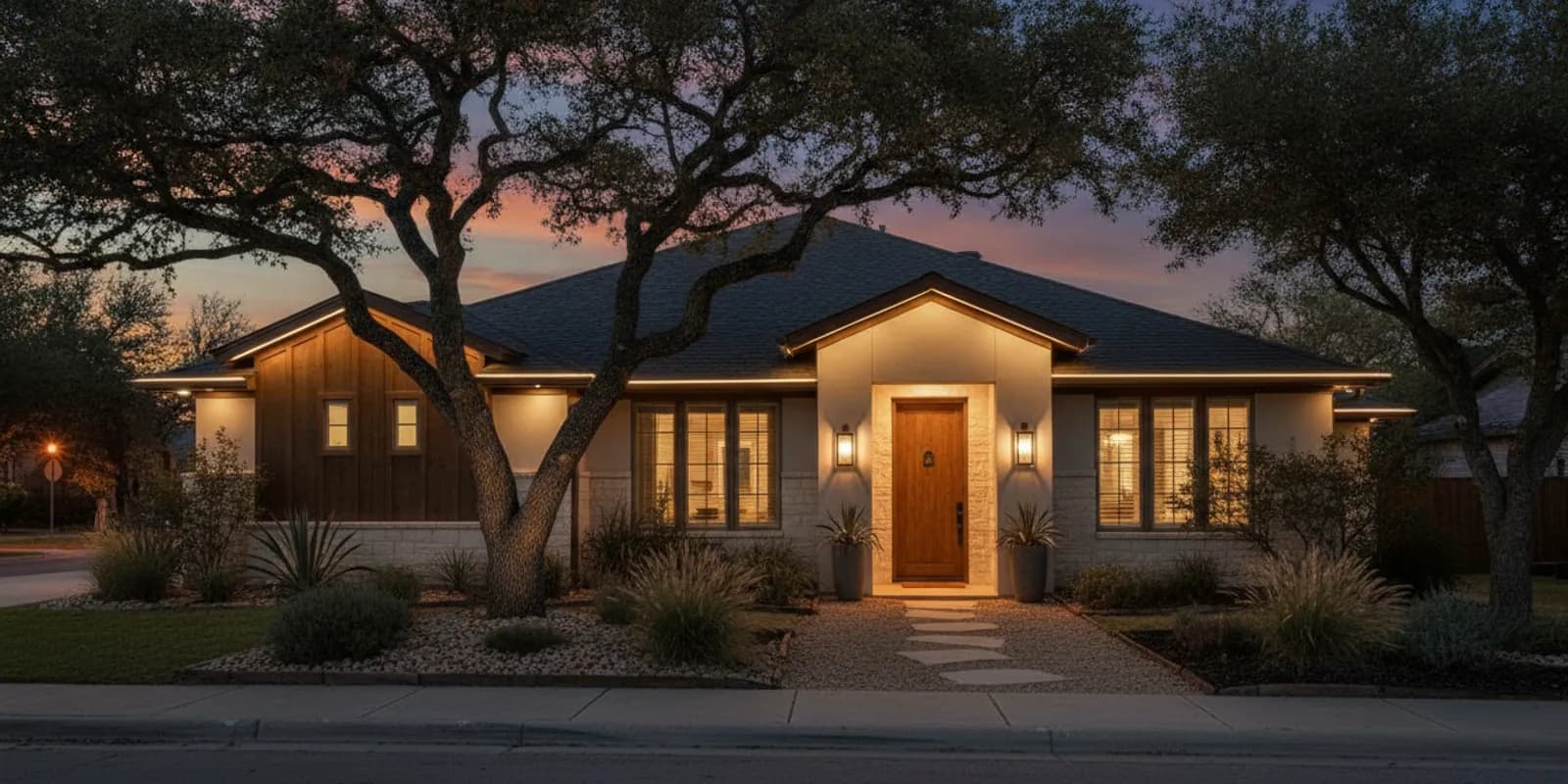
Does permanent outdoor lighting add value to a home? It can support curb appeal and shape a buyer’s first impression, but no outdoor light fixtures can promise a higher appraisal or a particular resale return. The value is in how well the installation suits the property, looks after dark, and serves the household while it owns the home.
Request a lighting quote for your home
What does “value” mean for outdoor lighting?
Home value can mean more than one thing. A homeowner may mean the asking price, a formal appraisal, buyer interest, or simply the enjoyment and usefulness of the home. Those outcomes are related, but they are not interchangeable. A lighting improvement might make a home more inviting to a prospective buyer without changing an appraiser’s opinion of its market value. It might also make daily use of the property more pleasant even if the owner never sells.
Permanent roofline lighting is best considered an exterior amenity, not a guaranteed investment. It can add a considered finishing detail to a home’s appearance, make rooflines more visible in the evening, and provide different uses through the year. The effect depends on the particular home and the quality of the design and installation. Buyers do not all value the same features, and local market conditions matter.
That distinction helps keep expectations practical. If the project only makes financial sense when it produces a specific resale premium, there is no dependable way to promise that result. If you would enjoy the lighting now, and the home’s design is a good fit, potential buyer appeal can be one benefit among several rather than the only reason to proceed.
Four kinds of value to separate
It helps to name the outcome you actually want before comparing a project with other home improvements. “Does it add value?” can refer to at least four different things:
- Market value: What a buyer might pay for the property in a particular market. An exterior feature may contribute to a buyer’s overall impression, but its presence alone does not establish a specific dollar increase.
- Appraised value: A professional opinion developed for a defined purpose. An appraiser considers the property and relevant market evidence; a homeowner should not assume that an installed amenity will appear as a separate dollar-for-dollar adjustment.
- Marketability: How easily a home attracts attention and how coherent its presentation feels. A clean, considered exterior can support the overall impression, though it does not ensure more showings or a quicker sale.
- Use value: The benefit the current household gets from the feature. Convenience, a preferred evening appearance, and the ability to use one roofline for different occasions may matter whether or not the owner ever lists the home.
These categories can overlap, but they should not be collapsed into one promise. A project may have meaningful use value while making no measurable difference in a formal appraisal. Or it may help a listing photograph look more polished without changing what a buyer is ultimately willing to pay. Decide which kind of value matters most to you; then use that as the lens for the rest of the decision.
Can permanent lighting improve curb appeal?
It can, when the lighting complements the home instead of competing with it. Roofline lighting draws attention to the outline and proportions of a house. A subtle look can make the exterior feel finished in the evening. A bright, uneven, or visually distracting installation can do the opposite and make an attractive home feel less balanced.
Think of curb appeal as the entire view, not just the lights. The home’s architecture, exterior materials, entry, landscaping, driveway, and neighboring properties all influence what a person sees. Lighting is one layer within that scene. It cannot make deferred maintenance disappear, and it should not be treated as a substitute for repairs, paint, landscaping, or other improvements that matter more to the property’s condition.
Before deciding, take a few photographs of the front and sides of the house in daylight and after dark. Look at them from the street and from the usual approach to the entry. Ask whether a roofline would help define the shape of the house or simply add another visual feature. Consider how the design will look with the exterior finishes and nearby lighting, not only in a close-up product image.
- Look for a clear architectural line. Roof edges and soffits can give a lighting layout a natural boundary. A clean, consistent route is usually easier to assess than a design that makes the home look visually busy.
- Consider the whole facade. A large or complex home may have several roof sections, while a simple facade may need less. The question is not how much lighting can be added, but what makes the property read clearly.
- Think about daytime appearance. Permanent hardware stays in place. Ask how the installed system will sit against the soffit or roofline when it is not illuminated, and whether the placement fits the home.
- Check the view from the street. Light that looks restrained from close up may appear stronger at a distance. Review the intended result from the places where residents and visitors will actually see it.
Permanent lighting is designed to remain installed rather than being hung and removed for each season. That can make a tidy, integrated appearance especially important. Review examples of finished work in the LIT365 installation gallery to think through the kind of roofline treatment that might suit your property. Examples can help you form questions, but your own home’s layout still determines the appropriate scope.
A simple curb-appeal review you can do at home
Use a repeatable review instead of relying only on an appealing photo or a quick glance. First, choose the viewpoints that matter: the sidewalk, the driveway approach, the front door, and any patio or yard where you expect to spend time. Take a daytime photo from each spot. Then, after dark, take another set from the same positions. Keeping the viewpoints consistent makes it easier to notice how the house reads as a whole.
Next, identify the visual feature you want the lighting to support. It might be the roofline, the entry, or the transition between the home and an outdoor gathering area. If you cannot name the feature, adding lights along every possible edge may not solve the design problem. Mark the sections that seem important and note where a roofline changes direction, where an elevation is hidden from the street, or where landscaping interrupts the view.
Finally, consider both the unlit daytime view and the nighttime scene. Since the equipment remains installed, the daytime appearance is part of the design rather than an afterthought. Ask whether the proposed route feels intentional against the home’s exterior. At night, consider whether the light draws the eye to the home’s form or distracts from the entry and other details. These observations are not a substitute for a site-specific plan, but they give you concrete feedback to discuss when reviewing a quote.
How can lighting affect a buyer’s impression?
A buyer’s first impression starts before a detailed inspection. The exterior can suggest whether a home feels cared for, functional, and welcoming. Thoughtful evening lighting may help a property stand out during a showing or make the entry easier to see. Those are presentation benefits, not proof that a buyer will offer more money.
Buyers also judge a home in context. Someone who likes a clean, understated exterior may respond well to lighting that follows the roofline discreetly. Another person may prefer a plain facade or may not want a feature they will need to learn to use. A prospective buyer could see an installed system as a convenient amenity, a design detail, or simply a matter of personal taste.
For that reason, aim for flexibility and restraint rather than a look that only works for one occasion. A roofline system can be used for holiday color, game day, security visibility, or patio ambiance, but those are different purposes. A balanced everyday appearance gives the home a composed look, while occasional colors can be reserved for celebrations. Avoid making the house depend on a highly specific display to look attractive.
If you plan to sell soon, consider whether the project supports the way the property will be presented. A good exterior photograph, an inviting entry, and a coherent overall appearance matter more than simply adding another feature to the listing description. Permanent lighting may complement those efforts, but it cannot compensate for issues in condition, location, layout, or price. Nor should the owner assume every buyer will assign a separate dollar amount to the system.
How different buyers might read the feature
There is no single buyer response, so it is useful to think through a few plausible reactions without treating any one of them as certain. A household that already uses outdoor spaces in the evening may see a roofline system as an amenity they can put to use. A buyer who enjoys seasonal displays may value not having to hang and remove temporary strings. A buyer with a preference for a very simple exterior may focus on whether the installation is discreet when it is off. Someone who is unfamiliar with the system may want to know how it is operated and what areas are included.
That range of reactions points to a practical design goal: make the permanent installation look deliberate in ordinary use and understandable to someone who did not choose it. A restrained everyday presentation can make the feature easier to live with across different tastes. If you are preparing to sell, avoid presenting a dramatic holiday display as the only example of the system. Show or describe its normal use as well, so a prospective buyer can judge the installed roofline rather than just a temporary occasion.
For a buyer evaluating a home that already has permanent lights, the questions are similarly practical. Which roofline areas are covered? How does the homeowner operate the system? Is there any documentation about the installation? Does the placement suit the home and the buyer’s preferences? A clear answer to these questions can make the feature easier to assess, but the buyer should not infer product details, ongoing costs, or warranty coverage that have not been documented.
What can a permanent roofline system do for the homeowner?
One reason homeowners consider permanent lighting is its year-round use. Instead of installing temporary strings for one holiday and taking them down afterward, an installed roofline can serve different occasions and everyday needs. That convenience has value to the people who live in the home, even though it is not the same as a guaranteed increase in resale price.
Consider how you would use the lighting on an ordinary week, not just on a major holiday. Would you want a calm evening look for the patio? Would you use a particular color for a game day or seasonal celebration? Would a visible roofline contribute to the way you want the exterior to feel after dark? If the only answer is “it might help when I sell,” pause and compare the project with more immediate priorities.
There is also a practical difference between an installed system and seasonal lights. Seasonal lights are temporary and can be changed or removed each year. Permanent lighting stays on the home, so the homeowner does not repeat the same hanging and takedown routine. Whether that trade-off is worthwhile depends on the value you place on convenience, the appearance of the installation, and how often you expect to use it.
For a closer look at the service itself, see LIT365’s page about permanent soffit lighting for homes. It describes the company’s roofline lighting offer and the uses it is intended to serve. A service page can explain the general approach; it cannot establish the right project scope or value for an individual property.
Map the value to your household’s real routine
Try a one-month thought experiment. Picture a normal week, a weekend evening, and one occasion during the year when you would want a different look. For each, write down whether you would turn the lights on, what part of the property you would use, and what the lights would help you do or enjoy. This makes “we might use them” more specific. If you can identify several recurring situations, personal usefulness is easier to weigh. If the list only contains one event, ask whether the convenience of a permanent setup still matters enough to you.
Also note who in the household would use the feature. One person may care about the appearance from the street; another may care more about the patio; a third may prefer not to have seasonal equipment to put up and take down. A good decision takes those different preferences seriously instead of assuming that one person’s enthusiasm represents everyone’s experience. Agree on an ordinary look and the situations in which you would change it before choosing the scope.
Now compare those anticipated uses with the permanent nature of the installation. The system is not a temporary decoration that disappears when a season ends. Ask whether you would be comfortable seeing it on the home during quiet periods, during daylight, and in the years when your priorities may change. That does not require predicting the future perfectly. It simply checks that the project fits your everyday preferences as well as your special occasions.
When is the upgrade more likely to make sense?
Permanent outdoor lighting is most compelling when it addresses something you actually want from the home. It may be a reasonable upgrade to explore if you want a finished evening appearance, expect to enjoy the system for years, and can see a suitable route along the roofline. It is also easier to justify when the project fits alongside the home’s other priorities rather than displacing necessary maintenance.
Ask yourself these questions before requesting estimates:
- Will I use it? Name the situations that matter to you: everyday ambiance, holiday color, game day, visibility around the home, or a combination. If you cannot picture using it, prospective resale appeal alone may not be enough reason to invest.
- Does it fit the architecture? Look at roofline shape, soffit placement, exterior finish, and the views from the street and patio. A thoughtful plan should account for the actual home rather than treating every house as the same layout.
- How long do I expect to stay? The longer you live with a feature, the more opportunity you have to enjoy its use and convenience. This does not predict resale value; it simply puts the homeowner’s personal benefit into the decision.
- Are more urgent projects unfinished? Roof, drainage, safety, and maintenance concerns may deserve attention before an elective lighting upgrade. A decorative improvement is not a substitute for keeping the property in good condition.
- Am I comfortable with permanent placement? The system remains part of the exterior. Consider how it looks in daylight, whether the proposed route suits the home, and how the installation will fit your preferences over time.
A “yes” to several of these questions does not guarantee that the project will pay for itself at resale. It does indicate that the decision can be based on concrete benefits you expect to receive, rather than a vague assumption that any exterior improvement automatically raises a home’s value.
Compare three common homeowner situations
The same installation can make sense for one homeowner and not for another because the goals and timing differ. Use these examples to see which factors deserve the most weight in your own case.
- The household planning to stay: A family expects to remain in the home for several years, uses the patio in the evening, and wants a year-round option for holidays and game days. The central question is whether the appearance and convenience will be worthwhile to them over time. They can include possible buyer appeal as a secondary consideration, but there is no need to rely on a resale prediction to explain the choice.
- The owner preparing to list soon: The owner is focused on presentation and timing. They should consider whether the proposed work will complement the home, whether it can be completed in time to be shown clearly, and whether other property tasks deserve priority. A permanent system could add a polished detail, but an owner should not assume it will recover its cost through a higher offer.
- The new homeowner still learning the property: The buyer has not yet settled into a routine and may not know which elevations matter most. It can be useful to observe how the home is used after dark, note the views from the street and outdoor areas, and establish a clear design goal before requesting a quote. Waiting to understand the property can help make the chosen scope more deliberate.
These examples do not establish a formula. They show why ownership horizon, actual use, design fit, and project timing belong in the same conversation. A person selling soon may focus more on presentation and coordination, while someone staying longer may place more weight on repeated use. Neither perspective creates a guaranteed resale outcome.
What should you compare when reviewing a quote?
There is no useful universal price for every property. The amount of roofline to include, the layout of the home, the elevations selected, and the access needed for the work all affect project scope. A quote that covers a short front elevation is not directly comparable to one covering the front, sides, and rear. A low total may reflect a smaller scope rather than a better value.
LIT365 does not publish a citywide price or a standard per-foot rate. Its quotes are property-specific and begin with the address and the elevations the homeowner wants to light. This is a more sensible starting point than assuming a price from a different home will apply to yours. The service-area page lists the named markets of Austin, San Antonio, and Dallas; address qualification comes before project assumptions.
When you compare proposals, make sure the scope is clear enough to understand what each company is including. Put the same information in front of each provider. Ask for the intended elevations, what parts of the roofline are included, how the placement will look from key viewpoints, and what assumptions were made about property access. Do not compare only the headline amount if the proposed work differs.
- Elevations and sections: Identify which sides of the home are included and whether any roofline sections are excluded. This is one of the most important ways to make two scopes comparable.
- Design intent: Ask how the layout will follow the home’s lines and what the installation will look like when unlit. A proposal should make the planned result understandable before work begins.
- Access assumptions: Point out the home’s height, roof shape, landscaping, and any areas that could affect access. Ask whether the estimate assumes normal access or depends on a site condition that needs to be checked.
- Project boundaries: Confirm which areas are included in the work and what is outside the scope. A shared understanding reduces the risk of comparing unlike proposals.
- Use and appearance: Explain whether your priority is everyday ambiance, holiday color, game day, visibility, or more than one use. The intended purpose helps the installer understand what result you want.
- What is documented: Ask what details the quote records, what decisions remain open, and what questions you should resolve before approving the work. Do not assume product specifications or warranty terms that are not stated.
It is sensible to ask for an explanation of unfamiliar terms and to keep the comparison in writing. If one quote does not describe the included elevations or the expected appearance, ask for clarification before deciding. Clear scope is more useful than an unsupported promise about resale value.
A practical quote-comparison worksheet
To make two estimates easier to compare, prepare a short brief and share the same information with each provider. Record the property address, the sides or sections you want considered, and your intended uses. Include photos from the street and any outdoor area that matters to you. If one elevation is a priority and another is optional, label them that way instead of asking for a vague whole-house price.
When estimates arrive, write down what each one says about the planned elevations, the unlit appearance, access assumptions, and items that are not included. Use “not specified” when the proposal does not answer a question. That is more useful than filling gaps with assumptions. If the scope is described differently, ask for a clarification that makes the options comparable before focusing on the total.
Then compare the proposal with your purpose. A plan that covers more roofline may not be a better fit if those sections are rarely visible or do not support the look you want. Conversely, an estimate covering only the front may not address a patio or side view that matters to your household. The right comparison is not simply which proposal includes the most or costs the least; it is which clearly described scope matches the property and your priorities.
Keep a copy of the written answers and the final agreed scope. This can help you remember what was discussed and what decisions remain to be made. It also makes it easier to ask a focused follow-up question later. The purpose is not to turn a design choice into paperwork for its own sake. It is to avoid choosing based on an unclear assumption about what will be installed or how the result will look.
Can you estimate the resale return?
Not reliably from a general article. The resale outcome would depend on the home, the local market, the buyer, the installation, and how the property is presented. Without evidence about comparable homes and actual transactions, claiming a specific return would be guesswork. A decorative exterior feature also may not be treated as a separate line item in an appraisal.
Think about three different questions instead. First, would the lights improve the way you use the property? Second, do they make the exterior feel more cohesive to you? Third, would the result likely be easy for a future owner to understand and use? These questions cannot produce a guaranteed dollar figure, but they can help establish whether the upgrade fits your goals.
For a homeowner who expects to stay, personal enjoyment and reduced seasonal setup may be substantial parts of the decision. For someone preparing to list, the key question may be whether a finished appearance complements the home and its presentation. For a buyer assessing an existing installation, the questions may be different: what areas are covered, how it is operated, what documentation is available, and whether the buyer likes the look. Each situation deserves a property-specific assessment.
Why a simple payback calculation can mislead
It is tempting to divide the project cost by a guessed resale increase and call the result a return. The problem is that the resale increase is not known in advance, and a homeowner may not be able to isolate the effect of lighting from the home’s condition, location, other upgrades, and the market at the time of sale. A number built on an unsupported resale estimate can look precise while answering a question that cannot be measured that way.
A more honest household calculation starts with the known project scope and the reasons you want it. Consider how many seasons you expect to live with the installation, how often you anticipate using it, and how much you value avoiding recurring seasonal setup. You can decide whether those benefits justify the project for you without assigning an invented dollar amount to each evening or holiday. If the project would only feel worthwhile under a resale scenario, treat that uncertainty as a reason to be cautious.
You can also compare the lighting project with other uses for the same home-improvement budget. If repairs, maintenance, or an improvement you care about more remain unfinished, weigh those first. This is not a rule that lighting should always come last; it is a way to make sure an elective amenity is not being evaluated as though it had a known financial return. Your priorities and the property’s condition should guide the order.
What should you do before choosing an installer?
Start with a clear project brief. Write down the property address, the elevations you are considering, the intended uses, and any exterior details that could affect access or placement. Include photographs taken from the street and any areas you want to use at night. That gives an installer a more useful starting point than asking for a generic estimate based on a house style or an assumed number of feet.
Then review how the proposed installation fits the property. Ask how the route will follow the roofline and how it will appear in daylight. Make sure the scope describes which elevations are included. If you are considering more than one use, explain which look should be appropriate for ordinary evenings and which uses are occasional. Avoid relying on claims about a resale premium as a substitute for these design and scope details.
Finally, confirm that the contractor’s service area and process fit your address. LIT365 serves Austin, San Antonio, and Dallas, with qualification based on the property address. The company’s quote form asks for contact details, service address, and whether the request concerns lighting, gutters, or both. For a lighting project, submit those details through the lighting quote form to discuss a site-specific scope.
Use this sequence to make the decision concrete
- State the goal. Write one sentence about what you want the installation to improve: everyday appearance, a patio atmosphere, seasonal convenience, or another stated use. Keep resale appeal as a possible benefit, not a promised outcome.
- Observe the home. Review the exterior in daylight and after dark from the places where it is actually seen. Note the roofline sections that contribute to the view and any access or design questions you want answered.
- Choose a priority scope. Separate essential elevations from optional ones. This helps you understand whether a quote addresses the main purpose or adds coverage that you may not need.
- Ask for a property-specific quote. Share the address and the elevations you want considered. A site-specific quote is more meaningful than extrapolating from another house or assuming a standard rate.
- Clarify the written plan. Review what is included, what is not, how the proposed route is meant to look, and which assumptions still need confirmation. Resolve uncertainty before approving work.
- Revisit the value question. Ask whether you would still choose the project if no buyer paid a separate premium for it. If the answer is yes because the use and appearance matter to you, you have a sounder personal basis for the decision.
This sequence keeps the decision grounded in the home rather than in a broad claim about resale. It also gives you a straightforward way to move from an initial idea to a useful conversation with an installer. The result is not a guarantee of market value; it is a clearer understanding of what you are considering and why.
How should you think about lighting when selling?
If you already have permanent lighting and expect to sell, focus on making the feature easy to understand rather than expecting it to speak for itself. A prospective buyer may not know which roofline sections are covered, whether the system is used every day, or how the homeowner changes its look for different occasions. A simple explanation can answer the practical questions without making a claim about a financial return.
Before showings, consider what a buyer will see in daylight as well as after dark. Make sure the exterior looks cared for and that the lights are not being used in a way that overwhelms the home’s other features. If an evening showing or listing photo is planned, choose a presentation that shows the property clearly and feels consistent with the overall exterior. The objective is to help a buyer picture the home, not to make the lighting the only thing they notice.
Gather any information you already have about the installed system and its operation. Keep to documented details. If you do not have records that answer a question about the product, installation, or ongoing care, do not guess. A buyer can decide whether the feature suits them based on what is known, and an accurate answer is more helpful than an expansive but unsupported promise.
If you are deciding whether to install lights shortly before listing, compare that timing with the time and attention needed for other preparation. Consider the proposed scope, how the installation will look, and whether you will have a chance to see and evaluate the finished result before marketing the home. If the main objective is a higher sale price, the project has an uncertain outcome. If you also want the appearance or use while you remain in the home, those present-day benefits can be part of the decision.
Is permanent outdoor lighting worth it for your home?
It may be worth considering if you want a more polished evening exterior, value year-round use, and find an installation that fits the lines of your home. It is less compelling if your decision depends on a promised increase in appraisal value, if the lights would rarely be used, or if more important property work should come first. The right answer is not identical for every homeowner.
Use buyer perception as a possible supporting benefit, not as a financial guarantee. Give equal attention to personal use, permanent appearance, installation scope, and how the system fits the home. When those factors make sense together, a property-specific quote can help you decide whether the proposed work is appropriate.
Share your address and discuss a lighting project
Permanent outdoor lighting can contribute to a home’s appeal, but its clearest value is the combination of an exterior look and everyday uses that matter to the people who live there.