
2026-08-18
A DIYer's Complete Guide to LED Light Fixtures
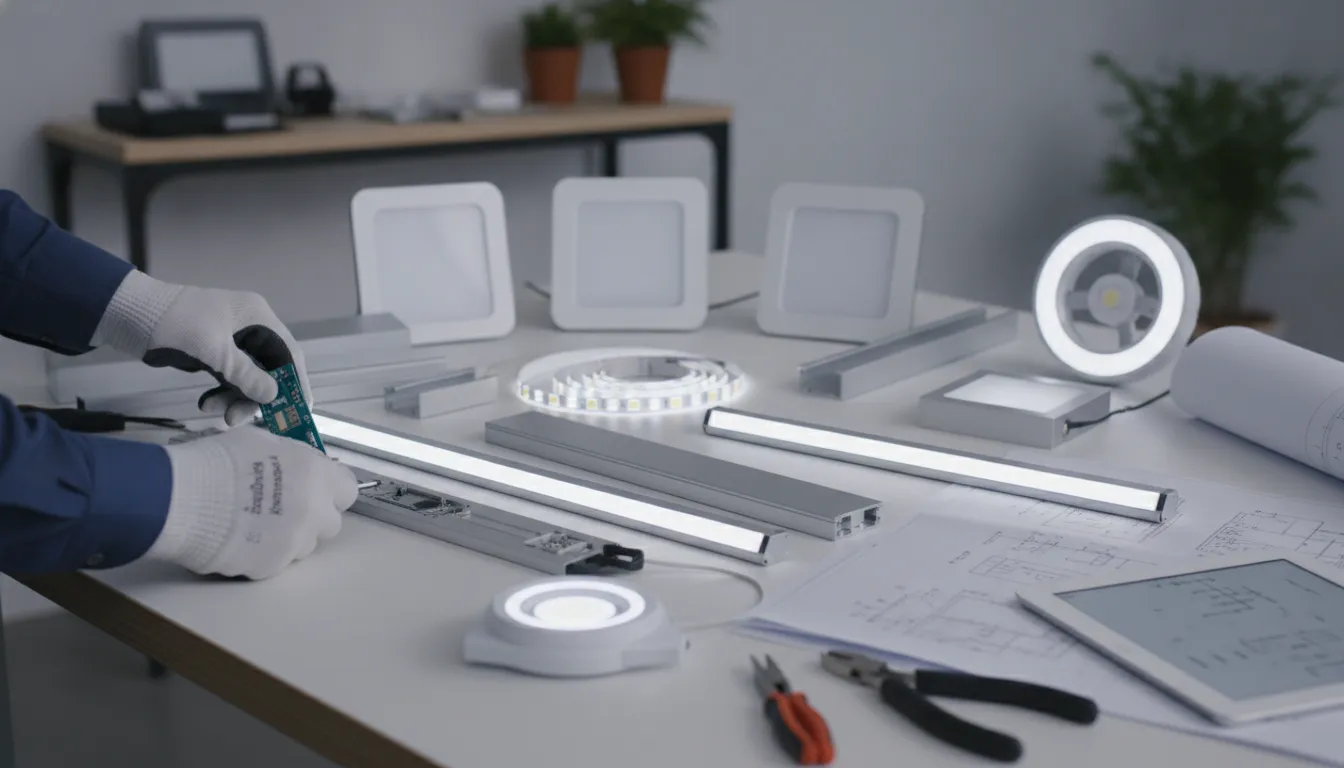
When you think about lighting, you probably picture a fixture and a separate, replaceable bulb. It’s a model we’ve used for a century. But what if the light source was built directly into the unit itself? That’s the simple but powerful idea behind integrated LED light fixtures. Instead of a fragile bulb that burns out, you get a complete, all-in-one package designed for incredible efficiency and a lifespan that can stretch over a decade. This guide demystifies the technology, showing you how these fixtures work, why they’re a smarter choice than old-school lights, and how to pick the perfect one for any room.
Key Takeaways
- Focus on the long-term financial win: While the upfront cost can be higher, LEDs save you money through dramatically lower energy bills and a lifespan that can last over a decade, meaning no more buying replacement bulbs.
- Get better light with modern perks: LEDs provide brighter, more color-accurate light that improves any space. Look for fixtures with adjustable color temperatures or smart home compatibility to gain full control over your home's atmosphere.
- Plan your project before you buy: The best results come from planning. Map out your lighting needs for each room, decide on the right fixture type, and check the specs for lumens, color temperature, and CRI to ensure you love the final look.
What Are LED Light Fixtures, Anyway?
If you’ve ever felt frustrated changing a burnt-out lightbulb in a hard-to-reach spot, you’ll appreciate the concept of an LED fixture. Instead of relying on traditional, replaceable bulbs, an LED light fixture has the light source built right in. These integrated diodes are the key to their magic, allowing them to last for an incredibly long time, sometimes up to 50,000 hours. That’s years of not having to think about replacements.
Think of it as a complete, all-in-one lighting package. You’re not just buying a housing for a bulb; you’re getting a fully contained unit designed for maximum efficiency and longevity. This integrated design is what sets them apart and makes them a smart, modern upgrade from older lighting styles. They come in all shapes and sizes, from sleek ceiling mounts to practical outdoor wall packs, so you can find a fixture for just about any project you have in mind. The real beauty is that once it’s installed, you can pretty much forget about it for the next decade.
How Does LED Technology Work?
So, how do these fixtures create light without a bulb? It all comes down to the tiny but powerful Light Emitting Diodes, or LEDs. At their core, LEDs are simple semiconductor devices that turn electricity directly into light. When a current passes through the special material inside the diode, it gets energized and releases photons, which is what we see as light.
This process is completely different from how old incandescent bulbs work, which involved heating a delicate wire filament until it glowed. That method wasted a ton of energy as heat. LEDs, on the other hand, are much more direct and efficient, which is why they run so cool to the touch and use significantly less power to produce the same amount of brightness.
LEDs vs. Traditional Lights: What's the Difference?
The biggest difference you’ll notice right away is the performance. LED lights are a huge improvement over their predecessors. They use far less electricity, provide excellent light quality, and are incredibly reliable and long-lasting. While the initial price of an LED fixture can be higher than a traditional one, the long-term operational cost savings make them a fantastic investment.
Most people and businesses see a 40% to 70% reduction in their lighting-related energy costs after making the switch. When you combine those monthly savings with the fact that you won’t be buying replacement bulbs for years, the financial benefits become clear. You get better, more dependable lighting while lowering your energy bills and maintenance headaches. It’s a win-win that pays for itself over time.
Why Make the Switch to LEDs?
Making the switch to LED lighting is one of the smartest upgrades you can make to your home. It’s not just about swapping out a bulb; it’s about rethinking how you light your space for the better. If you’re looking for a project that pays you back in savings, convenience, and quality, this is it. From your kitchen to your workshop, LEDs offer a powerful combination of benefits that older lighting technologies just can’t match. Let’s walk through exactly why this change is worth your time and effort.
Save Money on Energy Bills
Let's start with the most compelling reason for many people: saving money. LED fixtures are incredibly energy-efficient, using significantly less electricity than their incandescent or fluorescent counterparts. In fact, many homeowners see a dramatic drop in their energy bills after making the switch. Think of it this way: for every old 60-watt incandescent bulb you replace with a 9-watt LED, you're getting the same amount of light for a fraction of the cost. Over time, these savings add up across every fixture in your home. While the upfront cost of an LED fixture might be slightly higher, the long-term savings on your utility bills make it a financially savvy move.
Enjoy a Longer Lifespan with Less Maintenance
Tired of dragging out the ladder to change a burnt-out bulb in a hard-to-reach spot? With LEDs, that chore becomes a distant memory. One of the biggest advantages of LED technology is its impressive lifespan. Many LED fixtures are rated for 50,000 hours or more. If you use a light for eight hours a day, that single fixture could last for over 17 years. This "set it and forget it" quality means less time spent on maintenance and more time enjoying your well-lit space. This is especially great for high ceilings, outdoor fixtures, or any area where changing a bulb is a hassle. You get reliable, consistent light for years to come.
Get Better Light and Smart Features
Beyond savings and longevity, LEDs simply provide better light. They offer enhanced quality and consistency, which can improve safety in workspaces and create a more inviting atmosphere in living areas. But the real fun begins with smart features. Many modern LED fixtures integrate seamlessly with smart control systems, allowing you to dim the lights, change the color temperature, or even switch to vibrant colors with a simple voice command or tap on your phone. You can schedule your lights to turn on before you get home or dim automatically for movie night. This level of control transforms your lighting from a simple utility into a dynamic part of your home’s decor and functionality.
A More Eco-Friendly Choice
If you’re looking for ways to make your home a little greener, switching to LEDs is a fantastic step. Because they use so much less energy, they reduce your home's carbon footprint. Their long lifespan also means you're creating far less waste over the years, since you won't be throwing out burnt-out bulbs nearly as often. Unlike compact fluorescent lamps (CFLs), LEDs contain no mercury, making them safer for your home and easier to dispose of when they finally do reach the end of their life. Choosing LED lighting is a simple way to make an eco-friendly choice that benefits both the planet and your wallet.
Exploring the Different Types of LED Fixtures
Once you decide to go with LEDs, the next step is figuring out which type of fixture you need. The fixture is what holds the light source, directs the light, and adds to the style of your room, so it’s just as important as the LED itself. Different spaces have different needs, and there’s an LED fixture designed for just about every situation you can imagine. Thinking about your lighting in layers can help you choose. You have your ambient light, which is the overall illumination for a room; task lighting, which is focused light for activities like reading or cooking; and accent lighting, which highlights specific features like artwork or architecture.
The right fixture is all about balancing function and form. You need light that performs well for the tasks at hand, but you also want a fixture that complements your home’s decor. From the standard lights in your hallway to the heavy-duty fixtures in a workshop, knowing your options is the key to a successful lighting project. It prevents you from installing a light that’s too dim for your kitchen prep space or one that’s too harsh for your cozy living room. Let's walk through the most common types of LED fixtures so you can find the perfect match for your space and get the beautiful, functional results you’re looking for.
Flush Mount Fixtures
You’ve definitely seen these before. Flush mount fixtures are the go-to ceiling lights for most homes, especially in bedrooms, kitchens, and hallways with standard eight-foot ceilings. They sit directly against the ceiling, which gives them a sleek, low-profile look that’s perfect for rooms where a hanging light would feel too crowded or get in the way. Their simple design makes them incredibly versatile, but don't mistake simple for boring. Modern flush mounts come in countless styles, from classic domes to square shapes with metallic finishes. Their ease of installation makes them a great starting point for a weekend DIY project. If you need reliable, straightforward overhead lighting that won't overpower a space, a flush mount fixture is almost always a solid choice.
High Bay Lights
If you have a large space with tall ceilings, like a garage, workshop, or barn, you’ll need something more powerful than a standard fixture. This is where high bay lights come in. These fixtures are engineered to provide bright, even illumination from high up, ensuring your entire workspace is safe and well-lit without dark spots. They come in a few different styles, including long, rectangular Linear High Bays that are great for lighting aisles or long workbenches, and round UFO High Bays that work well for open areas. While once common only in industrial settings, their superior efficiency and light quality make them a popular choice for home workshops and garages with ceilings over 12 feet high.
Troffers and Panel Lights
For a clean, modern look, especially in a room with a drop ceiling, check out troffers and flat panel lights. These fixtures are designed to sit flush within a ceiling grid, creating a smooth, unobtrusive surface of light. They’re what you typically see in offices, but they are fantastic for finished basements, home gyms, and laundry rooms where you want bright, even light without any glare. They provide a wonderfully diffused light that makes a space feel open and professional. Some even have cool decorative options, like customizable accent panels that you can add to reflect your personal style. They are an excellent way to make a functional space feel bright and thoughtfully designed.
Wall Packs and Outdoor Fixtures
Your lighting plan shouldn't stop at your front door. Outdoor LED fixtures are essential for safety, security, and curb appeal. Wall packs are powerful lights typically mounted on exterior walls to illuminate large areas like driveways or backyards. You can also find a wide variety of other wall-mounted fixtures, from classic barn lights and decorative sconces to architectural wash lights that highlight your home’s features. Many come with built-in features like motion sensors or dusk-to-dawn settings for added security and convenience. A well-thought-out outdoor lighting plan can completely transform how you use and enjoy your home’s exterior spaces after dark, making them safer and more inviting.
Strip and Accent Lighting
If you want to add a touch of drama or some helpful task lighting, LED strip lights are your best friend. These flexible, adhesive-backed strips can be placed almost anywhere to provide a modern, high-end look. They are perfect for under-cabinet lighting in the kitchen, backlighting a TV to reduce eye strain, or running along the underside of stairs for safety and style. Because they are so versatile and energy-efficient, they’ve become a staple for DIYers. You can use LED strips to add a pop of color, highlight an architectural feature, or simply brighten up a dark corner. They’re an easy and affordable way to get creative with your lighting and add a custom touch to any room.
LED vs. Traditional Lighting: A Head-to-Head Comparison
When you're standing in the lighting aisle, it's easy to get stuck comparing price tags. But to really understand the value of LEDs, you have to look beyond the initial cost. Traditional lights like incandescent and fluorescent bulbs have been the standard for decades, but LED technology has completely changed the game. Let's break down how they stack up against each other in the areas that matter most to your wallet and your schedule: upfront cost versus long-term savings, day-to-day energy use, and overall lifespan and maintenance.
Upfront Cost vs. Long-Term Savings
Let's be honest, the sticker price on an LED fixture can sometimes be higher than a traditional one. While that initial cost might give you pause, it’s important to see it as an investment. The long-term operational cost savings deliver a substantial return that old-school lighting just can't match. For example, replacing a single 400-watt traditional fixture with a 150-watt LED can save you around $120 per year. When you multiply that by all the lights in your home or workshop, the savings add up quickly. Think of it less as a purchase and more as a down payment on lower energy bills for years to come.
Energy Use: A Side-by-Side Look
So, where do those savings come from? It all comes down to energy efficiency. LED lights are a huge improvement over older tech because they use significantly less electricity to produce the same amount of light. In fact, most people save between 40% and 70% on lighting-related energy costs just by making the switch. This economic impact isn't just a nice bonus; it's a core benefit of the technology. Less energy consumed means a lower electricity bill every single month. It’s one of the simplest and most effective ways to reduce your home's energy footprint without sacrificing the quality of your light.
Lifespan and Maintenance Showdown
If you’re tired of dragging out a ladder to change burnt-out bulbs, you’ll love this part. A key piece of any LED lighting buyer's guide is the incredible lifespan of the fixtures. Many LEDs are rated for 50,000 hours or more. To put that in perspective, if you use a light for 8 hours a day, it could last for over 17 years. This dramatically reduces the frequent re-lamping and labor costs associated with traditional bulbs. Because they are so reliable and long-lasting, you can install them in hard-to-reach places like vaulted ceilings or high-bay workshops and not think about them again for a very long time.
How to Pick the Perfect LED Fixture
Choosing the right LED fixture can feel like a big decision, but it really comes down to understanding a few key details about your space and what you want your lighting to do. Once you know what to look for, you can confidently pick a fixture that saves you money and makes your space look fantastic. Let’s walk through the four main things to consider.
Decoding Lumens, Color Temperature, and CRI
Think of these three terms as the "spec sheet" for your light. First, lumens measure brightness. Forget everything you know about watts; lumens tell you how much light a bulb actually produces. Next is color temperature, measured in Kelvins (K). A lower number (around 2700K) gives off a warm, cozy, yellowish light, while higher numbers (5000K+) produce a cool, bluish light that mimics daylight. Finally, the Color Rendering Index (CRI) tells you how accurately the light shows colors. On a scale of 0 to 100, a higher CRI means truer colors. For most spaces, a CRI of 80 or more is great. If you’re lighting a retail store or kitchen where color accuracy is key, look for a CRI of 90 or higher to make sure your products and food look their best.
Match the Fixture to Your Space
The perfect fixture for a garage won't be the right fit for a boutique. Start by thinking about the room's purpose. A workshop needs bright, direct light, making high bay or strip lights a solid choice. An office might benefit from troffers or panel lights that provide even, diffused light to reduce glare on screens. For high-end projects or retail spaces where brand perception matters, you might invest in well-known brands like Philips or Acuity. However, for many commercial projects or if you're on a tight budget, there are plenty of flexible and competitive lighting options that get the job done without breaking the bank.
Key Differences for Indoor vs. Outdoor Use
When you’re choosing fixtures for outside, durability is the name of the game. Outdoor LEDs need to withstand rain, dust, and temperature changes. Look for a fixture’s IP (Ingress Protection) rating, which tells you how well it’s sealed against moisture and debris. You’ll also see "damp-rated" for covered porches and "wet-rated" for areas exposed directly to rain. Beyond durability, the economic benefits of LED lighting are especially clear for businesses. Well-lit exteriors, parking lots, and walkways not only save on energy but also improve safety and security for employees and customers.
Check for Dimmer and Smart Home Compatibility
One of the best features of modern lighting is the ability to control it. If you want to adjust the brightness, you need to make sure both your fixture and your dimmer switch are compatible with LEDs. Not all LED fixtures are dimmable, and using the wrong dimmer can cause flickering or buzzing. Beyond simple dimming, many LEDs offer seamless integration with smart control systems. This allows you to set schedules, use motion sensors, or even change the light’s color from your phone. It’s a fantastic way to automate your lighting, save even more energy, and set the perfect mood for any situation.
Popular LED Brands to Know
When you start shopping for LED fixtures, the number of brands can feel overwhelming. While you don't need to become an expert on every company, it helps to know the major players. Certain brands have built a strong reputation for quality, innovation, and reliability over the years. Getting familiar with them gives you a solid starting point and a benchmark for what to expect in terms of performance and price.
Some companies are known for their high-end, design-forward fixtures, while others are go-to sources for practical, commercial-grade lighting. Whether you're tackling a home renovation or outfitting a new workspace, there are a few top LED light brands that consistently deliver. We'll look at four popular names you're likely to encounter: Acuity Brands, Philips, Zumtobel, and TCP Lighting. Each one has its own strengths, so you can find the right fit for your specific project and budget. Knowing who is behind the product can give you confidence in your purchase, ensuring your new lights will perform well for years to come.
Acuity Brands
Think of Acuity Brands as one of the giants in the lighting world. They are a leading manufacturer that offers an incredibly wide range of lighting solutions for almost any situation you can imagine. Whether you need a simple flush mount for your home’s hallway or a sophisticated system for a large commercial building, they likely have a product that fits. The company specializes in everything from indoor and outdoor fixtures to advanced lighting controls and daylighting systems. Their sheer variety makes them a reliable one-stop shop for both residential and commercial projects, so you’ll often see their products recommended by contractors and designers for their dependability and extensive selection.
Philips
Philips is a household name, and for good reason. They have a long history of innovation in lighting, and their products are often considered a top choice for high-end projects where quality is essential. If you're looking for excellent performance and cutting-edge features, Philips is a brand to keep on your radar. They are particularly well-known for their advancements in smart lighting with the popular Philips Hue line, which allows you to control your lights from your phone. This blend of premium quality and user-friendly technology makes them a favorite for homeowners who want to add a touch of modern convenience and style to their spaces.
Zumtobel
If you've ever walked into a modern museum, a high-end retail store, or a beautifully designed office and admired the lighting, there's a good chance it was from Zumtobel. This brand is a global leader that focuses on the powerful interaction between light and architecture. They are known for creating complete lighting solutions that do more than just illuminate a room; they enhance the space itself. With a wide selection of top-tier luminaires and control systems, Zumtobel is the go-to for professionals in architecture and interior design. For a DIYer with a keen eye for design, their products offer a chance to bring a truly professional and artistic touch to your project.
TCP Lighting
For practical, no-fuss commercial lighting, TCP Lighting is a fantastic option. They are focused on making the switch to LED simple and effective, especially for businesses. Their product lineup includes all the essentials for commercial spaces, like recessed panels, troffers for drop ceilings, and powerful high bay lights for warehouses or garages. One of their biggest strengths is offering retrofit kits, which let you upgrade your old, inefficient fixtures to LED technology without having to replace the entire unit. This makes TCP a smart and budget-friendly choice for anyone looking to update their lighting with durable, energy-efficient solutions that are built to last.
Are LEDs Really Worth the Investment?
Let’s talk about the bottom line. You’ve seen the price tags on LED fixtures, and it’s fair to wonder if they’re truly worth the higher upfront cost. The short answer is a resounding yes. Making the switch to LEDs is one of the smartest financial decisions you can make for your home or business, delivering returns that go far beyond just your electricity bill.
Think of it less as an expense and more as a long-term investment in efficiency and quality. While traditional bulbs seem cheaper at the checkout counter, they cost you more over time in energy consumption and frequent replacements. LEDs flip that script. You pay a bit more initially to save a lot more down the road. We’ll break down exactly how the numbers work, from busting cost myths to calculating your return on investment.
Busting Common Myths About Cost and Performance
The biggest myth about LEDs is that they’re too expensive. While the initial price of an LED fixture is often higher than a traditional one, that’s only a tiny piece of the puzzle. The real story is in the long-term operational cost savings. Because LEDs use significantly less energy, most homes and businesses see their lighting-related energy costs drop by 40% to 70%.
That higher sticker price starts to look much more reasonable when you realize you’re buying a fixture that will last for years, or even decades, while actively reducing your monthly bills. The performance is also a clear win. You get better quality light, instant-on brightness, and none of the flickering or buzzing that can come with older fluorescent bulbs.
Finding Rebates and Tax Incentives
Want to lower that upfront cost even more? You’re in luck. Many utility companies and local governments offer rebates and incentives to encourage people to switch to energy-efficient lighting. A quick search on your utility provider’s website or the ENERGY STAR Rebate Finder can show you what’s available in your area. These programs can offer instant discounts or mail-in rebates that make the switch even more affordable.
For business owners or anyone tackling a large project, buying in bulk can also lead to significant savings. Many suppliers offer better pricing on larger orders, making it financially smart to upgrade your entire space at once. Combining bulk pricing with local rebates is a powerful way to maximize your investment from day one.
Calculating Your Long-Term ROI
Seeing your return on investment (ROI) with LEDs is simple. Many LED upgrades can pay back over time, and you can figure out your payback period with some basic math. Start with the cost of the new fixture. Then, compare the wattage of your old bulb to the new, lower wattage of the LED. The difference is your energy savings.
From there, factor in your local electricity rate (you can find this on your utility bill) and how many hours a day the light is used. You’ll quickly see how the daily energy savings add up, covering the initial cost of the fixture and then turning into pure profit. For a business, these savings can be reinvested into other areas, helping you grow and develop.
Your Pre-Installation Checklist
Before you start swapping out fixtures, a little prep work can make a world of difference. Think of it like gathering your ingredients before you start cooking; it ensures everything goes smoothly and you get the beautiful, efficient lighting you’ve been dreaming of. Taking a few moments to plan will save you from making extra trips to the hardware store or realizing halfway through that you picked the wrong fixture for your space. It’s all about working smarter, not harder.
This simple checklist will walk you through everything you need to consider before you touch a single wire. We’ll start with a quick audit of your current lighting to see just how much you stand to save. Then, we’ll map out your new layout to make sure the light is just right. You’ll also need to decide between two main types of LED fixtures, and finally, we’ll cover the essential tools and safety rules to have in mind. Following these steps will set you up for a successful and stress-free installation.
Perform a Quick Lighting Audit
First things first, let’s get a clear picture of what you’re working with. Take a walk through your space and make a note of every light fixture you plan to replace. How many are there? What kind of bulbs do they use? This quick audit helps you create a shopping list and also highlights just how much you can save. Many people see their energy costs for lighting drop by 40% or more after making the switch.
To get a rough idea of your potential savings, you can use an online energy savings calculator or just look at the wattage difference. An old 100-watt incandescent bulb can be replaced with an LED that uses only about 15 watts while giving off the same amount of light. When you multiply that by all the fixtures in your home or business, the savings add up fast.
Plan Your Layout for the Best Light
Great lighting is about more than just brightness; it’s about creating the right atmosphere and making a space functional. Before you buy, think about how you use each area. A kitchen needs bright, clear light for tasks, while a living room benefits from warmer, cozier lighting. Consider the quality of light by looking at the Color Rendering Index (CRI) on the product label. A CRI of 80 or higher is good for general use, but for retail or kitchens where color accuracy matters, aim for 90 or more.
Sketch out a simple plan for where each fixture will go. Do you need direct light pointing down on a workspace, or softer, indirect light that bounces off the ceiling? This is also the time to think about adding smart controls like dimmers or timers, which give you even more control over your lighting and energy use.
Choose Between Integrated vs. Replaceable LEDs
When you shop for LED fixtures, you’ll notice two main types: integrated and those that use replaceable bulbs. An integrated fixture has the LED lights built directly into the unit. They often have a very sleek, modern look and are designed to last for years without any maintenance. The downside is that when the light eventually burns out, you have to replace the entire fixture.
Fixtures with replaceable LED bulbs look more like traditional lights. The big advantage here is flexibility. If a bulb dies or you decide you want a different color temperature, you can just swap the bulb instead of the whole fixture. This choice often comes down to personal preference: the all-in-one convenience of an integrated fixture versus the long-term flexibility of replaceable bulbs.
Gather Your Tools and Review Safety Tips
With your plan in place, it’s time to get ready for installation. Gather all the tools you’ll need ahead of time. This usually includes a screwdriver, a ladder, wire strippers, and perhaps a voltage tester. Having everything in one spot prevents you from having to stop mid-project to find a tool.
Most importantly, let’s talk about safety. Electricity is not something to mess with, so always, always turn off the power at the main circuit breaker before you start. Don’t just rely on the wall switch. After you flip the breaker, try turning the light switch on to be absolutely sure the power is cut. If you’re ever unsure about the wiring, it’s always best to watch a tutorial or call a licensed electrician for help.
A Simple Guide to Installing LED Fixtures
Ready to give your space a major upgrade? Installing new LED fixtures is one of those satisfying DIY projects that makes a huge impact. It’s simpler than you might think, and you don't need to be a master electrician to get it done. The key is to work safely and follow the steps methodically. Once you’re done, you’ll have the perfect lighting to work on your next big idea, like finally launching that online portfolio with a tool like the Airo AI Builder.
Let's walk through the process step-by-step.
Step 1: Cut the Power
Before you touch a single wire, your first and most important job is to turn off the electricity. Don't just flip the wall switch; you need to go to your home's main circuit breaker panel and shut off the power to the room you're working in. After you flip the breaker, go back and test the light switch one more time to be absolutely certain the power is dead. This simple safety check is non-negotiable and helps ensure your project goes smoothly from the start. For a refresher, you can review some basic home electrical safety tips.
Step 2: Take Out the Old Fixture
With the power safely off, you can now remove the old light fixture. This usually involves unscrewing a cover and then the mounting screws holding it to the ceiling box. Once it’s loose, carefully lower it and disconnect the wires by twisting off the small plastic caps, called wire nuts. If you see any reflective foil or bulky insulation in the ceiling box, you can go ahead and remove it. Older incandescent bulbs got very hot and needed that extra protection, but modern LEDs run much cooler and don't require it.
Step 3: Connect the Wires
Now it’s time to wire up your new LED fixture. It might look complicated, but it’s usually just a matter of matching colors. Your new light will have a black wire, a white wire, and a green or bare copper wire. You’ll simply connect these to the matching wires coming from your ceiling. Connect the black wire to the black wire, white to white, and the green or bare wire (the ground wire) to the green or bare wire from the ceiling. Use the wire nuts to twist the ends together for a secure connection.
Step 4: Set Your Color Temperature
One of the best features of many new LED fixtures is the ability to choose your light’s color, or temperature. This setting lets you pick anything from a warm, cozy yellow-white to a bright, cool blue-white. If your fixture has this option, there will be a small switch on the light itself. Make sure you select your preferred color before you finish mounting the fixture to the ceiling. It’s a small step, but it saves you the hassle of having to take the light down again if you decide you want a different vibe.
Step 5: Secure and Test Your New Light
You're in the home stretch! Carefully tuck the connected wires up into the electrical box in the ceiling. Align the new fixture with the mounting bracket and secure it in place with the provided screws. Make sure it feels snug and stable against the ceiling. Once everything is secure, you can head back to the circuit breaker and turn the power back on. Flip the light switch and enjoy your brand-new, energy-efficient lighting. It’s always a great feeling to see your hard work light up the room.
Know When to Call a Pro
Most modern LED fixtures are specifically designed for people to install themselves, so you generally don’t need to hire an electrician for a straightforward swap. However, you should always trust your gut. If you open up the old fixture and find that the wiring is old, brittle, frayed, or just looks confusing, it’s always a smart move to call a professional. Your safety is the top priority, and there’s no shame in handing the job over to an expert when you’re out of your comfort zone.
Where to Find Great Deals on LEDs
Once you’ve decided to make the switch to LEDs, the next step is finding the right fixtures without breaking the bank. A great deal isn’t just about the lowest price tag; it’s about getting the best value for your money. Where you shop, how you buy, and what you look for all play a huge role in stretching your budget. Think of it like building a website: you want a professional result that’s also affordable and easy to manage. With a smart shopping strategy, you can get the perfect lighting for your space and feel confident in your purchase.
Just as you can use our Airo AI Builder to get a beautiful website live in minutes, you can use a few simple tips to find high-quality LEDs at a great price. It all comes down to knowing where to look and how to recognize true value.
Shopping Online vs. In-Store
Your local home improvement store is a great place to start, especially if you need a single fixture for a small project. You can see the light in person, ask questions, and take it home the same day. For larger projects, however, shopping online often makes more sense. Online retailers typically have a much wider selection and more competitive pricing since they have lower overhead costs.
If you’re outfitting an entire workshop, basement, or office, you can save a lot by purchasing your fixtures online. Many online sellers offer discounts for larger orders, and for businesses or serious DIYers, bulk purchasing is a financially sound move. You get a consistent look across all your fixtures and a much lower cost per unit, making that big project much more manageable.
Finding Local and Wholesale Suppliers
For the best quality and expertise, consider looking beyond the big-box stores. Local electrical supply houses and lighting wholesalers are fantastic resources. These suppliers typically cater to professional electricians and contractors, so they stock durable, high-performance products that are built to last. Don’t be intimidated; many of these suppliers are open to the public and have knowledgeable staff who can offer excellent advice for your project.
You’ll often find better pricing at a wholesale supplier, especially if you’re buying multiple fixtures. As more people make the switch to LED technology, these suppliers are accustomed to helping homeowners and small business owners find the right products. It’s worth a phone call to see if a local supplier can offer you a better deal than you’d find elsewhere.
How to Spot a Genuinely Good Deal
A genuinely good deal on an LED fixture goes far beyond the initial sticker price. While LEDs can have a higher upfront cost than traditional lights, they deliver a substantial return on investment over time. The real value comes from their incredible energy efficiency and long lifespan. A cheap fixture that burns out in a year isn’t a deal at all; it’s a headache waiting to happen.
Instead of focusing only on price, look at the long-term savings. Most people save 40% to 70% on energy costs by switching to LEDs. To ensure you’re getting a quality product, check for certifications like ENERGY STAR or DLC (DesignLights Consortium). These labels mean the fixture has been tested for performance and efficiency. A good deal is the perfect balance of a fair price, proven quality, and long-term reliability.
Related Articles
- How Commercial LED Lighting Reduces Costs
- LED Lighting Buyer's Guide
- The Economic Impact of LED Lighting
- Top 11 LED Light Brands in the World
- Why Bulk Purchasing Commercial LED Lights Makes Financial Sense
Frequently Asked Questions
How long will it actually take for my new LED lights to pay for themselves? The payback period really depends on two things: how much you use the light and your local electricity rates. For a light that’s on several hours a day, like in a kitchen or office, you could see the fixture pay for itself in energy savings in just a year or two. For less-used lights, it might take a bit longer. Remember to factor in that you also won't be buying replacement bulbs for a very long time, which adds to the overall savings.
What's the best color temperature for different rooms in my house? This is a great question, as the right color can completely change the feel of a room. For task-oriented spaces where you need to see clearly, like kitchens, home offices, and garages, a cooler, brighter light around 4000K to 5000K is a great choice. For areas where you want to relax and feel cozy, such as living rooms and bedrooms, stick with a warmer light between 2700K and 3000K.
My new dimmable LEDs are flickering. What's the problem? Flickering is almost always caused by an incompatible dimmer switch. Most older dimmer switches were designed for the high energy load of incandescent bulbs and just don't work well with the low energy needs of LEDs. The solution is usually simple: you'll need to replace your old switch with a new dimmer that is specifically rated for use with LED lights.
What happens when an integrated LED fixture finally burns out? This is a common concern, and the straightforward answer is that yes, you typically have to replace the entire fixture. However, it's important to remember that these fixtures are designed for incredible longevity. With a lifespan of 50,000 hours, a light used for eight hours a day could last over 17 years. So while you do have to replace the whole unit, it's a task you'll likely only have to do once a decade or even less.
Do I need a special kind of light for a damp area like a bathroom? Absolutely. For spaces with moisture in the air, like a bathroom or a covered porch, you need to look for a fixture that is specifically "damp-rated." This means it's built to withstand humidity without failing or becoming a safety hazard. This is different from a "wet-rated" fixture, which is designed for direct exposure to rain and is necessary for unprotected outdoor locations.