
2026-08-21
How to Choose the Best LED High Bay Lights for Sale
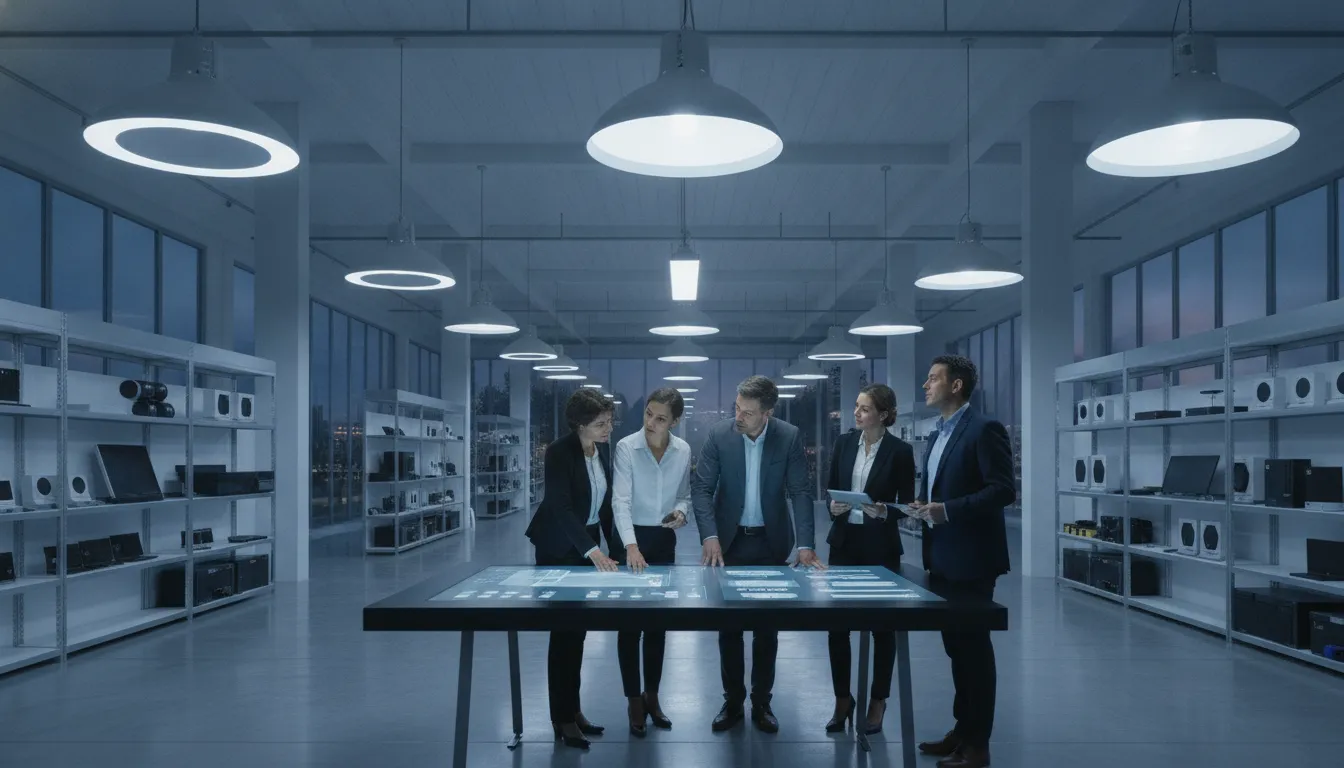
Let’s talk about your facility’s electricity bill. For any business with a large footprint, lighting is one of the biggest operational expenses. If you’re still running old, inefficient fixtures, you’re likely spending far more than you need to. Upgrading your lighting is one of the fastest ways to see a significant return on your investment. LED high bays are engineered for maximum efficiency, drastically cutting down on energy consumption from the moment they’re installed. Add in their incredibly long lifespan, which eliminates constant maintenance costs, and the financial benefits become clear. This guide will show you how to calculate your savings and find the best led high bay lights for sale to improve your bottom line.
Key Takeaways
- Focus on total cost, not just the price tag: The real value of LED high bays comes from their long-term performance. They dramatically lower your energy bills and have such a long lifespan that you'll save a considerable amount on maintenance and replacement costs over time.
- Choose a style and specs that fit your layout: Select round UFO fixtures for open floor plans and linear fixtures for aisles or long workstations. To create an effective lighting plan, make sure you also consider key specs like lumens for brightness and beam angle for light spread.
- Look for certifications to ensure safety and unlock rebates: Confirm that any light you buy has safety certifications like UL or ETL, which verify it has been tested for safety. Also, look for a DLC qualification, as this often makes you eligible for utility company rebates that can help reduce your upfront project cost.
What Is an LED High Bay Light?
If you’re outfitting a space with tall ceilings, your standard light fixtures just won’t cut it. That’s where LED high bay lights come in. Think of them as the heavy-duty lighting solution for large, open areas. These powerful overhead commercial lighting fixtures are specifically designed to provide bright, clear, and efficient illumination in spaces with ceilings ranging from about 15 to 40 feet high. The "LED" part is key, as it means they use light-emitting diodes, which are far more energy-efficient and longer-lasting than the old-school fluorescent or metal halide lights they often replace.
These lights are engineered to push bright, uniform light all the way down to the floor from a significant height, preventing dark spots and ensuring excellent visibility. Unlike a standard bulb that scatters light everywhere, a high bay fixture uses specialized reflectors or lenses to direct light downward in a concentrated beam. This focused approach is what makes them so effective for large-scale applications. Choosing the right high bay light is crucial for creating a safe, productive, and well-lit environment without running up a massive energy bill.
High Bays vs. Standard Lighting: What's the Difference?
The biggest difference between high bay lights and standard lighting is their intended application. High bay lights are built for high ceilings and expansive spaces, delivering focused and powerful illumination from a distance. In contrast, standard lighting fixtures, like the ones in your home or a small office, are designed for lower ceilings. If you tried to use a standard fixture in a warehouse, the light would disperse and become too dim before it ever reached the floor, leaving you with a poorly lit and potentially unsafe environment. High bays solve this by providing the intensity and coverage needed to light up a large area effectively.
Common Uses and Applications
You’ll find LED high bay lights in any large commercial or industrial building where high ceilings are the norm. They are the go-to choice for warehouses, manufacturing plants, and factories, where clear visibility is essential for worker safety and productivity. You’ll also see them in gymnasiums and recreation centers, providing bright, even light that covers the entire court or activity area. Big-box retail stores and large showrooms also use high bay fixtures to ensure their products are well-lit and the space feels open and inviting for customers. Essentially, if a space is big and tall, it probably needs high bay lights.
Why You Should Switch to LED High Bays
If you're still using traditional lighting in your large-scale space, you might be missing out on some serious benefits. Upgrading to LED high bays is more than just a simple swap; it's a smart business decision that pays off in multiple ways, from your budget to your team's safety.
Save Money and Energy
Let's be real, the bottom line matters. One of the biggest reasons to make the switch to LED high bays is the significant impact on your electricity bill. LEDs are simply much more energy-efficient than older lighting technologies like metal halide or fluorescent bulbs. This means they use far less power to produce the same amount, or even more, of bright, clear light. For any facility where the lights are on for long hours, like a warehouse, gym, or manufacturing plant, the savings on operating costs can be substantial. Think of it as a long-term investment that starts paying you back from the moment you flip the switch.
Spend Less Time on Maintenance
If you’ve ever had to replace a bulb in a 20-foot ceiling, you know it’s a major hassle. It often involves renting a lift, scheduling downtime, and paying for labor, all for one burnt-out light. This is where the incredible lifespan of LEDs really shines. Many LED high bay fixtures are rated to last for 50,000 hours or more. That’s years of consistent, reliable light without needing a replacement. An upgrade to LED high bays means you can say goodbye to frequent bulb changes and hello to reduced maintenance costs. You’ll spend less time worrying about your lighting and more time focusing on your business.
Create a Safer, Brighter Workspace
Good lighting is about more than just seeing; it’s about safety. Dim, shadowy, or flickering lights can create hazardous conditions in busy environments. LED high bays provide bright, uniform illumination that dramatically improves visibility across large spaces. This is critical in warehouses with moving forklifts or workshops with active machinery, as it helps reduce the risk of accidents. A well-lit space is a safer space for everyone. When you're shopping, look for fixtures that have been tested for performance and safety. Proper industrial high bay lighting can make your facility more efficient and give you peace of mind knowing your team is working in a safer environment.
Finding Your Perfect High Bay Style
When you hear the word "style," you might think about aesthetics, but with high bay lights, style is all about function. The shape of the fixture determines how it spreads light across your space. Choosing the right one ensures you get bright, even coverage exactly where you need it, without dark spots or wasted energy. The two main players in this arena are UFO and linear high bays. Let's look at what makes each one unique so you can pick the perfect fit for your building.
UFO High Bay Lights
Just like their name suggests, UFO high bay lights are round and compact. Think of them as the go-to choice for big, open areas with tall ceilings, typically anything from 20 to 40 feet high. Their circular design is perfect for spreading light evenly over a wide surface area, which is why you’ll often see them in warehouses, gymnasiums, and large manufacturing facilities. If your main goal is to illuminate a large, unobstructed floor space from a significant height, the UFO style provides powerful and efficient coverage. They effectively replace old, bulky metal halide fixtures, offering a modern look and superior performance.
Linear High Bay Lights
Linear high bay lights are long and rectangular, resembling classic fluorescent tube fixtures but with all the benefits of LED technology. This shape makes them the perfect solution for illuminating long, narrow spaces. Think about warehouse aisles, corridors, or retail stores with rows of shelving. Instead of spreading light in a wide circle, linear fixtures direct it downward in a more defined path. This focused approach ensures light is concentrated where it’s needed most, like along aisles and workspaces, rather than spilling onto the tops of shelves. This makes them incredibly efficient for layouts with racking or partitioned areas.
Which Style Is Right for You?
Making the right choice is simpler than it seems and comes down to your floor plan. If you have a wide-open space, go with UFO high bays. If your layout is defined by aisles, shelves, or long workstations, linear high bays are your best bet. Either way, if you’re still using old metal halide or fluorescent lights, making the switch to any LED high bay style will be a major upgrade. You’ll immediately notice lower energy bills and a brighter, higher-quality light. By matching the fixture style to your space’s layout, you can create a lighting plan that is both effective and energy-efficient.
How to Choose the Right LED High Bay Lights
Once you’ve picked a style, it’s time to get into the technical details. Choosing the right specs can feel a little overwhelming, but it’s all about matching the light to your space and your needs. Getting these details right ensures your lights perform well, save you money, and create a safe, comfortable environment. Let’s walk through the key factors to consider so you can feel confident in your choice.
Understanding Wattage vs. Lumens
When you’re shopping for lights, it’s easy to get stuck on wattage, but the most important number to look for is lumens. Lumens measure the actual brightness of a light, while watts measure how much energy it uses. With energy-efficient LEDs, more watts no longer means more light. The key metric is lumens per watt (lm/W), which tells you how efficiently the light converts energy into brightness. A higher rating means more light for less energy. For a high-performing fixture, you should look for LED high bay lights with an efficiency of at least 130 lumens per watt. This will give you powerful brightness while consuming minimal power.
Selecting the Right Color Temperature
The color temperature of a light, measured in Kelvin (K), has a huge impact on the look and feel of your space. Many people think all LEDs produce a harsh, blue-toned light, but modern LED technology comes in a wide spectrum of colors. Cool white (5000K–6500K) mimics natural daylight, providing crisp visibility that’s ideal for warehouses and workshops where alertness is key. Neutral white (3500K–4500K) offers a cleaner, more balanced light for retail stores and showrooms. Warm white (2700K–3000K) creates a cozy glow but is less common in work environments.
Checking IP Ratings for Durability
An IP (Ingress Protection) rating tells you how well a fixture is protected against solids like dust and liquids like water. This is critical for ensuring your lights last, especially in demanding industrial environments. The rating has two numbers: the first for solids (0-6) and the second for liquids (0-8). For most warehouses and workshops, an IP65 rating is an excellent standard. This means the fixture is completely dust-tight and can withstand low-pressure water jets, making it durable and easy to clean. Choosing reliable, high-performing solutions with strong IP ratings is a smart move for longevity.
Looking for Key Safety Certifications
When installing any electrical equipment, safety should be your top priority. Look for high bay lights that have been tested and certified by a Nationally Recognized Testing Laboratory (NRTL). The two most common certifications in the United States are UL (Underwriters Laboratories) and ETL (Intertek). These marks mean the product has passed rigorous tests for safety and performance. Using certified lights is often required by local building codes and for insurance purposes. An ETL mark provides independent validation that the fixture meets established safety standards, protecting your property and your team.
Deciding on Dimming and Smart Features
One of the biggest myths about LED lighting is that it can’t be dimmed. In reality, most modern LED high bays are designed to be fully dimmable, giving you greater control over your lighting and energy use. Dimmable fixtures allow you to adjust brightness levels to suit different tasks or times of day, which can significantly reduce your electricity consumption. Beyond simple dimming, you can also add smart controls like motion sensors. These LED-compatible dimmers and sensors help you maximize energy savings without sacrificing performance.
Choosing the Correct Beam Angle
The beam angle determines how wide or narrow the spread of light from the fixture will be. Choosing the right one is essential for achieving even, consistent lighting without dark spots or excessive glare. The ideal beam angle depends on your ceiling height. As a general rule, use a wider beam angle (90° or 120°) for ceilings 15–25 feet high to cover a large area. For ceilings 25 feet or higher, a narrower beam angle of 60° is better for focusing light downward. Checking this simple spec ensures your high bay lights are perfectly suited for your space.
How Many High Bay Lights Do You Need?
Figuring out the right number of lights for your space can feel like a tricky puzzle, but it’s more of a science than a guessing game. Getting this right is important. Too few lights create unsafe, shadowy areas, while too many will just run up your energy bill without any real benefit. The goal is to achieve even, consistent lighting across your entire floor.
To determine how many fixtures you need, you’ll have to consider a few key factors: the size of your space (length and width), the height of your ceiling, and the type of work you’ll be doing in the area. A storage warehouse has very different lighting needs than a workshop where detailed assembly happens. By breaking it down, you can create a simple lighting plan that perfectly illuminates your space, keeps your team safe, and makes your workspace more productive. Let's walk through how to get an accurate count for your project.
Calculate Based on Ceiling Height
The first thing you need to do is measure your ceiling height. This measurement is the starting point because it determines whether you need high bay or low bay lights. As a general rule, high bay lights are designed for ceilings that are 15 feet or taller. If your ceiling is lower, you might be better off with low bay fixtures.
Next, think about how bright the space needs to be. This brightness is measured in foot-candles. For example, a warehouse used for general storage might only need 20 to 30 foot-candles of light, while a manufacturing area where people do detailed work could require 50 to 75 foot-candles for safety and precision.
Plan Your Layout for Even Coverage
Once you know your ceiling height and brightness needs, you can start planning the layout. The goal is to space your lights correctly to get even coverage without dark spots or overly bright "hotspots." The beam angle of your chosen lights will play a big role in this, as a wider angle can cover more area from a lower height.
You don’t have to figure this out alone. Many lighting suppliers offer free assistance with planning where to put them to ensure you get the best results. A professional layout plan considers your room’s dimensions and the specific output of the lights to create a map of where each fixture should be installed for optimal, uniform illumination.
Top-Rated High Bay Light Brands
Once you know the specs you need, the next step is to find a brand you can trust. While countless companies sell high bay lights, a few consistently earn top marks for quality, performance, and customer support. Think of this list as a great starting point for your research. These brands have built a solid reputation by delivering reliable products that stand the test of time in demanding environments. They understand the unique challenges of lighting large spaces, from managing heat to ensuring consistent brightness across a wide area.
Choosing a well-regarded brand helps ensure you get a product that performs as advertised and is backed by a solid warranty. It’s about more than just buying a light; it’s about investing in a long-term solution for your space. A reputable manufacturer is more likely to provide accurate specifications, offer responsive customer service, and stand behind their products if something goes wrong. We’ve gathered a few of the most frequently recommended names in the industry to help you find a fixture that’s right for your project.
Sunco Lighting
If you need lighting for a food processing facility, commercial kitchen, or any space where sanitation is a top priority, Sunco Lighting is a fantastic choice. Many of their overhead commercial LED high bay lights are NSF Certified, meaning they meet strict standards for public health protection. Their fixtures are also known for excellent heat dissipation and waterproof housing, making them a durable option for warehouses, stockrooms, and other large facilities with high ceilings. This focus on safety and durability makes them a go-to for many industrial applications.
Hyperlite
Hyperlite is a name that comes up often, especially their Hero series. This particular line has been a bestseller for years, and for good reason. The Hero series is recognized for its impressive durability and efficiency, designed specifically to meet the needs of large spaces that require consistently bright light. If you’re looking for a workhorse fixture that has been proven in countless warehouses and workshops, reviewing the best high bay light from their collection is a great place to start. Their popularity is a strong indicator of their reliability and performance.
Eiko
Eiko has earned a strong reputation for producing quality lighting solutions that balance performance and value. Their Bay series is frequently mentioned in discussions among professionals and hobbyists alike as a dependable choice for commercial settings. When you see a brand recommended in forums by people who use the products daily, it’s a good sign. This kind of community-backed LED high bay recommendation highlights Eiko's reliability and solid performance, making them a brand worth considering for your workspace or facility.
LED Light Expert
While also a retailer, LED Light Expert stands out for its educational approach. They provide one of the most comprehensive buyer's guides available, helping you understand the technical details that matter. Their resources are perfect if you want to learn more about how lumens, wattage, and mounting heights affect your lighting plan. Using their LED high bay lights guide can help you feel more confident in your final decision, ensuring you select a product that delivers optimal performance and energy efficiency for your specific needs.
Are LED High Bays Worth the Investment?
Making a significant upgrade to your facility always comes down to one question: is it worth the money? While LED high bays have a higher initial price tag than their traditional counterparts, looking at the sticker price alone doesn't tell the whole story. The real value comes from their long-term performance, energy savings, and lower maintenance needs. When you consider the total cost of ownership, you’ll find that switching to LEDs is one of the smartest financial decisions you can make for your business.
Breaking Down Your ROI and Energy Savings
The most immediate return on your investment comes from your electricity bill. LEDs are significantly more energy efficient than conventional lighting, which is a huge advantage in large spaces where lights run for long hours. In fact, many businesses save 40-70% on their electricity bills just by making the switch. Beyond energy use, you also save on maintenance. Since LEDs last so much longer, you won't be spending time and money constantly replacing bulbs. This lower total cost of ownership means the lights quickly pay for themselves and continue to save you money for years to come.
Finding Rebates to Lower Your Upfront Cost
You can also lower the initial cost by taking advantage of financial incentives. Many utility companies offer rebates for installing energy-efficient lighting, but there's a catch: your lights usually need to be certified. Look for fixtures that are DLC (DesignLights Consortium) qualified. This certification ensures the light meets high standards for performance and efficiency, making it eligible for valuable utility rebates. Other important lighting certifications like UL or ETL listed confirm that the product has been independently tested for safety. These marks give you peace of mind that you're installing a reliable, high-quality product in your workspace.
Debunking Common High Bay Light Myths
Making a big purchase for your space can feel daunting, especially when you hear conflicting information. Let's clear up a few common myths about LED high bay lights so you can feel confident in your decision. These lights have come a long way, and many old beliefs simply don't apply anymore.
Myth #1: "They're too expensive."
It's easy to get sticker shock when looking at the upfront price of LED high bays compared to older lighting styles. However, this view often overlooks the total cost of ownership. While the initial investment might be higher, LEDs save you a significant amount of money over their lifespan. They use far less energy, which directly translates to lower electricity bills each month. Plus, their long life means you won't be spending time or money on frequent replacements. When you factor in energy and maintenance savings, LEDs are the more economical choice in the long run.
Myth #2: "They're too bright for a workspace."
Another common worry is that high bay lights will be overwhelmingly bright, creating a harsh or uncomfortable environment. In reality, modern LED high bays are designed to provide optimal illumination while being incredibly efficient. The goal isn't just brightness; it's about creating clear, consistent, and high-quality light that makes a space safer and more productive. You can choose from different lumen outputs and beam angles to get the perfect amount of light for your specific needs, ensuring the area is well-lit without being overpowering. They deliver powerful light exactly where you need it, without the wasted energy.
Myth #3: "You can't dim them."
This is a classic myth that hangs on from the past. While it's true that early LED technology had some compatibility issues with standard dimmer switches, that's no longer the case. Today, most high-quality LED high bay lights are designed to be fully dimmable. This feature gives you complete control over your lighting, allowing you to adjust brightness levels to suit different tasks, save even more energy, or simply set the right mood for the space. Just make sure you pair your lights with a compatible LED dimmer to get smooth, flicker-free performance.
Where to Buy LED High Bay Lights
Once you know what kind of high bay lights you need, the next step is finding a reliable place to buy them. You have a few options, from big-box home improvement stores to specialized online retailers and local electrical suppliers. Each has its pros and cons, so it’s worth exploring which route makes the most sense for your project and budget. For business owners outfitting a new warehouse, workshop, or retail space, finding a supplier that offers great prices, solid warranties, and helpful customer service is key. Let's walk through where to look and what to watch for to make sure you get the best deal on quality lights.
Online vs. Local Suppliers
Deciding between an online and a local supplier often comes down to balancing convenience with hands-on service. Online retailers typically offer a massive selection and competitive pricing because they have lower overhead. For example, sites like Warehouse-Lighting.com have an extensive catalog of fixtures perfect for industrial settings, while specialists like Sunco Lighting provide a great variety of high bay lights for different commercial spaces. The downside is that you can't see the product in person before buying. A local electrical supplier lets you inspect the lights and get expert advice face-to-face, but their selection and pricing might be more limited.
How to Find Bulk Discounts
If you're lighting a large area like a warehouse or a big workshop, you'll likely need to buy fixtures in bulk. This is where you can find some serious savings. Many online suppliers offer significant discounts for large orders. For instance, ELEDLights provides bulk pricing and even offers free shipping on larger purchases, which can cut your project costs considerably. Don't be afraid to reach out to a supplier's customer service team directly. Many have dedicated sales reps for commercial clients who can create custom quotes and help you find the most cost-effective solution for your project.
Tips for Buying Safely Online
When you're shopping for commercial lighting online, making sure the products are safe and reliable is a top priority. One of the most important things to look for is a safety certification mark. The ETL mark, for example, shows that a product has been independently tested and meets North American safety standards. This is especially crucial for commercial projects where electrical safety is non-negotiable. You should also familiarize yourself with other common lighting certifications like UL and CE, as these provide extra assurance about the quality and performance of the lights you’re buying. Always check the product description for these marks before you add anything to your cart.
Frequently Asked Questions
What's the single most important spec to check when buying an LED high bay? While it's tempting to focus on wattage, the most important number is lumens. Lumens tell you how bright the light actually is, whereas watts just measure the energy it uses. To understand a light's efficiency, look for its lumens per watt (lm/W) rating. A higher number means you get more bright, clear light for less energy, which is exactly what you want for saving money on your electricity bill.
How do I decide between a round UFO light and a long linear one? This choice comes down to the layout of your space. If you are lighting a large, open area like a warehouse floor or a gymnasium, a round UFO high bay is your best bet because it spreads light evenly in a wide circle. If your space is organized into long, narrow sections, such as aisles in a store or corridors, a linear high bay will be more effective since it directs light in a rectangular pattern.
Can I use a high bay light in my home garage? You can, but it might be more light than you need. High bay lights are designed for ceilings 15 feet or higher. If your garage has a standard ceiling height, the intense, focused light could create uncomfortable glare. For most home garages, a powerful LED shop light or a low bay fixture will provide plenty of bright, even illumination without being overpowering.
Are these lights difficult to install? For a qualified electrician, installing high bay lights is a pretty standard job. However, because they are installed on high ceilings and require proper electrical wiring, this is not a project for a typical DIYer. For safety and to ensure everything is up to code, we always recommend hiring a professional for the installation.
How do I actually get a rebate for my new lights? The process is more straightforward than you might think. First, check with your local utility company to see what energy-efficiency rebate programs they offer for commercial lighting. They will have specific requirements, but a common one is that the lights must be DLC (DesignLights Consortium) certified. Once you purchase qualifying lights, you can submit an application with your proof of purchase to the utility company to receive your rebate.