
2026-10-14
Cost of Running LED Christmas Lights: What to Expect
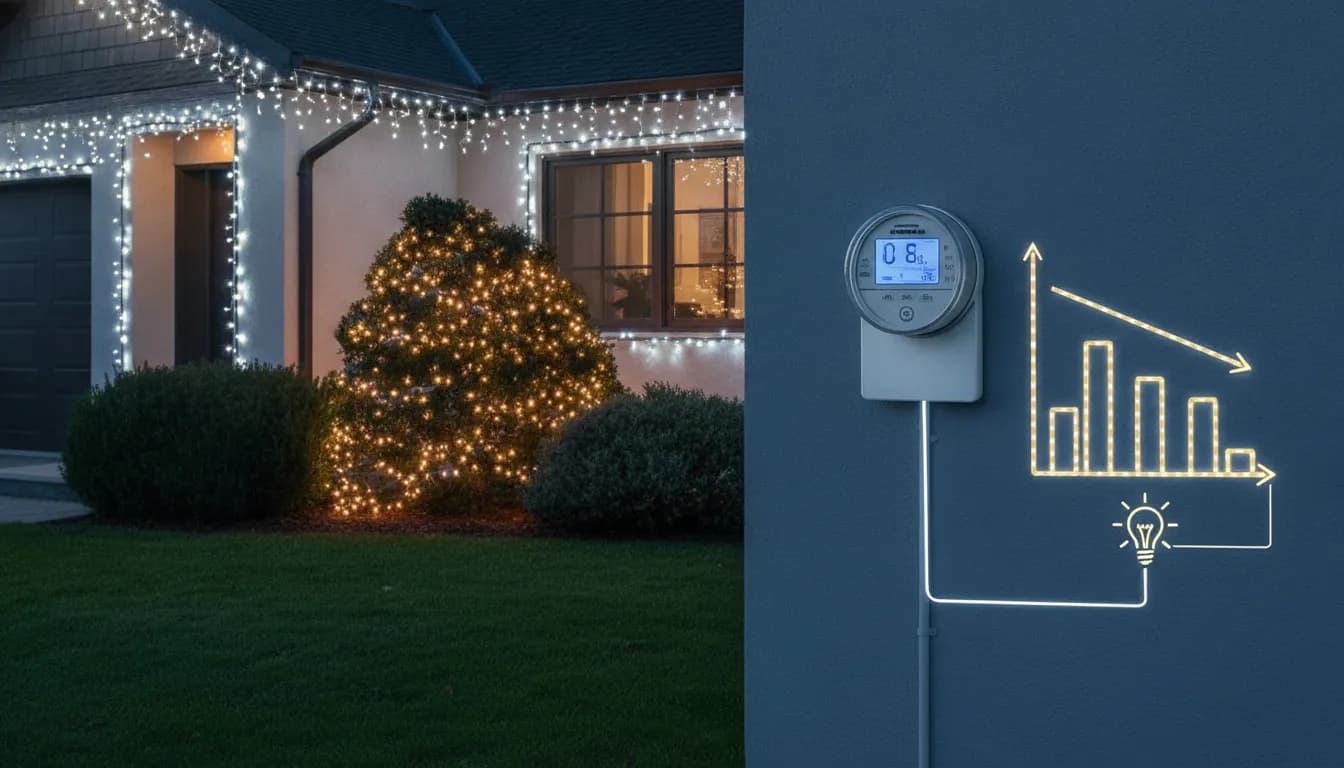
A bright holiday display doesn’t have to come with a surprise electricity bill. LED Christmas lights generally use less power than incandescent strands, but your costs still depend on the lights you choose, how many you connect, and how long they stay on. A small tree may use very little electricity, while a roofline display with several strands can add up over the season. The good news is that you don’t need complicated equipment to estimate the cost of running led christmas lights. Start with the wattage listed on your lights, your nightly schedule, and the rate on your utility bill. Here’s how to put those numbers together and plan a display that fits your budget.
Key Takeaways
- LEDs typically use less electricity than incandescent lights: Compare product wattage to see how much power your specific strands draw.
- Estimate costs using your actual usage and rate: Add the display’s wattage, multiply by hours and days, divide by 1,000, then multiply by your cost per kilowatt-hour.
- Set a schedule and plan for the full cost: Timers can limit operating hours; for permanent lighting, consider installation expenses separately from ongoing electricity use.
How Much Electricity Do LED Christmas Lights Use?
LED Christmas lights typically use much less electricity than incandescent lights, but the exact amount depends on the product and how long you run it. A small mini-light strand may draw only a few watts, while a larger display with C9 bulbs, multiple strands, or powered accessories can use more. The most reliable starting point is the wattage printed on each product’s label or listed by its manufacturer.
To estimate energy use, multiply the display’s total wattage by the number of hours it runs. For example, a 10-watt strand switched on for six hours uses 60 watt-hours of electricity that day. Divide by 1,000 to convert watt-hours to kilowatt-hours, the unit used on most utility bills.
Bulb count alone doesn’t tell you how much power a display needs. Two strings with the same number of bulbs may have different wattages because they use different bulb types, sizes, or wiring. Your display’s operating schedule matters, too. EnergySage’s guide to Christmas light energy use explains that light type, quantity, and hours of use all affect consumption.
If you’re planning a seasonal display, add the wattage of every strand and powered component you’ll run at once. That gives you a practical starting point for estimating electricity use, whether you’re decorating a tree, outlining a roof, or lighting a larger area.
Compare Mini, C9, and Icicle Light Wattages
Mini, C9, and icicle describe a light’s style, not a set wattage. Mini lights have small bulbs, while C9 bulbs are larger and often used for rooflines and other visible areas. Icicle lights hang in drops, and their total wattage depends on the number of drops, strand length, and bulb type. For any style, check the product label rather than relying on the name or appearance.
As a general reference, a 100-light LED string may use about 4.8 to 10 watts, according to SolarTechOnline’s overview of Christmas light electricity use. That range is not a rule for every mini, C9, or icicle set. Compare the listed wattage of the specific products you plan to use, particularly if your display combines different styles or several strands.
Compare LED and Incandescent Energy Use
LED Christmas lights generally use substantially less electricity than incandescent lights. For example, a 100-light LED string may draw about 4.8 to 10 watts, while a similar incandescent string can use around 40 watts. The exact difference varies by product, so compare the wattage on the packages or manufacturer listings when choosing between them.
The gap can also be noticeable across a larger display. A six-foot tree may use an estimated 20 to 30 watts with LEDs, compared with 160 to 240 watts with incandescent lights, according to Christmas Designers’ comparison of Christmas light energy use. Treat these figures as examples, not guarantees. Your results depend on the lights you own and how many hours they run. If you’re replacing older incandescent strands, compare the wattage of the full sets to estimate the difference in power needs.
Look Beyond Bulb Count to Estimate Power Use
More bulbs do not always mean higher electricity use. A strand with 200 efficient LEDs may draw less power than a shorter incandescent set. Bulb size, spacing, strand length, and any controller or power supply can also affect total wattage. Check the product specifications for each item in your display.
For a whole-home setup, add the wattage of all the strands and powered components that will run at the same time. Then note how many hours a day you’ll use them. For example, a 50-watt display running for six hours uses 300 watt-hours per day. If you’re connecting multiple strands, follow the manufacturer’s instructions and limits for end-to-end connections. This simple inventory gives you a more accurate picture of the display’s electricity use than counting bulbs alone.
What Does It Cost to Run LED Christmas Lights?
LED Christmas lights generally use less electricity than incandescent lights, but your actual cost depends on the display’s wattage, how many hours it runs, how many days you use it, and your electricity rate. A small strand can cost only a few cents a month to operate. A larger display will use more power, though LEDs can still cost much less to run than comparable incandescent lights.
The estimates below can help you set expectations. Treat them as examples, since strands with the same number of bulbs may use different amounts of electricity.
Estimate the Cost of a 5-Watt Strand Running Six Hours a Night
A 5-watt strand running six hours each night uses 30 watt-hours of electricity per night. Over 30 nights, that comes to 900 watt-hours, or 0.9 kilowatt-hours. At a rate of 15 cents per kilowatt-hour, the strand costs about 14 cents for the month. At 20 cents per kilowatt-hour, it costs about 18 cents.
That’s close to Govee’s estimate of 13 to 20 cents a month for a 100-bulb LED mini-light strand running six hours a day. Your lights may use more or less power, so check the wattage on the product label or listing before using this estimate.
Compare Monthly Costs at Different Electricity Rates
The same light display can cost different amounts to run in different homes because electricity rates vary. For instance, if your lights use 10 kilowatt-hours in a month, they’ll cost $1.50 at 15 cents per kilowatt-hour and $2.50 at 25 cents. Check your utility bill for your rate. If it lists separate supply and delivery charges, include applicable charges to get a more complete estimate.
The difference between LED and incandescent lights can be significant for a larger display. EnergySage compares the monthly cost of 700 LED mini lights at about $3.10 with roughly $27 for traditional mini lights. These figures are examples, not fixed prices. Your costs depend on the lights’ wattage, schedule, and local rates.
Estimate Costs for More Strands and a Full Season
For a larger display, add together the wattage of all the strands. For example, ten 5-watt strands use 50 watts combined. If you run them six hours a night for 30 nights, they’ll use 9 kilowatt-hours. At 20 cents per kilowatt-hour, that’s $1.80 for the month. Run the display for twice as many nights, and its electricity use and cost will double.
A large roofline display will use more electricity, but LEDs can make a noticeable difference compared with incandescent bulbs. EnergySage estimates that a 500-foot roofline display with incandescent C9 bulbs may cost more than $117 a month to run, compared with about $16 for an LED version. Treat those numbers as reference points, since bulb type and usage affect the final bill.
Separate Light and Replacement Costs
Electricity is only one part of the cost of holiday lighting. Factor in the price of the lights, replacement bulbs or strands, timers, and any installation or storage expenses. LEDs generally produce less heat and can last longer than incandescent bulbs, which may mean fewer replacements. Lifespan varies by product and conditions, so check the manufacturer’s specifications. SolarTechOnline explains how LED efficiency, heat output, and lifespan compare.
To compare options fairly, consider both the upfront price and expected running costs over several seasons. A less expensive incandescent strand may cost more to operate, while a durable LED option may use less electricity. For a professionally installed permanent lighting system, consider installation costs separately from ongoing electricity use. That gives you a clearer picture of the investment alongside the convenience of scheduled holiday and everyday lighting.
What Affects LED Christmas Light Costs?
Your LED Christmas light bill depends on how much power your display draws, how long it runs, and what you pay for electricity. Accessories and lighting settings can also affect consumption. Check these details before estimating your seasonal costs.
Count Strands and Add Their Wattage
Add the wattage of every strand to estimate your display’s total power draw. Check each product label or listing, since strands with the same number of bulbs can use different amounts of electricity. Bulb size and design matter, too: a C9 strand may use more power than a mini-light strand.
As a general guide, a 100-light LED string may use about 4.8 to 10 watts, compared with around 40 watts for a similar incandescent string. Actual figures vary by product, so use the listed wattage when you can. LED strings can use considerably less electricity than incandescent lights, but the wattage of every strand still counts toward your total.
Consider Daily Hours and Season Length
The longer your lights stay on, the more electricity they use. A display that runs for three hours each evening will generally use less power than the same display left on all night. The number of days also matters: running lights throughout the season costs more than displaying them for a few weeks.
Choose a schedule that fits your routine, then use a timer or smart plug to switch lights off automatically. Limiting operating hours can reduce energy use, and the savings depend on how much time you cut. For permanent outdoor lighting, you can set one schedule for holiday displays and another for everyday accent lighting.
Check Local Rates and Time-of-Use Plans
Electricity rates vary by location and utility, so identical displays can cost different amounts to run. Your rate may also depend on when you use power. If your utility has time-of-use pricing, running lights during higher-priced hours may add more to your bill than running them at other times.
For a useful estimate, check your utility bill for the rate that applies to your household. Published electricity-rate examples illustrate how much prices can differ, but averages may not match your plan. Look for separate supply and delivery charges, and check whether both are calculated per kilowatt-hour.
Account for Light Modes, Dimmers, Controllers, and Power Supplies
Flashing, color-changing, or dimmed settings may affect electricity use, but the impact depends on the product. Don’t assume a certain mode uses less power. Check the manufacturer’s specifications if you want to compare settings, and use the listed wattage as a starting point for your estimate.
Controllers and power supplies can also draw electricity while the lights are on. Check their labels or product information, and account for standby use if the manufacturer provides that figure. Smart controls may use a small amount of power, too, though scheduling can help limit how long the lights run. Follow product guidance for compatible accessories and outdoor use, especially when connecting multiple strands.
How Do You Calculate LED Christmas Light Costs?
To estimate what your display will add to your electricity bill, gather three figures: the total wattage of your lights, how many hours you run them, and your electricity rate per kilowatt-hour (kWh). This gives you a useful estimate for planning a holiday display or comparing different lighting schedules. Your actual bill may also include delivery charges, taxes, or time-based rates.
Apply the Formula: Watts × Hours × Days ÷ 1,000 × Rate
Use this formula to estimate the electricity cost:
Total watts × hours per day × number of days ÷ 1,000 × electricity rate per kWh
Dividing by 1,000 converts watt-hours into kilowatt-hours, the unit used on electricity bills. For example, a 5-watt strand running six hours a night for 30 days uses 0.9 kWh: 5 × 6 × 30 ÷ 1,000. At $0.16 per kWh, the estimated cost is about $0.14 for the month.
For multiple strands, add their wattages first. You can also use a Christmas light electricity calculator to check your math. Use your own product wattage and utility rate for the most relevant estimate.
Find Each Strand’s Wattage on Its Label or Product Listing
Check the product label, packaging, or online listing for each strand’s wattage. If your display combines different types of lights, note the wattage for each and add the figures together. A roofline with C9 bulbs, for example, may use a different amount of electricity than a few short strands of mini lights.
If a listing provides voltage and amperage but not wattage, multiply volts by amps to estimate watts. Most products list wattage directly, though. As a general reference, EnergySage’s guide to Christmas light electricity use reports that a 100-light LED string may use about 4.8 to 10 watts. Product designs vary, so use the figure listed for your specific lights whenever possible.
Check Your Utility Bill for the Applicable Rate
Look at your latest electricity bill for the price per kWh. If you have a time-of-use plan, check the rate that applies during the hours your lights will be on. Your bill may list supply and delivery charges separately, so include any usage-based charges for a more complete estimate.
Electricity rates vary by location and plan, which means a national average may not reflect what you pay. SolarTechOnline’s guide to electricity costs shows how rates can differ by region, but your utility bill is the best source for your own rate. If you’re unsure which figure to use, check your utility’s website or contact its customer service team.
Calculate Daily, Monthly, and Seasonal Costs
Apply the formula to the time period you want to estimate. For a 5-watt strand running six hours each night at $0.16 per kWh, the estimated cost is about $0.005 per day, $0.14 for 30 days, or $0.43 for a 90-day season. Your total may differ based on your rate and billing details.
For a larger display, add the wattage of all the strands, then calculate the total. If different parts of your display run on different schedules, estimate each group separately and add the results. For instance, you might run roofline lights every evening and switch on yard or window lights only on weekends. Keep track of your wattage, hours per night, and season length so you can revise the estimate if your display or schedule changes.
Which Electricity Rates and Cost Estimates Should You Use?
Your estimate depends on more than the wattage of your lights and how long they’re on. The electricity rate you use matters, too. A national average can offer a helpful starting point, but your utility bill provides the most relevant figure for your home. Use online estimates to compare costs, then adjust them to reflect your local rates, plan, and fees.
Compare Your Utility Rate With a National Benchmark
A national average can help you put your lighting costs in perspective. One holiday lighting cost estimate uses 17.62 cents per kilowatt-hour as a U.S. benchmark. Treat that figure as a reference, not a guaranteed rate for your household. Electricity prices change, and the average may reflect a different period than your current bill.
For a more accurate calculation, look for the price per kilowatt-hour, or kWh, on your utility bill. You can compare it with the latest U.S. electricity data, but check the reporting period before using a national figure. Once you have your rate, use it in your estimate to see what your lights might add to your bill.
Use Regional Rates as Examples, Not Guaranteed Prices
Electricity rates vary by state and utility. A regional rate comparison gives examples from about 11 cents per kWh in North Dakota and Washington to 41 cents in Hawaii. These figures illustrate how location can affect operating costs, but they don’t predict what every household in those states will pay.
Your actual rate may depend on your provider, plan, and billing details. For a useful estimate, use the rate on your own bill rather than assuming a statewide figure applies to you. When comparing cost estimates, also check their assumptions: how many strands they include, how many hours the lights run, and how many days they stay on. Matching those details makes it easier to compare like with like.
Include Delivery Charges and Time-of-Use Rates
The energy rate alone may not represent the full cost of electricity on your bill. Your utility may also charge delivery fees or other electricity-related charges. Review your bill to see what applies. For a rough all-in estimate, divide the charges related to electricity by the total kWh used, then use that figure in your calculation. Keep in mind that some bill charges are fixed, so they may not change when you add lights.
Check your plan for time-of-use pricing, too. Under these plans, electricity costs more during some hours and less during others. If your lights run during different rate periods, calculate each period separately for a closer estimate. A timer can help you set a consistent schedule, and may let you avoid higher-rate hours if that fits your plan.
How Can You Keep LED Christmas Light Costs Low?
A few practical choices can help keep your holiday display’s electricity use in check. Set a schedule, compare the wattage of different strands, and check your setup before plugging everything in. These steps make it easier to manage costs while enjoying a festive display.
Limit Lighting Hours With a Timer or Smart Plug
Set your lights to turn on around dusk and switch off before you go to bed. A timer or outdoor-rated smart plug can follow that schedule automatically, so you don’t have to remember to unplug the display each night. Check the device’s instructions and make sure it can handle the combined electrical load of the lights connected to it.
A smart plug may also let you change the schedule from an app, which is handy for weekends or gatherings. Choose a schedule that gives you time to enjoy the display without leaving it on through the night. Govee recommends using a timer or smart plug to limit how long holiday lights run.
Turn Lights Off When You’re Away or Asleep
LEDs use less electricity than many older lighting options, but they still draw power whenever they’re on. Turn your display off when you leave home or go to bed, or use a timer to handle it automatically. If you’ll be away for several days, consider switching the display off for the full trip.
Turning lights off also gives you a chance to check that the setup is working as expected. Make sure cords and connections remain in good condition, and follow the instructions that came with your lights. EnergySage recommends turning Christmas lights off when you go to bed or leave home.
Choose Efficient Strands and Light Key Areas
Compare wattage on the package or product listing when shopping. Bulb count alone won’t tell you how much electricity a strand uses, and two sets with the same number of bulbs may have different wattages. If you’re replacing incandescent lights, compare their power use with LED options before buying.
You can also make a smaller display feel intentional by focusing on a few areas, such as a roofline, entryway, or favorite tree. That may mean buying and running fewer strands. Utah Holiday Lighting reports that LED lights can use up to 90% less energy than incandescent lights. Actual savings depend on the products and usage you compare.
Measure Consumption With a Meter or Energy-Monitoring Plug
An energy-monitoring plug or meter can help you see how much electricity your display uses. Choose a device designed for your setup, and use an outdoor-rated model if it will be exposed to outdoor conditions. Follow the device’s instructions, including any limits on connected equipment.
You can also estimate costs using the lights’ total wattage: divide watts by 1,000, then multiply by hours used, days, and your electricity rate. For example, a 100-watt display running six hours a night for 30 days uses 18 kilowatt-hours. SolarTechOnline explains this calculation. Check your utility bill for the rate that applies to your home.
Follow Product and Electrical Safety Guidance
Inspect each strand before hanging it. Look for frayed wires, cracked sockets, loose connections, or broken bulbs, and replace damaged lights rather than using them. Check product labels to confirm that lights are rated for outdoor use, and follow the manufacturer’s directions for connecting strands and power supplies.
Use extension cords designed for outdoor conditions outside, and keep connections protected from moisture as directed by the product instructions. Don’t exceed the number of strands or electrical load allowed by the manufacturer. Keep cords out of walkways, and use light clips instead of nails or staples. EnergySage recommends checking light strings and using cords suited to their location.
How Do Permanent LED Lights Affect Running Costs?
Permanent LED lights add to your electricity use, but the cost depends on the system’s wattage, how long it runs, and your local electricity rate. The example estimates below use a 100-watt system and a rate of 15 cents per kilowatt-hour. Check your system specifications and utility bill to calculate a more precise figure for your home.
Estimate Use for Holiday and Everyday Schedules
A 100-watt system running six hours each night for 30 days uses 18 kilowatt-hours. At 15 cents per kilowatt-hour, that comes to about $2.70 for the month. If you use the same system for everyday accent lighting, running it four hours each night for a full year, it uses 146 kilowatt-hours, or about $21.90 at that rate.
These are examples, not guaranteed costs. Your system’s wattage and electricity rate may differ, and your usage can change with your schedule. For comparison, LED lights can use substantially less energy than incandescent lights. Use your system’s specifications to make an estimate that reflects your own setup.
Separate Electricity Costs From Professional Installation Costs
Your electricity bill is just one part of the cost of permanent lighting. Professional installation is a separate upfront expense, and the price can depend on your home’s size and layout, the equipment, and the work involved. When requesting a quote, ask what it includes, such as installation, controls, maintenance, and warranty coverage.
After installation, estimate running costs using the system’s wattage and your expected schedule. Because permanent lights stay in place, you won’t need to install and take down temporary lights each season. That convenience may also mean less seasonal storage and fewer temporary strands to replace, but it is separate from any electricity savings. Consider both the initial installation and likely ongoing use when comparing options.
Consider Scheduling, Convenience, and Year-Round Curb Appeal
A schedule helps keep electricity use predictable. Set the lights to run during the hours you want to enjoy them, then adjust the timing for holidays, gatherings, or other occasions. A timer or smart controller can switch them off overnight. Limiting the hours your lights run is one practical way to manage energy use.
Think about how you’ll use the system throughout the year, too. Permanent lighting can create a festive display for the holidays and provide subtle exterior accents on ordinary evenings. Check the system’s wattage and controller settings, then estimate costs for both occasional displays and regular use. That gives you a clearer picture of the electricity expense alongside the convenience and curb appeal the system can provide.
Frequently Asked Questions
Do LED Christmas lights use a lot of electricity?\ Usually not. LED strands tend to use far less electricity than comparable incandescent lights, though a large display or long daily schedule will use more than a small, occasional setup. Check each product’s wattage to estimate your display’s use.
How can I estimate what my Christmas lights will cost to run?\ Add the wattage of the lights that will run at the same time, multiply by the hours per day and number of days, then divide by 1,000. Multiply that result by your electricity rate per kilowatt-hour. Your utility bill is the best place to find your rate.
Are C9 lights more expensive to run than mini lights?\ They can be, but the style alone doesn’t determine energy use. Bulb type, strand length, and product design all matter. Compare the wattage listed for the specific strands you’re considering.
Will a timer reduce my lighting costs?\ A timer can help by switching lights off when you don’t need them. The amount you save depends on how many hours it cuts from the display’s schedule and the display’s total wattage.
How much electricity do permanent outdoor LED lights use?\ It depends on the system’s wattage and how often you use it. Check the system specifications and estimate costs separately for holiday displays and everyday lighting. Installation is an upfront expense, separate from the electricity bill.