
2026-10-15
Cost to Retrofit Industrial Lighting to LED: What to Expect
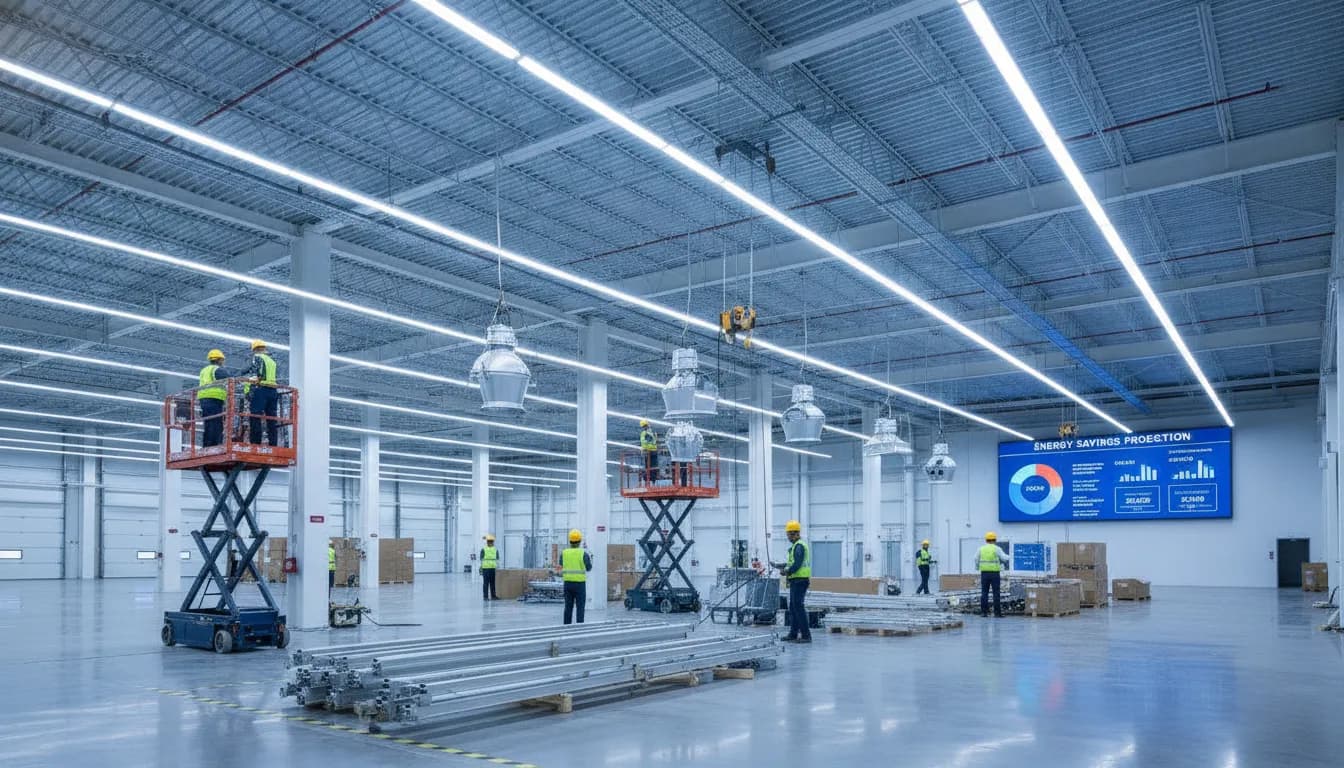
A low quote can be tempting, but it may not tell the whole story. Does it include lift equipment, disposal, electrical work, and testing? Are the proposed LEDs compatible with your existing fixtures, or will some need to be replaced? These details can change the cost to retrofit industrial lighting to led, as well as how much the project may save over time. Before approving a proposal, it helps to understand the work your facility needs and the assumptions behind the price. Here’s what to review when estimating costs, comparing bids, and planning a retrofit around your operations.
Key Takeaways
- Start with a facility-specific assessment: Document fixture types, condition, wattage, access needs, wiring, controls, and operating hours to shape a realistic estimate.
- Compare complete project scopes: Review equipment, labor, electrical work, access equipment, disposal, testing, scheduling, and exclusions in each quote.
- Evaluate costs over time: Estimate energy and maintenance savings using your utility bills, then check payback and confirm rebate requirements before committing.
What Does an Industrial LED Retrofit Cost?
Industrial LED retrofit costs vary by facility. The fixture count and type, installation conditions, and compatibility of existing wiring and controls all affect the price. Rather than relying on a single cost-per-square-foot estimate, compare itemized quotes and consider both the initial investment and the ongoing cost to operate and maintain the lighting.
Estimate Costs per Fixture and Square Foot
Cost per fixture can help you compare quotes, especially when each one separates equipment from labor. Prices depend on the fixture type and light output, as well as whether the project uses LED tubes, retrofit kits, or new fixtures.
Cost per square foot can be useful for early budgeting, but it’s only a rough guide. Two facilities with the same floor area may have different ceiling heights, work areas, and lighting layouts. To get a more relevant estimate, count your fixtures and note their types and locations. A lighting assessment can help determine suitable retrofit options and estimate potential energy savings.
See What an Installer’s Quote Covers
Ask for an itemized quote that identifies equipment, labor, access equipment, disposal, and electrical work. It should specify the proposed products and clarify whether the project includes retrofit kits or new fixtures, controls, wiring changes, and testing. If your facility has production areas, high ceilings, or damp spaces, confirm that the proposed lighting suits those conditions.
Check whether your existing fixtures and controls are compatible with the new LEDs. Any required changes can affect the scope and cost. A professional retrofit assessment can help identify suitable products, likely project costs, and possible rebates. Before approving a quote, ask what could lead to additional charges and how installation may affect your operations.
Compare Upfront and Total Ownership Costs
A lower purchase price doesn’t always mean a lower-cost project over time. Compare the upfront cost with expected energy use, service life, maintenance needs, and replacement costs. A less expensive option may require more frequent repairs or use more electricity.
Your potential savings depend on the current lighting, facility hours, and electricity rates. LEDs may use less energy than traditional lighting, and longer service life can reduce relamping and maintenance. Resound Energy’s LED retrofit guidance says LEDs can be up to 80% more efficient and last up to 10 times longer than traditional lighting, though results vary by product and site. Ask installers to estimate annual operating costs using your utility rates and usage, then compare those figures with the project’s upfront price.
What Affects Industrial LED Retrofit Costs?
An industrial LED retrofit quote reflects more than the cost of the new lights. The number and condition of existing fixtures, building access, electrical requirements, and work schedule can all affect the project total. Reviewing these details before requesting bids helps you understand what each quote includes and compare proposals on equal terms.
Check Fixture Count, Type, Wattage, Condition, and Compatibility
Begin with an inventory of the fixtures in each area. Record the quantity, type, wattage, and condition of each one. High bays, troffers, and strip lights may call for different products and installation methods, while damaged fixtures can require more than a simple lamp swap.
Check compatibility before assuming existing fixtures can be reused. Some can accept LED lamps or retrofit kits, while others need replacement. A retrofit may take less time and cost less than replacing an entire lighting system, but fixtures that cannot use LED lamps may need new equipment, as Daisy Energy explains in its retrofit guide. Ask installers to identify reusable fixtures and required replacements in their quotes.
Consider Building Size, Ceiling Height, Access, and Site Conditions
Square footage gives only part of the picture. A larger facility may contain more fixtures, but ceiling height, access, and the layout of each work area also influence installation time and equipment needs. High ceilings may require lifts, while crowded aisles or machinery can make it harder for crews to reach fixtures.
Consider how installation will fit around production, inventory, tenants, and other daily operations. Work may need to be scheduled in stages or during specific hours to limit disruption. The building, existing fixtures, and size and type of lights all affect project timing and scope, according to Daisy Energy’s overview of LED retrofits. Share access restrictions and scheduling requirements when requesting estimates so installers can account for them.
Account for Labor, Electrical Upgrades, Controls, and Downtime
Labor costs depend on fixture quantity, ceiling height, installation complexity, and preparation work. A quote may also include lift rental, removal and disposal of old equipment, testing, and cleanup. Ask for these costs to be itemized, along with any assumptions about work hours or project phasing.
Some facilities need electrical upgrades before new LEDs can be installed. This could include panel work, new circuits, or wiring changes. Daisy Energy’s guide for businesses notes that panel upgrades and new circuits may be required for some retrofits. Occupancy sensors, dimmers, and scheduling controls can add to upfront costs, too. Consider whether installation will interrupt operations: phased or after-hours work may reduce disruption, but can change labor costs.
Factor in Operating Hours, Electricity Rates, and Demand Charges
The potential energy savings depend partly on how long the lights run. A facility operating multiple shifts may save more than one that uses lighting for only a few hours a day. Electricity rates also affect the value of reduced energy use. Compare the wattage of current fixtures with the proposed LEDs, then factor in annual operating hours and your utility rate. Luminate Lighting Group’s retrofit savings guide recommends starting with this wattage comparison.
Demand charges may also influence the project’s financial case, depending on how your utility calculates peak power use. Ask your utility provider whether a lighting change could affect those charges. Action Services Group outlines a basic energy-savings calculation using watts saved, operating hours, and electricity rates. Use your own bills and schedules for a more useful estimate, and ask the installer to explain the assumptions behind any projected savings.
Which LED Retrofit Fits Your Facility?
The right LED retrofit depends on the fixtures you have, the tasks each space supports, and the condition of your wiring and controls. A warehouse with high ceilings has different needs from an office, production floor, or parking garage. Start by listing fixture types and locations, noting areas with poor visibility, frequent lamp failures, or high energy use. This gives installers a clearer picture of your facility and helps them recommend solutions for each space.
An LED retrofit may preserve compatible fixtures, replace selected components, or involve installing entirely new fixtures. Each approach affects equipment costs, labor, downtime, and future maintenance. Ask for a recommendation that explains why the proposed products fit your facility, rather than a one-size-fits-all package. Confirm that the plan accounts for light levels, mounting conditions, wiring, controls, and safety requirements. A qualified lighting professional can inspect the existing system and identify compatibility issues before you commit to equipment or a project schedule.
Choose LED Tubes, Retrofit Kits, or New Fixtures
LED tubes can suit fluorescent fixtures that are in good condition and compatible with the selected lamps. Depending on the product, a tube may work with a compatible ballast, or the ballast may need to be bypassed or removed. Retrofit kits replace selected fixture components while keeping the existing housing, making them an option when the fixture body is still usable.
New LED fixtures may be the better choice if existing housings are damaged, inefficient, or poorly suited to the space. Compare each option’s full cost, including equipment, installation, wiring changes, and future maintenance. An overview of LED retrofits explains how retrofit approaches can vary. Have an installer verify compatibility on site before selecting tubes or kits.
Match High Bays, Troffers, Strip Lights, and Vapor-Tight Fixtures to Each Area
Choose fixtures according to ceiling height, room layout, work activities, and exposure to dust or moisture. High bays are common in warehouses and manufacturing spaces with tall ceilings. Troffers fit many suspended office ceilings, while strip lights often work well in workshops and utility areas. Vapor-tight fixtures can be appropriate in spaces where moisture or airborne particles are a concern.
The fixture type is only one part of the decision. Ask for a lighting layout that accounts for mounting height, spacing, obstructions, and the level of illumination each task requires. Daisy Energy’s guide to retrofit options describes common fixture types and applications. Use it as a reference, then ask your installer to match products to the conditions in each area of your facility.
Compare Light Output, Efficiency, Certifications, Warranty, and Service Life
Compare light output in lumens, and confirm that the proposed design will provide suitable illumination for the work being done. Wattage measures power use, but it does not show brightness on its own. Review efficacy, which indicates how much light a fixture produces for the electricity it consumes. Also check color quality and any relevant safety or performance certifications.
Ask about warranty length, expected service life, replacement parts, and product support. Find out whether the warranty covers labor or only the equipment. LED products can reduce energy and maintenance costs, but results depend on fixture selection, operating hours, and utility rates. Resound Energy describes potential LED lighting benefits, but use your facility’s actual conditions to estimate savings and compare products.
Check Wiring, Thermal, and Dimming Compatibility
Confirm how each LED product connects to your existing fixtures. Some tubes require a compatible ballast, while others need a wiring change. The installation method should be clearly specified and labeled. Incorrect wiring can create a shock hazard, particularly if a fixture is changed but still appears suitable for a fluorescent lamp. Jarvis Lighting’s troubleshooting guide describes common wiring risks to discuss with your installer.
Check heat management, especially for fixtures in enclosed spaces. Excess heat can affect LED performance and service life. If you plan to use dimmers, occupancy sensors, daylight controls, or a building management system, verify that the LED drivers and controls are compatible. Have a qualified electrician review wiring and controls before work begins, and document any changes for future maintenance.
Compare Product Support and Installation Scope
A clear proposal should list equipment, labor, wiring changes, disposal, testing, and cleanup. It should also explain who provides lift equipment, handles permits, follows site safety procedures, and coordinates work around facility operations. Ask how the installer will address unexpected issues, such as damaged fixtures or wiring that differs from the initial inspection.
Confirm what support is available after installation, including warranty claims, service requests, product documentation, and updated fixture records. A written installation plan can help reduce disruption and keep responsibilities clear. Envocore recommends coordinating retrofit work with the provider and relevant departments. Before signing, compare proposals line by line so you understand the equipment, services, and installation tasks included in the price.
How Much Can an LED Retrofit Save?
The savings from an industrial LED retrofit depend on your current fixtures, operating schedule, electricity rate, and maintenance needs. A warehouse running high-bay lights across multiple shifts may see a different return than a facility with shorter hours. To get a useful estimate, start with your fixture inventory and utility bills, then ask your installer to explain the assumptions behind the projected savings.
Estimate Energy Savings from Wattage, Hours, and Electricity Rates
Compare the wattage of each existing fixture with the LED replacement. Multiply the wattage difference by the number of fixtures and annual operating hours, then divide by 1,000 to calculate the kilowatt-hours saved. Multiply that number by your electricity rate to estimate annual energy savings.
For example, replacing 400-watt fixtures with 150-watt LEDs saves 250 watts per fixture. If 100 fixtures operate 4,000 hours per year, the estimated reduction is 100,000 kilowatt-hours. At 13 cents per kilowatt-hour, that equals $13,000 in annual energy savings, before other charges. This calculation follows the method described by Luminate Lighting Group. Use actual fixture wattages and the rate on your utility bill for a more reliable estimate.
Include Maintenance, Replacements, and Potential Demand Savings
Energy is only one part of the potential savings. LEDs can last longer than many traditional light sources, which may mean fewer replacement lamps, less service labor, and fewer interruptions when a fixture needs attention. These savings can matter especially in spaces with high ceilings, where reaching a light requires lifts, extra staff, or a production pause.
Review maintenance records to estimate how often fixtures need repairs and what replacement parts and labor cost. Then check your utility bill for demand charges, which may be based on peak power use. Lower lighting loads could affect those charges, but the result depends on your utility rate and the facility’s overall power use. Starbeam Lighting explains why reduced energy use and replacement needs can contribute to retrofit savings.
Calculate Payback and Life-Cycle Cost
A simple payback estimate helps show how long it may take for savings to cover the project cost. Divide the installed project cost, minus confirmed rebates or incentives, by estimated annual savings. For instance, a project with a net cost of $60,000 and annual energy and maintenance savings of $20,000 has a simple payback of three years.
Payback is a useful starting point, but it does not capture every cost over the system’s life. Compare installation, equipment, energy, maintenance, and replacement costs over the expected service period. Include your facility’s operating schedule and any planned changes to the space. Facilities that run lights for longer hours may see payback sooner, as PEC Northwest notes. Ask the installer to share the assumptions behind the projected savings so you can compare quotes on the same basis.
Clear Up Common Cost Misconceptions
A higher upfront price does not necessarily mean an LED retrofit will cost more over time. Compare the total cost of owning and operating the lighting, not just the price of each fixture. A lower-priced option could use more electricity, need more frequent service, or fail to provide the light quality your facility requires.
At the same time, projected savings are not guaranteed. Results vary based on existing equipment, operating hours, electricity rates, controls, installation quality, and available incentives. Ask for an estimate that lists energy and maintenance savings separately and makes its assumptions clear. Some organizations report payback within a few years, but your facility’s results may differ. Relumination’s overview of LED retrofit misconceptions offers general context. Your utility bills, maintenance history, and project-specific quote are better guides for estimating your return.
How Can You Estimate and Reduce Net Project Costs?
Start with a clear picture of your facility’s current lighting, operating schedule, and project goals. Net project cost includes more than the price of LED fixtures. Account for labor, wiring or controls work, lifts and other access equipment, disposal, possible downtime, and post-installation adjustments. Then subtract any rebates you’ve confirmed your project qualifies for. Listing these costs separately makes it easier to spot gaps between quotes and identify expenses that still need investigation.
Base your estimate on the way your facility actually operates. A warehouse with high ceilings and long operating hours may need different equipment and installation planning than a small space used for one shift. Ask contractors to state their assumptions, including fixture compatibility, access requirements, and installation timing. A clear scope helps you compare the initial investment with expected energy and maintenance savings, and gives you a better chance of avoiding unexpected costs.
Audit Fixtures, Lighting Needs, Utility Bills, and Schedules
Create a fixture inventory before requesting proposals. Record each fixture’s type, quantity, wattage, condition, location, and approximate hours of use. Note areas that need brighter light, more even coverage, or updated controls. This information helps contractors recommend equipment for specific spaces instead of applying a one-size-fits-all plan.
Gather recent utility bills and operating schedules as well. Electricity rates and hours of use shape savings estimates, while shift changes or planned shutdowns can affect installation timing. Ask your lighting provider to assess the facility, identify potential challenges, and use those details to develop a lighting plan. A thorough LED retrofit assessment can help match fixture choices to your building’s needs.
Request Comparable Quotes with Clear Equipment and Labor Costs
Ask contractors to price the same fixture inventory and project scope. Each quote should list equipment models and quantities, light output, controls, labor, access equipment, disposal, wiring work, and exclusions. Confirm whether commissioning, cleanup, and post-installation adjustments are included. Clear line items help you compare proposals fairly and avoid choosing a low bid that leaves essential work out.
Ask contractors to state their assumptions, estimated schedule, and plans for unexpected site conditions. Confirm who will handle permits, if needed, and whether the quote includes any required electrical upgrades. If a proposal seems unusually high or low, ask for a breakdown before deciding. A lighting audit can help clarify project costs and expected savings, as outlined in Starbeam Lighting’s retrofit guidance.
Check Rebates and Incentives Before You Buy
Contact your electric utility and relevant local or regional programs before choosing products or signing a contract. Incentives may apply only to equipment that meets specific efficiency standards or to certain installation methods. Some programs also require preapproval or an application before work begins. Confirm the requirements with the program administrator, and ask your contractor whether they can help identify incentives for your project.
Treat a rebate as a possible cost reduction until you verify the amount and terms. Ask which documents you’ll need, who submits the application, and when payment is expected. Include the incentive in your budget only after confirming that your facility, equipment, and project scope qualify. Availability varies by program, so check the details rather than relying on a general estimate. This overview of LED retrofit incentives explains how rebates can affect project costs.
Confirm Eligibility and Application Deadlines
Review a program’s eligibility criteria before buying equipment or scheduling installation. Requirements may specify fixture performance, contractor qualifications, project size, or the order in which work must happen. Keep product data sheets, invoices, installation records, and any required before-and-after information together so you can complete the application accurately.
Check deadlines and approval steps with the program administrator. Some programs require approval before work starts, while others have funding limits or set application periods. Ask for the process in writing, and confirm who is responsible for each step. Paperwork can take time, so include it in your project schedule. Stouch Lighting’s retrofit management overview highlights why it pays to plan for rebate administration as well as the potential incentive.
Plan for Wiring Issues, Disruption, Safety, and Post-Install Adjustments
Ask the installer to inspect existing wiring, ballasts, controls, and fixture condition before finalizing the scope. Some retrofit options require electrical modifications, and older equipment may need extra work. Confirm who will complete those tasks, whether they’re included in the quote, and how the crew will protect employees and equipment. For example, some fluorescent-to-LED conversions require ballast removal and rewiring, as explained in this LED retrofit troubleshooting guide.
Plan installation around facility operations. Agree on work areas, access times, shutdown requirements, cleanup, and disposal. Set aside a reasonable allowance for adjustments, such as aiming fixtures or fine-tuning controls after staff use the new lighting. Before work begins, document the schedule and safety responsibilities. Also agree on how the contractor will notify you if an unexpected condition changes the project scope or cost.
Frequently Asked Questions
How can I get a reliable estimate for an industrial LED retrofit?\ Start with a count of your fixtures, noting their types, wattages, condition, and locations. Share that inventory, your operating hours, recent utility bills, and any access or scheduling restrictions with installers. Ask for itemized proposals based on the same project scope so you can compare costs fairly.
Is retrofitting existing fixtures always less expensive than replacing them?\ Not always. Reusing compatible fixtures may reduce equipment and labor costs, but damaged or unsuitable fixtures could need replacement. Ask an installer to inspect your system and compare the full installed cost of each option, including wiring changes and future maintenance.
How long does it take for an industrial LED retrofit to pay for itself?\ Payback depends on the project price, confirmed incentives, electricity rates, operating hours, and maintenance savings. Divide the net project cost by estimated annual savings for a basic estimate. Ask the contractor to show the assumptions behind the savings calculation, then check them against your utility bills and maintenance records.
What should I compare when reviewing retrofit quotes?\ Check that each proposal lists equipment, labor, access equipment, disposal, electrical work, controls, testing, and any exclusions. Also compare product specifications, warranty coverage, installation timing, and how the contractor will handle unexpected site conditions.
Can my facility receive a rebate for an LED retrofit?\ Possibly. Incentives depend on your location, utility, equipment, and project requirements. Contact the program administrator before purchasing or scheduling work, since some programs require preapproval. Confirm the amount, deadlines, and application responsibilities before including a rebate in your budget.