
2026-10-30
Lit-365 Guide 05: Ceiling Light Fixture
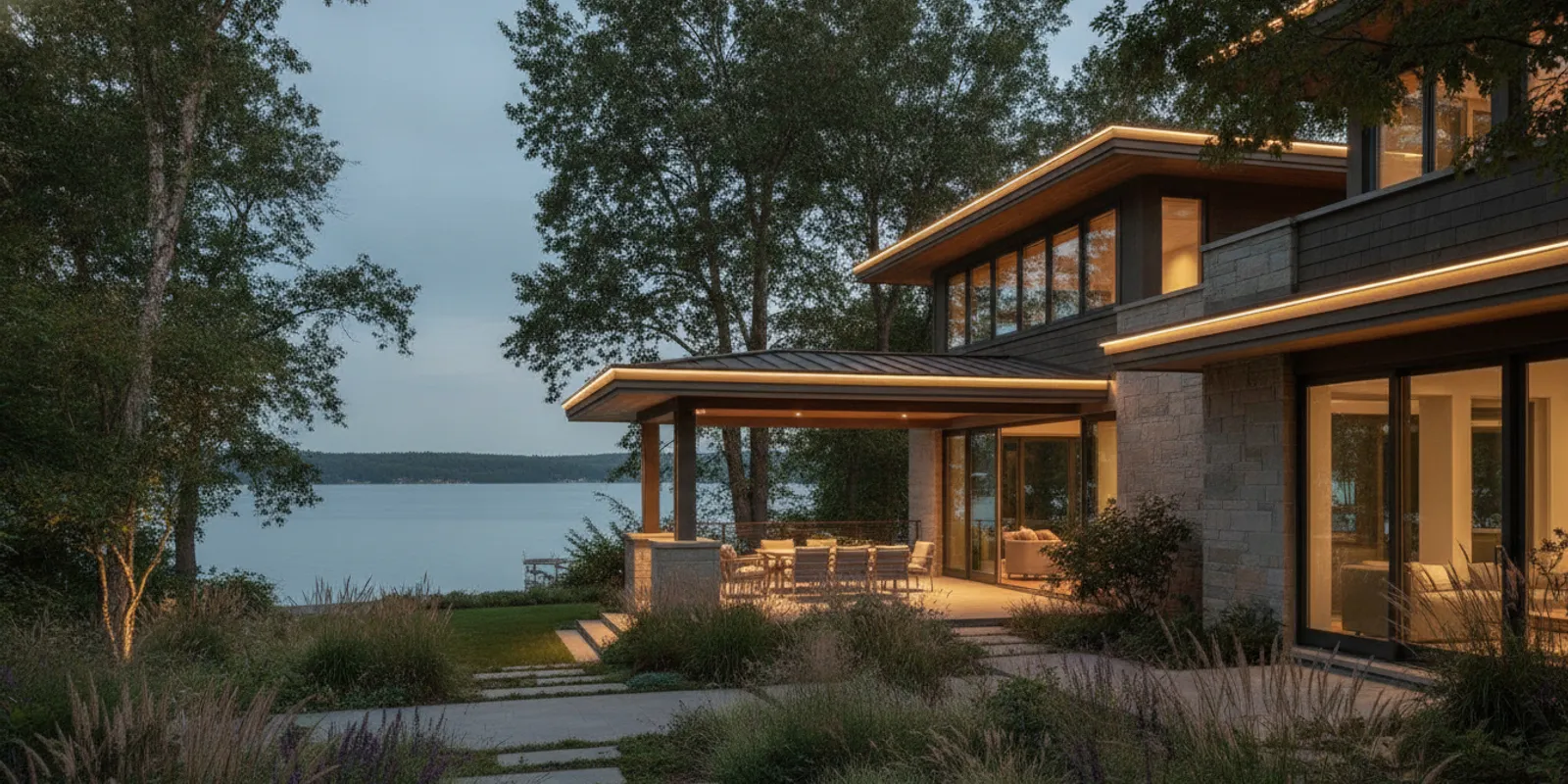
A ceiling light fixture can brighten a room or covered patio, but it is only one part of a waterfront home's lighting plan. Owners also need to think about the roofline, outdoor routes, glare, and how the property is used after dark. For a waterfront home, the right plan keeps indoor, covered, and exterior lighting distinct while making them work together. This guide explains how to assess the spaces, compare fixture choices, and decide whether permanent roofline lighting belongs in the plan.
Request a site-specific lighting quote
What should a waterfront home's lighting plan include?
Begin with the way people use the property, not with a fixture catalog. A home beside water may have indoor rooms, a covered porch, a deck, steps, a path to the shoreline, and an exposed roofline. Each area has a different job. A ceiling fixture can provide general light beneath a covered ceiling. A task light may help with a particular activity. Roofline lighting can define the home's exterior and support decorative or everyday accent lighting. These layers are related, but they are not interchangeable.
Make a simple list of destinations and activities. Include the front entry, garage approach, patio seating, outdoor dining area, stairs, side doors, and any route people use to reach the water. Note which areas need light for ordinary arrival, which are used for gatherings, and which are mainly decorative. Mark the spaces that already have lights and whether those lights are useful from the approach. This inventory helps avoid buying a fixture just because it looks attractive in a showroom.
Next, decide what should be visible from inside the home and from outside it. A bright light aimed toward a window can be distracting indoors. A strong reflection on glass or a shiny surface can also make it harder to see what is beyond it. Think about neighbors and other users of the waterfront, too. The aim is not to make every surface equally bright. It is to give each area the appropriate light while keeping unnecessary glare and spill in mind.
Permanent outdoor lighting is one possible layer, not a replacement for every ceiling or task fixture. LIT365 installs permanent soffit and roofline lighting for homes and businesses in Austin, San Antonio, and Dallas. The system is intended for year-round uses such as holiday color, game day, security visibility, and patio ambiance. Property address and desired scope determine whether a project is a fit; a waterfront setting alone does not establish service eligibility or a project design.
How is a ceiling light fixture different from roofline lighting?
A ceiling light fixture is mounted to a ceiling and illuminates the area beneath or around that point. Its usefulness depends on the room or covered area, the mounting position, the fixture's light distribution, and the activity. A fixture centered over a dining table, for example, serves a different purpose from a light at a covered entry. The term covers many designs, so the name alone does not tell you whether it will provide comfortable, useful light for your space.
Permanent soffit or roofline lighting follows the exterior roofline instead. It creates a continuous visual layer around selected portions of a building, rather than concentrating light at a single ceiling point. Lit-365 describes its system as a low-profile LED installation that can support holiday displays, everyday accent lighting, curb appeal, and year-round use. Customizable colors, patterns, and schedules can suit holidays, celebrations, or routine use. Those capabilities do not mean that roofline lighting supplies all the light a patio, entry, or work surface needs.
For a waterfront home, separate the questions. Ask what light is needed on a covered ceiling, what light is needed for a specific activity, and what appearance is wanted on the exterior. A ceiling fixture may be the right answer for a porch or room. A permanent roofline system may be a distinct choice for the facade. Other areas may require a separate, carefully placed light. Combining these roles in one fixture can create dark spots or uncomfortable brightness.
Review the permanent lighting installation overview to understand the exterior roofline application. Consider the installation gallery as a way to look at examples of the overall appearance. Images can help you describe the style you like, but they do not confirm that a particular layout, finish, or result is possible for a different property. A site-specific discussion is still needed.
Which areas should you assess before choosing a fixture?
Walk the property at the time of day when you expect to use it. If possible, note both dusk and full darkness. During the walk, identify surfaces people need to see and the direction from which they approach. Record existing lights that leave a route dim, cast a hard shadow, or shine into a window. Do not assume that a waterfront view should be lit as brightly as the house; preserving a comfortable view may call for less light, not more.
- Indoor rooms: Note the ceiling height, room use, existing points of light, and whether the window view is part of the room's nighttime experience.
- Covered patios and porches: Identify seating, dining, cooking, or circulation areas. A single ceiling fixture may not serve each activity equally.
- Entries and transitions: Look at the move from indoors to a porch, from the porch to steps, and from a path to the yard. Transitions are easy to overlook when planning from a floor plan.
- Paths and steps: Map the routes people actually use. Note changes in level, turns, handrails, and surfaces that become hard to distinguish in low light.
- Roofline and facade: Identify the elevations you want to accent, including portions that are hidden from the street or main outdoor seating area.
- Windows and neighboring properties: Consider where light could enter a room, reflect across glass, or be visible beyond your lot.
For each location, write down the purpose in a few words: “see the step,” “read at the table,” “welcome visitors,” or “create a holiday display.” This small exercise exposes competing needs. A bright decorative setting may not be right for a quiet evening. A low, subtle accent may look appealing but may not be sufficient for an activity that needs focused light. Give each light a job before choosing its position or style.
Finally, identify surfaces and access constraints that an installer would need to evaluate. Note roofline height, steep or difficult-to-reach areas, covered ceilings, landscaping, and any known access restrictions. Do not guess at a product's suitability for a damp or exposed location based on appearance. The site and the specific fixture or system must be reviewed for the conditions where it will be installed.
How can you reduce glare and protect the view?
Glare is light that feels uncomfortable or makes it harder to see. A fixture can be attractive and still cause glare if its bright source is exposed in the line of sight. At a waterfront property, the challenge may show up while sitting on a patio, looking through a window, or facing a route that leads toward the water. Review the planned view from seated and standing positions, not just from the spot where the fixture will be installed.
Ask whether a light source will be directly visible from the main seating area. Consider how light may reflect from windows, water, pale paving, metal railings, or other smooth surfaces. Reflections change with viewpoint and surrounding conditions, so avoid assuming that a fixture aimed away from the water cannot affect the view. A mock-up, temporary demonstration, or review of the light distribution may help you and your installer discuss the effect before finalizing a plan, when those options are available.
Use the smallest useful number of lighting layers, with each serving a clear purpose. Add a dedicated ceiling or task light where an activity calls for it, rather than relying on a decorative roofline effect to do all the work. For exterior accents, discuss which elevations need attention and which can remain unlit. A restrained layout can make the home legible without turning every edge of the property into a bright focal point.
Schedules are another planning tool. Lit-365's content describes customizable schedules for everyday lighting and special occasions. Discuss when a setting should turn on, when it should change, and when it should be off. A holiday or celebration pattern need not be the same choice as a routine evening setting. Do not assume any particular control method or scheduling feature beyond what the installer confirms for the selected system.
Ask how changes will be handled after installation and who should be contacted if the planned effect does not suit the way you use the property. Do not rely on a broad promise that any glare issue can be corrected without first understanding the product, placement, and scope. The useful question is specific: which light is causing the problem, from which viewpoint, and what adjustment is available for that actual installation?
What should you check for a covered patio or porch?
A covered patio may seem like an obvious place for a ceiling light fixture, but start by dividing it into zones. A table, a seating group, a grill or serving area, and the route between them do not have identical needs. A single point centered under the roof can leave edges darker or place a bright source directly over a seated person's view. Sketch the roof outline, furniture locations, and normal walking route before choosing the fixture position.
Consider ceiling height and the visual scale of the fixture. A large hanging fixture can feel dominant beneath a low cover, while a small fixture may not suit a broad ceiling. Check whether the design allows enough clearance for people moving beneath it and whether it competes with fans, beams, or other ceiling elements already present. A flush or surface-mounted design may be worth comparing with a pendant when headroom and sightlines matter. The right answer depends on the space and the particular fixture, not a universal style rule.
Then consider what the patio is for. Dining may call for light over the table; conversation may be more comfortable with a softer overall level and no exposed bright source in the eye line. A task area needs a more targeted conversation about its use. If the patio has multiple jobs, separate controls or layers may help, but only if the products and installation support them. Ask the installer to explain the proposed arrangement in terms of real activities.
Waterfront exposure makes it especially important to confirm that any selected fixture is appropriate for its exact location. A covered ceiling is not necessarily protected from wind-driven rain, humidity, or other local conditions. Do not infer a rating or durability from a product photograph or from the word “outdoor.” Ask for the fixture's documented suitability for the location, the installation requirements, and any maintenance guidance from the manufacturer or installer.
Keep permanent roofline lighting conceptually separate in the discussion. It may contribute to the patio's ambient feel or define the exterior, but it does not automatically illuminate a table or work area in the way a purpose-selected ceiling fixture might. A combined plan should show the role of each layer, the locations it serves, and how the appearance changes between regular use and an event.
How do you compare common lighting choices?
The following comparison is about function, not a promise that every option suits every property. Actual fixture performance depends on the selected product and installation. Use it to organize the questions you will ask rather than as a substitute for evaluating the site.
| Lighting choice | Primary role | Questions to resolve | Common planning limitation |
|---|---|---|---|
| Ceiling light fixture | General light beneath a room or covered ceiling | Where is it mounted? What activity and area should it serve? Is the fixture suitable for that exact location? | One point may not cover multiple zones evenly; exposed brightness can affect comfort. |
| Task or activity light | Focused light for a defined activity or destination | What task needs light? Where will people stand or sit? Can the source be positioned without glare? | A focused light does not necessarily provide an even ambient effect or define the whole facade. |
| Permanent soffit or roofline lighting | Year-round exterior accent and display lighting along selected roofline areas | Which elevations are in scope? What uses and schedules matter? What property access is involved? | It is not a substitute for every ceiling, path, or task light. |
| Existing exterior fixture | Light at an established entry or location | Does it serve its intended route? Is its direction comfortable from the house, yard, and neighboring areas? | Its placement may leave gaps elsewhere; adding more brightness may not solve a placement issue. |
Compare options by the area served, not just by fixture count or appearance. Ask how the light will look from the locations where you spend time. When assessing a proposal, look for a description of the intended elevations and the purpose of each included element. If the proposal uses vague terms such as “whole property lighting,” ask which specific areas that means and what remains outside the scope.
Which waterfront conditions should you discuss with an installer?
Waterfront homes are not all alike. A house beside a lake, river, bay, or canal can have different exposure, architecture, shoreline access, and neighborhood expectations. The presence of water does not tell an installer what products are appropriate or whether every part of the property can be included. Share the actual conditions and ask the professional to assess them rather than relying on a general waterfront label.
Start with the locations where equipment would be mounted and the surfaces around them. Explain which areas are covered and which are fully exposed. Point out where wind-driven rain, damp air, salt exposure, irrigation, or repeated spray may be a concern if those conditions apply to your property. Ask for confirmation that the specific components and installation method are appropriate there. Do not accept an unverified claim about corrosion resistance, waterproofing, or lifespan as a substitute for product documentation.
Describe how the property is occupied. Is the patio used throughout the year, only for occasional gatherings, or mostly as a view from indoors? Are there guest arrivals after dark, young children, older visitors, or regular foot traffic along steps? This information helps frame a plan around movement and comfort. It does not justify assuming that a decorative lighting installation provides safety coverage or replaces appropriate path lighting, handrails, or other safety measures.
Also ask about access and project boundaries. Roof height, roofline geometry, landscaping, and the elevations selected can affect the work involved. If an area is difficult to reach or there are property rules to follow, mention that before the estimate is prepared. For a home governed by an association or shared waterfront community, check applicable approval and lighting rules independently and share relevant constraints with the installer.
For a permanent roofline project, the property address and the elevations you want lit are useful starting points. Lit-365 serves Austin, San Antonio, and Dallas, but that list does not establish eligibility for an unlisted waterfront address or a particular travel radius. Use the service-area information and ask for address qualification rather than making assumptions based on a nearby city.
What information should you prepare before requesting a quote?
A useful project brief lets the installer understand the property before making assumptions. Begin with the service address and a short description of the home. Then list the roofline elevations you are considering: front, sides, rear, porch, or another clearly identified portion. If you are uncertain about the scope, say so and ask what the installer needs to assess. Do not treat a rough drawing or a photo as a confirmed measurement.
Prepare photographs taken from several views, if requested or useful for the conversation. Include the front approach, the side or rear elevations in scope, and the covered patio. Take photos in daylight so that roofline shape and access are easy to see; separate nighttime photos can show existing light and glare issues. Explain which image corresponds to which elevation. A photo is supporting context, not a substitute for an on-site assessment when one is needed.
Write down the outcome you want. For example, you may want a year-round roofline accent, holiday color, a game-day display, or an ambient effect near the patio. If several uses matter, rank them. Note any colors or patterns you prefer, as well as times or occasions when a different setting would be useful. Be clear that these are preferences for discussion, not assumptions about what the selected system can deliver.
List conditions that could affect planning: covered and exposed areas, difficult access, known property restrictions, existing fixtures, preferred installation timing, and any areas you do not want included. If a separate ceiling light fixture or task light is part of the project, identify it as a separate need. This prevents a discussion of roofline lighting from being mistaken for a complete indoor or patio lighting design.
Lit-365's quote form requests contact details, a service address, and whether the request is for lighting, gutters, or both. Lighting estimates are site-specific, and the live site does not publish a citywide price or a per-foot rate. The lighting and gutter quote form is the route to start that conversation. Gutter-only work is handled through the sister brand TX Gutter Solutions.
How should you compare two permanent-lighting proposals?
Two proposals are only comparable when you know what each includes. One may cover only a front elevation; another may include the front, rear, and a porch roofline. One may assume straightforward access while another accounts for difficult areas. Compare scope before price, and do not infer that similar totals mean the same amount of work or the same intended effect.
Ask each provider to identify the elevations and sections included. The plan should clarify where the installation begins and ends, how corners or transitions are treated, and whether any areas you discussed are excluded. A written outline or marked-up photograph can reduce ambiguity. If a section is not included, ask whether it was intentionally omitted, is not suitable, or would need a separate scope.
Next, ask what system and components are proposed, what is known about their suitability for the property's actual conditions, and what product information can be reviewed. Do not fill in missing details yourself. Confirm what is included in the installation, what the owner must provide, and how the contractor handles changes to the plan. Warranty terms, product specifications, and performance promises should be stated by the provider in writing if they apply; do not assume them from a general description.
Discuss the intended result in plain terms. Ask how the proposal supports the uses you identified, such as holiday displays, everyday accent lighting, or patio ambiance. Find out how customization and schedules are handled for the specific system under consideration. If you have a concern about glare, views, neighbors, or a particular elevation, ask the provider to address that point explicitly instead of relying on a broad statement about “complete” lighting.
Finally, compare timing, access assumptions, payment terms, and the process for approving any scope change. The public Lit-365 site does not list prices, so an online general number cannot substitute for an address-based estimate. A useful quote makes the scope understandable enough that you can decide whether it fits your property and priorities.
What mistakes can make a waterfront lighting plan less useful?
- Choosing by appearance alone: A fixture that looks right online may not serve the location or activity. Check the job it needs to do and the setting where it will be installed.
- Expecting one light to do every job: A ceiling fixture, a task light, and roofline accents serve different purposes. Define separate roles instead of asking one layer to solve every dark area.
- Ignoring the view from the seat: A light source can feel comfortable from standing height and intrusive when a person is seated. Review the actual viewpoints that matter.
- Assuming roofline light equals route light: Decorative exterior lighting does not automatically illuminate steps or a shoreline path adequately. Assess each route and task on its own.
- Overlooking the rear elevation: The front facade may be the first thing considered, while the patio-facing roofline is where household members spend time. Make the preferred viewing side part of the scope discussion.
- Assuming waterfront means a particular product rating: Exposure varies. Confirm suitability for the actual location and specific equipment instead of relying on a generic label.
- Requesting a quote without defining the area: “Light the house” can mean different elevations and access conditions. Identify the areas you want considered, even if you are still deciding.
- Confusing a visual sample with a commitment: A gallery image is inspiration, not proof that the same design or configuration applies to another home. Ask for a proposal based on your address.
Each mistake can be avoided by making the property and its uses part of the conversation. The goal is not to maximize the number of fixtures or illuminated edges. It is to choose a workable combination that suits the setting, the activities, the desired appearance, and the home's actual conditions.
How can you plan different settings for everyday use and occasions?
Think in scenes rather than a single all-on setting. A household might want a restrained appearance on an ordinary evening, a different color or pattern for a holiday, and a more festive look for a gathering. A business or community property may have its own calendar and preferences. Naming the scenes in advance gives the installer a clearer brief than simply saying “make it customizable.”
For each scene, state which parts of the roofline should be active, what general appearance you want, and when the setting is useful. If you want to coordinate exterior lighting with the covered patio, describe the intended relationship. A roofline display can contribute to the overall mood, while a dedicated ceiling light fixture remains responsible for the specific area beneath it. Keep separate needs separate in the plan.
Consider visual restraint, especially when the home sits near neighbors or a shared view. A pattern that is enjoyable for an event may be distracting as a nightly default. Discuss how the system can move between the settings supported by the actual product. Do not assume a particular app, controller, number of colors, or programming function unless the provider verifies it. Ask for a clear explanation of what customization is available and how you would request or make a change.
Schedules should reflect how the property is used, not just a convenient preset. Consider arrival times, quiet hours, seasonal routines, and whether a setting should operate when the home is unoccupied. Ask which schedules the selected equipment supports, what happens if your routine changes, and whether there are restrictions or steps you need to know. This keeps an appealing feature from becoming a source of confusion later.
After installation, review the scenes from the same viewpoints you used during planning: inside looking toward the water, seated on the patio, approaching the entry, and from the exterior areas that matter. If the appearance differs from your expectations, describe the location and setting precisely when discussing it with the provider. A specific observation gives the installer a better starting point than a general request for the lights to be brighter or more subtle.
Frequently asked questions
Can permanent roofline lighting replace a ceiling light fixture?
Not in every situation. A ceiling fixture serves the area under a ceiling, while permanent roofline lighting follows selected exterior roofline sections. They have different roles. A patio may benefit from both, or one may be more relevant than the other, depending on how the space is used and what light it needs.
Does a waterfront home need a special ceiling light fixture?
There is no single fixture choice for every waterfront home. The right fixture depends on its exact location, exposure, mounting surface, and intended use. Ask a qualified installer or supplier to confirm that the specific product is appropriate for that location, and review the manufacturer's documentation rather than assuming a product is suitable from its appearance.
Does Lit-365 publish a price for permanent soffit lighting?
No public citywide price or per-foot rate is listed. A quote starts with the property address and the elevations you want considered. Scope, access, and the actual property are important to a site-specific estimate.
Can roofline lighting support both everyday use and holidays?
Lit-365 describes permanent roofline lighting for holiday color, game day, security visibility, and patio ambiance, with customizable colors, patterns, and schedules described in the customer offering. Ask the provider to confirm the options available for the system proposed for your property. Do not assume unverified product or control specifications.
How do I find out whether my address is in the service area?
Lit-365 names Austin, San Antonio, and Dallas as its markets, but a city list does not establish coverage for every nearby address or a specific waterfront location. Provide the service address through the quote form and ask for qualification before planning around a project.
Share your address and lighting priorities
A clear plan begins by separating the work of a ceiling fixture from the role of exterior roofline lighting, then matching each choice to the places and activities that matter at your home. When you are ready, describe the address, elevations, and desired uses so the scope can be assessed for the actual property.