
2026-08-26
The 5 Best LED Lights for Commercial Parking Lots
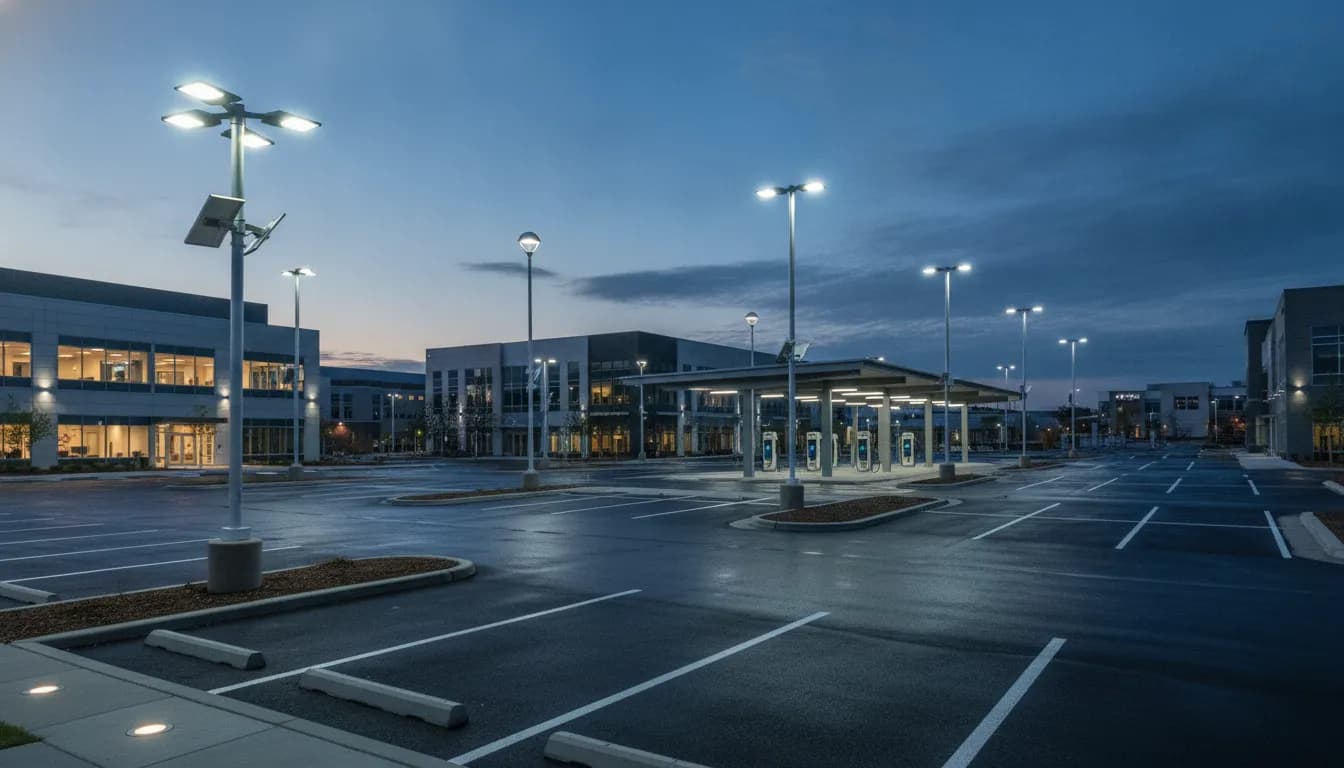
Your parking lot is the first handshake you offer customers, long before they walk through your door. A poorly lit, shadowy space can feel unwelcoming and unsafe, creating a negative first impression that’s hard to shake. If you're still relying on outdated, flickering lights, you're not just risking your business's reputation; you're also overspending on energy and maintenance. Making the switch to the best led lights for commercial parking lots is one of the most impactful upgrades you can make. It’s a decision that enhances safety, improves curb appeal, and lowers your operational costs. While you’re upgrading your physical welcome mat, remember your digital one matters just as much. You can get a professional website running in minutes with an AI-powered platform that handles the design work for you.
Key Takeaways
- Focus on the total cost, not just the sticker price: While LEDs have a higher initial price, their significant energy savings and long lifespan mean they are the more affordable and financially smart choice in the long run.
- Better light creates a safer, more professional property: Upgrading to bright, daylight-white LEDs is a direct investment in safety. It eliminates dark corners, improves security camera visibility, and makes your business look more welcoming from the moment customers arrive.
- Create a lighting plan before you buy: Don't just swap out old fixtures one-for-one. A strategic plan that considers pole height, spacing, and fixture placement is essential to guarantee even coverage and prevent wasting money on a poorly lit lot.
Why Your Parking Lot Needs an LED Upgrade
Your parking lot is the first impression you make. It’s the welcome mat for your business, and poor lighting can make it feel unsafe and unprofessional. If you're still using outdated metal halide or high-pressure sodium lights, you're likely spending too much on energy and maintenance for a subpar result. Making the switch to LED lighting is one of the most effective upgrades you can make for your commercial property. It’s a move that pays off in lower operational costs, improved safety, and a better overall look for your business. Let's break down exactly why an LED upgrade is a smart decision.
Save Energy and Lower Your Bills
Let's be direct. The biggest draw for any business upgrade is the impact on the bottom line, and LED lighting delivers. Modern LEDs use up to 75% less energy than the traditional bulbs you might be using now. Think about what that means for your monthly utility bills; the savings can be substantial. While it’s true that new LED fixtures have a higher initial cost, they are an investment that quickly pays for itself. The dramatic reduction in energy consumption means you’ll often recoup the upfront expense through lower bills over time, making it a financially sound decision for the long run.
Get a Longer Lifespan with Fewer Replacements
Beyond energy savings, think about the time and money you spend on maintenance. Traditional parking lot lights have a frustratingly short lifespan, which means you’re constantly dealing with burnt-out bulbs and dark spots in your lot. High-quality LED lights, on the other hand, can last for 150,000 hours or more. That’s years of consistent, reliable performance without needing a replacement. This incredible longevity means fewer calls to an electrician, less money spent on replacement bulbs, and no more renting a lift just to change a light. You get to enjoy a well-lit, low-maintenance property and focus your resources on other parts of your business.
Improve Safety, Visibility, and Curb Appeal
A poorly lit parking lot is a liability. It can make customers and employees feel uneasy and can even be a magnet for crime. Upgrading to bright, 5000K daylight white LEDs dramatically improves visibility and contrast, eliminating shadowy corners. This clear illumination not only enhances safety for pedestrians but also makes it easier for security cameras to capture clear footage. Beyond security, a brightly lit space just looks better. It creates a welcoming, professional atmosphere that improves your property’s curb appeal and shows customers you care about their experience from the moment they arrive.
Know Your Options: Types of Parking Lot LEDs
Choosing the right fixture is the first step to a well-lit parking lot. Not all LEDs are created equal, and different lights are designed for different jobs. Let's break down the most common types you'll encounter so you can figure out what works best for your space.
Shoebox (Area) Lights
When you picture a classic parking lot light, you’re probably thinking of a shoebox light. These are the workhorses of commercial lighting for a reason. They have a slim, rectangular design that casts a broad, powerful beam, making them perfect for illuminating large, open areas. Modern LED shoebox lights offer commercial-grade quality in a lightweight package, providing excellent coverage without being bulky. Because they are so effective at lighting up wide spaces, they are the go-to choice for most standard retail and business parking lots. They mount on top of poles and can be angled to direct light exactly where you need it most.
Cobra Head Lights
Cobra head lights are what you typically see lining streets and highways, but they’re also a fantastic option for large parking lots and roadways on commercial properties. Their distinct shape is designed to throw light forward and downward in a specific pattern, ensuring consistent illumination over long stretches. Most commercial LED area lighting applications use a color temperature of 4000K or 5000K. The 5000K option mimics daylight, which creates high contrast and visibility. This makes it a popular choice for high-traffic lots or anywhere you have security cameras, as the clear, bright light helps improve camera performance and overall safety.
Post Top Lights
If your property includes walkways, park-like areas, or decorative entrances, post top lights are an excellent choice. Unlike the purely functional design of shoebox or cobra head lights, post top lights add an aesthetic touch while still providing essential illumination. They sit directly on top of poles and cast light in a more circular, downward pattern, creating a welcoming ambiance for pedestrians. These fixtures are perfect to upgrade your commercial outdoor space with efficient, long-lasting solutions that deliver reliable performance. They combine style with safety, making them ideal for areas where both appearance and visibility are important.
Wall Pack and Canopy Lights
Not all of your lighting needs will be in the middle of the lot. Wall packs and canopy lights are designed to be mounted directly onto your building. Wall packs are installed on exterior walls to light up perimeters, entryways, and loading docks. Canopy lights are used for covered spaces like gas station pump areas, drive-thrus, or building overhangs. Both types of LED parking lot lights provide abundant lighting right where you need it. They are also incredibly energy-efficient and require very little maintenance, making them a simple and effective way to secure your building’s immediate surroundings.
Solar-Powered Lights
For areas where running electrical wiring is difficult or cost-prohibitive, solar-powered LED lights are a game-changer. These self-contained units use a solar panel to charge a battery during the day, which then powers the light at night. They are an eco-friendly solution that completely eliminates electricity costs for that fixture. Because LED lights are so energy-efficient, they are a perfect match for solar power. They last a long time, shine brightly, and can handle bad weather, making them a reliable off-grid lighting option for remote corners of your lot or for businesses looking to reduce their carbon footprint.
How to Choose the Right LED Lights for Your Lot
Picking the right LED lights for your parking lot goes beyond just finding the brightest option. The best choice creates a safe, welcoming, and efficient environment. To get it right, you need to balance brightness with energy use, durability, and how the light is spread across your space. Thinking through these factors beforehand will save you from costly mistakes and ensure your lot is perfectly lit for years to come. Let's walk through the key features to look for.
Lumens: Figure Out How Bright You Need to Go
Forget about watts for a moment; lumens are the true measure of a light’s brightness. When you're comparing fixtures, the lumen output tells you how much light you're actually getting. The right amount of lumens depends on several things: the height of your light poles, how far apart they are, and the type of area you're lighting. A high-traffic retail lot will need more brightness than a small employee parking area. To get it right, you’ll need to consider how light spreads (its optics) and how that interacts with your pole placement to avoid dark spots and ensure even coverage.
Wattage and Energy Efficiency
Here’s where you see the real power of LED technology. Wattage measures how much energy a light consumes. With LEDs, you can get a high lumen output for a very low wattage. This incredible efficiency is why LED lights use so much less electricity and last longer than old metal halide bulbs. Lower wattage directly translates to lower energy bills and fewer repairs over the fixture's lifespan. When comparing two lights with similar lumen outputs, the one with the lower wattage is the more energy-efficient choice, meaning more savings for your business month after month.
Color Temperature and Light Quality
Color temperature, measured in Kelvin (K), determines the color appearance of the light, from warm yellow to cool blue-white. For commercial parking lots, you’ll typically see options between 4000K and 5000K. A 4000K light gives off a neutral white light that’s easy on the eyes, while 5000K produces a crisp, daylight-white light. Because it delivers high contrast and excellent visibility, 5000K is the most common choice for busy retail lots where safety and security are top priorities. This clear, bright light makes it easier for drivers and pedestrians to see their surroundings.
IP Ratings for Weather Resistance
Your parking lot lights are exposed to the elements 24/7, so they need to be tough. That’s where Ingress Protection (IP) ratings come in. An IP rating is a two-digit number that tells you how well a fixture is sealed against solids (like dust) and liquids (like rain). For outdoor use, you should look for lights with at least an IP65 rating. The "6" means it's completely dust-tight, and the "5" means it can withstand low-pressure water jets from any direction. An even higher IP66 rating means it can handle powerful water jets, making it a great choice for areas with heavy rain or pressure washing.
Mounting Options and Light Distribution
How you mount your lights and how they distribute light are just as important as their brightness. The goal is to achieve uniform illumination across the entire lot, eliminating dangerous dark spots between poles. Common mounts include slip fitters for round poles, arm mounts for square poles, and yoke mounts for walls or other flat surfaces. Each fixture also has a specific light distribution pattern, which determines how the light spreads out from the source. A professional lighting plan, or photometric layout, can help you select the right fixtures and placement to ensure every corner of your lot is safely and evenly lit.
Choosing Flexible Wattage and Color Options
If you’re not entirely sure about the perfect brightness or color temperature, look for fixtures with selectable features. Many modern LED lights are "field-adjustable," meaning you can choose from several wattage or color temperature settings with a simple switch on the fixture itself. This flexibility is a huge advantage. It allows you or your installer to fine-tune the lighting on-site to get the exact look you want. It also helps future-proof your investment, as you can adjust the settings later if the needs of your space change, without having to replace the entire fixture.
Calculate How Many Lights You Actually Need
Figuring out the right number of lights for your parking lot isn't about making a wild guess. It’s a balancing act to create a space that’s safe, welcoming, and efficient. Putting up too few lights can create dangerous dark spots, while using too many is a waste of money and energy. To get it right, you need a clear plan that considers your lot’s specific needs. By focusing on a few key details, you can map out a lighting strategy that provides perfect coverage without overspending.
Determine Your Foot-Candle Requirements
First, you need to decide how bright the light on the ground should be. This brightness is measured in foot-candles. The right amount depends on how your lot is used. For most commercial lots, a color temperature of 4000K (neutral white) or 5000K (daylight white) is ideal. The 5000K option delivers excellent contrast and visibility, making it the top choice for busy retail centers, industrial sites, and any area where you want clear images from security cameras. You can find recommended foot-candle levels for different outdoor areas to guide your decision.
Factor in Pole Height and Spacing
Next, think about your poles. The height of your poles and the distance between them are critical pieces of the puzzle. Taller poles can cast light over a wider area, but they’ll need brighter fixtures to ensure the ground is properly lit. You’ll also need to consider the light’s optics (how it spreads), its power usage (wattage), and its brightness (lumens). All these elements work together. Getting a professional photometric layout is the best way to make sure all these factors are accounted for, helping you visualize coverage and prevent glare before installation begins.
Create a Photometric Layout to Eliminate Dark Spots
Simply putting new lights on old poles without a plan is a recipe for poor results. This often creates a messy patchwork of overly bright areas and hazardous dark spots. A photometric layout is essentially a blueprint for your lighting, showing exactly how light will cover the space. This analysis ensures you get smooth, uniform illumination across the entire lot. It helps you place each fixture strategically to eliminate shadows and reduce glare, creating a safer environment for both drivers and pedestrians. This professional plan is the key to achieving consistent, effective lighting.
Our Top Picks for Commercial Parking Lot LEDs
Sorting through all the technical specs can feel overwhelming, so I’ve put together a list of standout options to get you started. These lights are known for their performance, durability, and efficiency, making them solid choices for a range of commercial properties. While you’re upgrading your physical space, remember that your digital presence matters just as much. You can get a professional website up and running in minutes with an AI-powered platform that handles the heavy lifting for you.
1. Quasar G3 LED Area/Parking Lot Light
If you’re looking for a fixture that’s built to last, the Quasar G3 is a fantastic contender. It’s made with a die-cast aluminum housing, which means it can handle tough conditions without a problem. This model puts out a powerful 19,800 lumens of cool white light while only using 150W of power, making it incredibly efficient. The 5000K color temperature provides bright, clear illumination that mimics natural daylight, which is perfect for enhancing safety and security in your lot. Its sleek bronze finish also gives it a modern, professional look that complements most building exteriors. You can find these LED area lights designed for performance and longevity.
2. LED Shoebox Lights by CommercialLEDLights.com
For large parking areas where you need to balance cost and quality, these LED shoebox lights are an excellent choice. They offer commercial-grade lighting at a competitive price point, so you don't have to break the bank to get great coverage. What I really like is their slim and lightweight design, which can make installation much simpler and faster, potentially saving you money on labor costs. They are designed to be energy-efficient, providing bright, reliable light that keeps your property safe for customers and employees without running up your electricity bill. It’s a practical solution that delivers on both performance and value.
3. Revolve LED Parking Lot Lights
The biggest appeal of the Revolve LED lights is their promise of reduced maintenance. These fixtures are engineered to burn longer and brighter, so you can spend less time and money on replacements. They deliver abundant, energy-efficient lighting that makes your property feel safer and more inviting. The robust construction ensures they can stand up to the elements year after year. If you want a dependable "set it and forget it" lighting solution that keeps your lot well-lit with minimal fuss, these LED parking lot lights are definitely worth considering. They provide the peace of mind that comes with a durable, long-lasting system.
4. GKOLED LED Parking Lot Lights
If your business is located somewhere with harsh weather, you need lighting that can keep up. The GKOLED LED parking lot lights are specifically designed for high performance in tough conditions. They provide consistent, reliable illumination, so you won’t have to worry about them failing during a storm. Their advanced technology also ensures a long lifespan and excellent energy efficiency, which translates directly into lower operating costs for your business. Choosing a weather-resistant and economical option like this is a smart investment that pays off in both durability and long-term savings, ensuring your lot stays bright no matter what the weather brings.
5. QSSI LED Parking Lot Lights
Flexibility is key when you’re trying to create the perfect lighting plan, and that’s where QSSI shines. These fixtures are known for their high-quality construction and excellent energy efficiency, but their standout feature is the variety of available options. With different wattages to choose from, you can tailor the illumination to the specific needs of different areas in your parking lot. This allows you to install brighter lights in high-traffic zones and slightly lower-wattage ones in less critical spots, optimizing both safety and energy consumption. These QSSI LED parking lot lights give you the control to create a customized, efficient lighting system for your property.
LED vs. Traditional Lighting: A Head-to-Head Comparison
If you're still using traditional lighting like metal halide or high-pressure sodium, you might be wondering if LEDs are really that different. The short answer is yes. When you put them side-by-side, LEDs come out on top in nearly every category that matters for a commercial property owner: efficiency, performance, and long-term cost. Let's break down exactly what that means for your parking lot.
Convert Your Wattage from Metal Halide
One of the first things you'll notice when switching to LED is that you can't compare wattage on a one-to-one basis. LEDs are far more efficient, so you need significantly less wattage to produce the same amount of light. For example, a 1500-watt metal halide fixture can typically be replaced with a 500-watt LED. Similarly, a 1000-watt metal halide can be swapped for a 300-watt LED, and a 400-watt fixture for a 150-watt LED. This direct wattage conversion is where your energy savings begin, allowing you to maintain or even improve brightness while cutting your power consumption by more than half.
Compare Performance, Brightness, and Light Quality
Beyond just being bright, the quality of light matters. Most commercial LED lights come in a color temperature of 4000K (a neutral white) or 5000K (a pure, daylight white). The 5000K option is especially popular for parking lots because it creates high contrast and sharp visibility, making everything from parking lines to pedestrians easier to see. This crisp, clear illumination is also a huge asset for security cameras, as it provides a much clearer picture than the yellowish glow of older lights. Better light quality doesn't just make your property look better; it makes it feel safer and more secure for everyone.
Look at the Cost Over Time
It's true that the upfront cost of LED fixtures is often higher than traditional ones, and that can cause some sticker shock. However, it's crucial to look at the bigger picture. The initial purchase is only one part of the total cost of ownership. Because LEDs use so much less energy, your electricity bills will drop immediately. Plus, their incredibly long lifespan (often over 50,000 hours) means you'll spend far less on maintenance and replacement bulbs over the years. These long-term savings almost always offset the higher initial investment, making LEDs the more economical choice in the long run.
Common Myths About LED Parking Lot Lights, Debunked
Switching to a new technology can feel like a big step, and there's a lot of conflicting information out there about LED lighting. It’s easy to get stuck on old assumptions or hearsay, especially when you're making a significant investment in your property. You want to be sure you're making the right choice for your business, your budget, and your customers' safety. Maybe you've heard that LEDs just aren't powerful enough for a large commercial lot, or that you'll have to rip out all your existing fixtures to make the switch. Concerns about performance in extreme weather or the high initial cost are also common. Let's clear the air and look at some of the most common myths about LED parking lot lights, so you can make a decision based on facts, not fiction.
"LEDs aren't bright enough for large outdoor spaces."
This idea is a holdover from the early days of LED technology. While the first LEDs were better suited for indicator lights than for illuminating a whole parking lot, things have changed dramatically. Modern LED lighting has advanced so much that it's now the standard for commercial properties, both inside and out. Today’s high-quality LEDs deliver powerful, consistent brightness that can easily and effectively light up even the largest spaces. They provide excellent visibility and can be directed precisely where you need light, eliminating dark spots and improving safety for your customers and employees.
"You have to replace everything to switch to LED."
It's a common worry that upgrading to LED means a complete, and expensive, overhaul of your entire lighting system. Thankfully, that's not the case. The industry has made the transition incredibly simple. Many manufacturers offer LED replacement lamps and retrofit kits specifically designed to work with your existing fixtures. This allows you to get all the benefits of LED technology, like energy savings and longer lifespan, without the cost and hassle of replacing every single pole and housing. The switch can be surprisingly seamless and budget-friendly.
"LEDs can't handle extreme cold."
This is one of the most persistent, and incorrect, myths out there. In reality, LEDs perform exceptionally well in cold weather, often even better than traditional lighting sources. Unlike fluorescent lights that can flicker or fail to start in the cold, LEDs thrive. Any performance issues you might hear about are almost always tied to lower-grade LED products, not the technology itself. As long as you invest in quality, commercial-grade fixtures, you can count on your LED parking lot lights to work reliably through even the harshest winter conditions.
"The upfront cost is too high."
Let's be direct: yes, the initial purchase price for high-quality LED fixtures can be higher than for traditional systems. However, focusing only on the upfront cost misses the bigger picture. Think of it as an investment with a fantastic return. The energy savings from LEDs are so significant that they quickly begin to offset that initial expense. When you also factor in the drastically reduced maintenance and replacement costs over their long lifespan, the total cost of ownership for LEDs is almost always lower than for their traditional counterparts.
Smart Features That Are Worth the Investment
Switching to LEDs is a fantastic first step, but adding smart features is how you truly maximize your investment. Think of it as the difference between a basic phone and a smartphone. Both make calls, but one does a whole lot more to make your life easier. Smart lighting controls automate your system, fine-tuning energy use down to the minute. This not only leads to significant long-term cost savings but also extends the life of your fixtures. By using light only when and where it’s needed, you create a safer, more efficient, and responsive environment for everyone who uses your parking lot.
Motion Sensors and Dimming Controls
Integrating motion sensors and dimming controls is one of the smartest upgrades you can make. These features allow your lights to operate at a lower brightness level when the lot is empty and instantly ramp up to full power when a car or pedestrian is detected. This is especially effective for lots with low activity after business hours. Instead of burning energy to light an empty space at full blast all night, you can maintain a safe, low level of light and have it brighten on demand. This simple change dramatically reduces energy costs and puts less strain on your fixtures, extending their lifespan even further.
Photocell (Dusk-to-Dawn) Technology
Photocells are the definition of a "set it and forget it" solution for your parking lot. These simple but brilliant sensors automatically detect the amount of ambient light in the environment. They are designed to turn lights on when it gets dark and switch them off again when the sun rises. This completely automates your daily lighting schedule, ensuring you never waste money by leaving lights on during the daytime. It also removes the risk of human error, so you can rest easy knowing your lot will be safely illuminated every single night without anyone needing to flip a switch. It’s a foolproof way to guarantee efficiency and safety.
Smart Controls for Energy Management
Think of a smart control system as the central brain for your entire lighting setup. While photocells and motion sensors are excellent standalone features, a connected system gives you ultimate control over your energy management. These systems allow you to set custom schedules, adjust dimming levels, and monitor energy consumption from a single dashboard. You can program lights in different zones to behave differently based on traffic patterns or time of day. Proper setup of these controls is key to maximizing your parking lot's safety, energy efficiency, and long-term cost savings. It’s the most comprehensive way to manage your lighting and ensure you’re getting the best possible performance from your LEDs.
Breaking Down the True Cost of LED Lighting
When you're looking at upgrading your parking lot, the price tag is a major factor. It’s easy to get sticker shock when comparing LEDs to older lighting technologies, but the initial purchase price is only one piece of the puzzle. To understand the real financial impact, you need to look at the total cost of ownership. This includes everything from the installation to long-term energy and maintenance savings. Let's break down what you can expect to invest and, more importantly, what you can expect to save over time.
Upfront and Installation Costs
Let’s be direct: the initial investment for LED lighting is typically higher than for traditional options. If you're just replacing an existing light fixture, you can expect to pay somewhere between $300 and $800 per fixture, which includes labor. If you need to install new poles and fixtures from scratch, the cost can range from $2,500 to over $8,000 per pole. This price depends on factors like pole height, material, and the complexity of the electrical work. While these numbers might seem high, think of it as a capital improvement that adds value and safety to your property, not just an operational expense.
Long-Term Savings and Total Cost of Ownership
Here’s where the math really starts to work in your favor. While the upfront cost is higher, the long-term savings are significant. The primary benefit comes from massive energy savings because LEDs use far less electricity than their metal halide counterparts. Plus, their incredibly long lifespan means you’ll spend much less on replacement bulbs and maintenance labor over the years. To get a true picture, you need to calculate the total cost of ownership. This includes the initial price, installation, energy consumption, and projected maintenance costs. When you run the numbers, the return on investment for an LED upgrade often becomes clear within just a few years.
Retrofit Kits vs. Full Fixture Replacement
A common myth is that switching to LED requires a complete and costly overhaul of your entire lighting system. Thankfully, that’s not always the case. For many properties, a more budget-friendly path is available through LED replacement lamps and retrofit kits. These kits are designed to fit into your existing traditional fixtures, allowing you to gain the energy efficiency and long life of LEDs without replacing every pole and housing. This approach makes the transition much faster and more affordable, giving you a quicker return on your investment. It's a great option if your current fixtures are still in good condition.
How to Find the Best Deals on Commercial LEDs
Finding a great deal on LED lights for your parking lot goes beyond just looking at the price tag. The best deal balances upfront cost with long-term value, ensuring you get quality fixtures that last. It’s about making a smart investment that pays off in energy savings and reliability. To get there, you’ll need a clear purchasing strategy and a supplier you can count on.
Decide Between Buying in Bulk or Starting Small
One of the first decisions you’ll make is how many lights to buy at once. If you have a large lot to outfit, buying in bulk is almost always the most cost-effective route. Many suppliers offer significant discounts for larger orders, which can lower the overall project cost. Considering that replacing a single fixture can run from $300 to $800 including labor, those bulk savings add up quickly.
However, if you’re working with a smaller budget or only need to replace a few lights at a time, starting small is a perfectly valid approach. This allows you to manage your cash flow while still beginning your upgrade. You can always purchase more lights later as your budget allows. Evaluate your immediate needs and financial comfort level to decide which path makes the most sense for your business.
Find a Supplier You Can Trust
The quality of your LED lights is only as good as the supplier you buy them from. A low price from an unknown vendor might seem tempting, but it can lead to headaches if the products fail prematurely or don't perform as advertised. A reliable supplier is a partner who ensures you get high-quality, durable lights that meet safety and performance standards. They should stand behind their products with solid warranties and responsive customer service.
Look for suppliers with a proven track record and positive reviews. Companies like Revolve LED are known for offering expert advice to help you choose the right fixtures for your specific layout and needs. A trustworthy supplier won’t just sell you a light; they’ll help you make an informed decision that benefits your business for years to come.
Frequently Asked Questions
Can I just replace the bulb in my old fixture with an LED one? Yes, you often can. This is called retrofitting, and it's a great budget-friendly option if your existing fixtures are still in good shape. Retrofit kits allow you to get the energy savings and long life of LED technology without the cost of a full replacement. However, a brand new, integrated LED fixture is designed from the ground up for superior performance, heat management, and light distribution, so it's usually the better long-term solution if your budget allows.
How long will it take to get my money back on this investment? The payback period varies for every business, but it's often much faster than you might think. Your return on investment depends on your local electricity rates, how many hours your lights are on, and the initial cost of the project. Because LEDs can cut your lighting energy use by up to 75% and practically eliminate maintenance costs for years, many businesses find the upgrade pays for itself within just a few years.
Do I really need a professional lighting plan, or can I just replace my old lights one-for-one? While a one-for-one swap seems simple, I strongly advise against it. Old lighting technologies and modern LEDs distribute light very differently. Simply replacing old fixtures without a plan often results in uneven lighting with bright hot spots and dangerous dark patches. A professional lighting plan, or photometric layout, acts as a blueprint to guarantee safe, uniform coverage across your entire property, making it a crucial step for getting the job done right.
You mentioned 4000K and 5000K light. Which one is actually better for my parking lot? For most commercial parking lots, 5000K is the go-to choice. This color temperature produces a crisp, daylight-white light that creates excellent contrast and visibility, which is ideal for safety and security. It helps drivers and pedestrians see clearly and improves the performance of security cameras. A 4000K light offers a slightly softer, neutral white look, which can also work well, but 5000K is the standard for a reason.
Are smart features like motion sensors really worth the extra cost? Absolutely, especially if you want to maximize your savings. Think of it this way: the LED fixture saves you money, and the smart controls help that fixture save you even more. Motion sensors and dimmers allow your lights to run at a low, energy-saving level when the lot is empty and brighten instantly when needed. This reduces your energy consumption even further and extends the life of the lights, making it a smart investment that deepens your long-term savings.