
2026-10-12
Benefits of Retrofitting Industrial Lighting to LED: Savings, Safety, and ROI
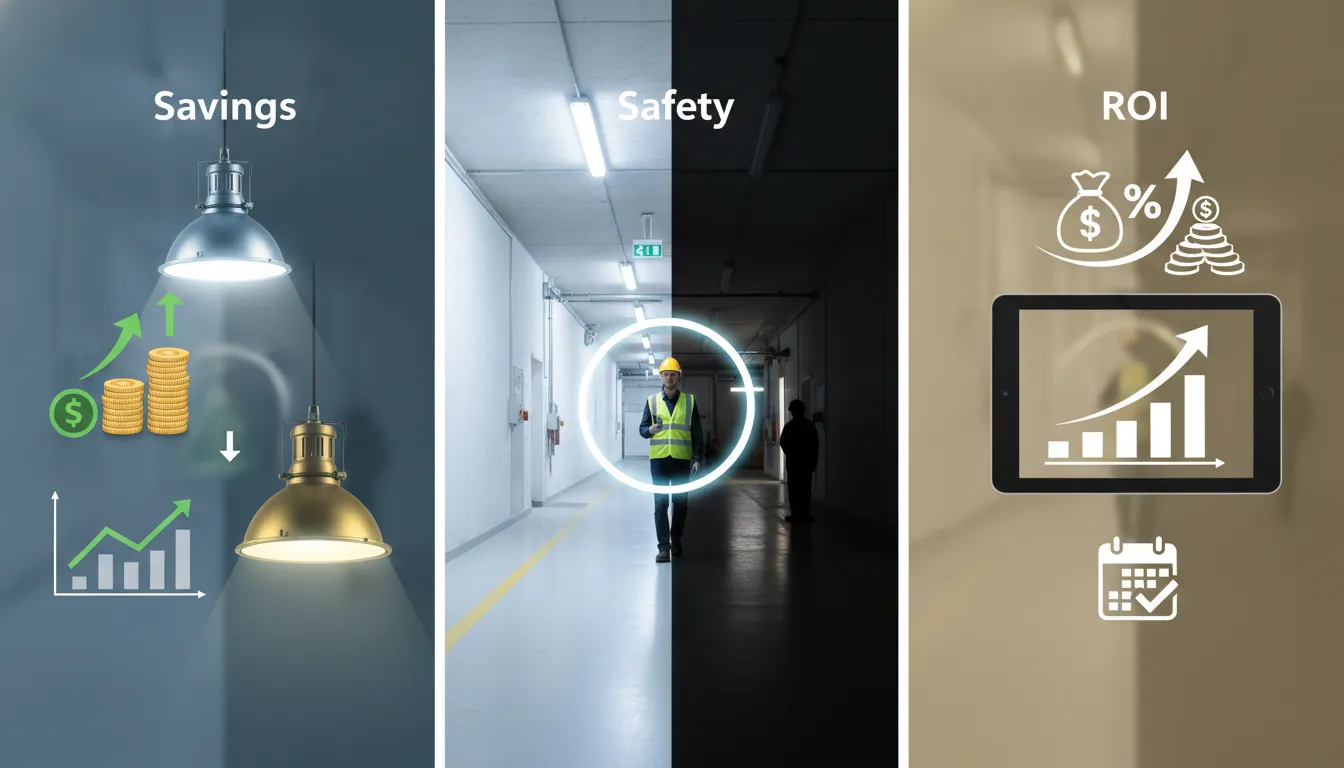
When lighting runs for long shifts across a large facility, small differences in energy use can add up. Maintenance demands can add up, too, particularly when teams must use lifts or pause work to replace hard-to-reach lamps. An industrial LED retrofit may help reduce both costs while giving facility managers more control over lighting schedules and levels. The benefits of retrofitting industrial lighting to LED also depend on how well the new system fits the work being done. A warehouse aisle, inspection station, and outdoor loading area each have different needs. By reviewing the full picture, you can set realistic goals and choose improvements that support daily operations.
Key Takeaways
- LED upgrades can cut energy and maintenance costs: Actual savings depend on existing fixtures, operating hours, electricity rates, and site conditions.
- Assess the whole facility before choosing fixtures: Review light levels, environmental demands, controls, electrical compatibility, and installation timing.
- Build and verify a realistic business case: Include project and maintenance costs, estimate energy savings, confirm rebate requirements, then compare post-installation results with your baseline.
What Are the Benefits of Retrofitting Industrial Lighting to LED?
An industrial LED retrofit can lower lighting energy use, reduce maintenance demands, and improve visibility across a facility. The biggest gains often come in spaces where lights run for long shifts, fixtures are difficult to reach, or older systems provide uneven illumination. A carefully planned upgrade can also give facility teams more control over how much light different areas use and when they need it.
The results depend on the existing equipment, the replacement fixtures, and how the facility operates. A warehouse with high ceilings and long operating hours has different needs from a workshop with detailed inspection tasks or a storage area used only occasionally. That’s why it’s helpful to assess current fixtures, light levels, controls, and problem areas before choosing replacements.
A retrofit is more than a one-for-one fixture swap. The right plan accounts for light distribution, glare, electrical and control compatibility, and site conditions such as dust, moisture, heat, and vibration. Facility managers should also consider installation timing and how to verify that the upgraded system performs as expected. The following benefits can help you decide what to prioritize and what to discuss during a lighting assessment.
Cut energy use with efficient fixtures
Industrial LED fixtures can use less electricity than older fluorescent, metal halide, or high-pressure sodium systems while providing suitable light levels. The amount saved varies by facility and by the equipment being replaced. The Votatec LED retrofit guide estimates that modern commercial LED fixtures may reduce lighting energy use by 50% to 70% compared with older systems.
To estimate the potential savings at your facility, compare existing and replacement fixture wattage, then factor in the number of fixtures, operating hours, and electricity rates. Don’t compare wattage alone: check that the new fixtures provide the right light output and distribution for each task. Dimming, scheduling, and occupancy controls may reduce energy use further when they suit the way a space is used.
Reduce replacements, labor, and downtime
Changing lamps in an industrial facility can take more than a few minutes. High ceilings, lift requirements, safety procedures, and production schedules all affect the time and cost of maintenance. Since LEDs generally have a longer service life than many traditional lamps, a retrofit may mean fewer replacement visits and less time spent accessing fixtures.
The maintenance savings depend on fixture quality, operating conditions, and installation. Dust, vibration, heat, and moisture can affect performance, so select products rated for the space. Check the expected life of drivers and other components, too, not only the LEDs. A PacLights case study describes how longer-lasting LED lighting can reduce staff time spent changing lamps. Fewer maintenance interruptions can be especially useful in areas where work needs to continue with minimal disruption.
Improve visibility, color, and light consistency
Well-planned lighting helps employees read labels, inspect products, handle materials, and move through work areas. An LED retrofit can improve consistency when fixtures are selected and positioned to reduce dark spots and uneven coverage. Facilities can also choose color temperature and color-rendering qualities that suit tasks such as assembly, quality checks, or general storage.
Brighter isn’t always better. Excessive brightness or poorly aimed fixtures can cause glare, while sharp changes in light levels may make it harder for workers’ eyes to adjust. Review light levels throughout the space, along with mounting height, fixture placement, and lens options. Orion Lighting’s overview of LED retrofit benefits notes that suitable lighting can support visual comfort. A lighting assessment can help identify where coverage needs improvement without over-lighting other areas.
Support safer work with instant-on, low-flicker lighting
LED fixtures typically reach full brightness as soon as they’re switched on. That can help in spaces where lights cycle on and off during a shift, or where workers need quick visibility in aisles, loading areas, and maintenance zones. For a reliable result, choose quality fixtures and drivers that are suited to the site’s electrical system and controls.
Compatibility matters, particularly when existing dimmers are part of the setup. Pairing LEDs with older or incompatible controls can cause visible flicker or inconsistent performance. Before installing fixtures throughout the facility, confirm that the components work together and consider testing a sample in the actual space. Jarvis Lighting’s LED troubleshooting guide explains how older dimmers may cause flicker with lower-wattage LED loads. Addressing compatibility early can prevent avoidable rework.
Add dimming, scheduling, and occupancy controls
LED retrofits can give facility teams more options than a single on-or-off switch. Dimming can adjust light levels for different tasks, while schedules can align lighting with known operating hours. Occupancy sensors may reduce lighting in areas that are empty, such as storage rooms, break rooms, or infrequently used corridors.
Controls should reflect how employees use each area. A sensor that switches lights off too soon can disrupt work, and a schedule that ignores shift changes may leave spaces unlit when they’re needed. Check fixture and control compatibility, and consider dividing the facility into zones with different schedules. Also ask your utility provider whether rebates or incentives are available for qualifying upgrades. The USLED guide to industrial lighting upgrades recommends checking incentives that may reduce upfront project costs.
Reduce heat and potential cooling demand
LEDs generally release less heat into a space than many older lighting technologies. In a facility with numerous fixtures, that may reduce some of the heat load on the building and ease demand on cooling systems, especially during warmer periods. The impact depends on the existing lights, HVAC system, climate, and building design, so treat reduced cooling costs as a possibility to assess rather than a guaranteed result.
Lower heat output may also be useful in areas where temperature affects worker comfort or stored products. Industrial LEDs still generate heat within their components, so fixture design and installation matter. Choose equipment suited to the environment and follow the manufacturer’s mounting and clearance guidance. Orion Lighting’s discussion of long-term retrofit benefits explains how reduced heat from LED lighting may lessen the load on a facility’s HVAC system.
How Much Can an Industrial LED Retrofit Save?
The savings from an industrial LED retrofit depend on your current fixtures, operating schedule, electricity rate, and the type of LED system you install. A facility with older, high-wattage lights running multiple shifts may see greater energy savings than one with newer fixtures used for a few hours a day. So use general savings figures as a starting point, not as a promise of what your facility will save.
For a useful estimate, gather fixture counts and wattages, annual operating hours, utility rates, and maintenance records. Compare existing equipment with LED replacements that meet your lighting needs, then calculate the expected energy reduction. Include potential savings from fewer repairs and replacements, and check whether utility incentives can lower project costs. A facility-specific assessment can help confirm assumptions and account for factors such as controls, installation requirements, and light levels.
Compare existing fixture wattage with LED alternatives
Start by listing the fixtures you plan to replace and checking their actual system wattage. Include the power used by ballasts where applicable, since a lamp’s rated wattage may not reflect the full load. Then compare that figure with an LED option that provides appropriate brightness, light distribution, and color quality for the work area.
For example, replacing a 400-watt metal halide high bay with a 150-watt LED would reduce the connected load by 250 watts per fixture, assuming those figures represent the complete systems. Modern commercial LEDs can use substantially less energy than older lighting while providing comparable or better light output. This commercial LED retrofit guide includes fixture comparisons to help you assess potential replacements.
Estimate energy savings from operating hours and electricity rates
Once you know the wattage difference, multiply it by the number of fixtures and their annual operating hours. Divide the result by 1,000 to convert watt-hours into kilowatt-hours, then multiply by your electricity rate to estimate annual energy-cost savings.
For example, a 250-watt reduction across 100 fixtures running 4,000 hours per year saves an estimated 100,000 kilowatt-hours annually. At 12 cents per kilowatt-hour, that equals $12,000 in energy savings before other charges or project costs. Your actual rate and operating schedule will affect the result. This lighting savings calculation guide outlines the method and the information to gather.
Factor in typical 50–70% savings and added control savings
Industrial LED retrofits often reduce lighting energy use by 50% to 70%, but the actual reduction depends on the equipment being replaced and the new system’s design. A facility upgrading older, inefficient fixtures may see a larger change than one replacing relatively recent equipment. Use this range for early planning, then calculate savings based on your own fixture data.
Controls can reduce use further by dimming or switching off lights when full illumination is not needed. Occupancy sensors, daylight controls, and schedules can help, provided they suit the tasks in each area and are set up correctly. Savings from controls vary with space use and operating patterns, so assess them separately from the fixture upgrade. The retrofit guide discusses how lighting controls may add to energy reductions.
Include maintenance, labor, and replacement costs
Lower energy use is only one part of a retrofit’s potential financial value. LED systems can reduce the frequency of lamp and ballast replacements, which may also cut labor, parts, lift rentals, and time spent accessing hard-to-reach fixtures. Fewer lighting repairs can mean less disruption to production or daily operations.
Review work orders and maintenance records to estimate your current costs. Note how often components fail, the labor required for each repair, and any equipment needed to reach fixtures. Then compare those expenses with the expected maintenance needs of the proposed system. Some projects may also affect cooling costs or worker conditions, but those outcomes depend on the building and how it operates. Use facility-specific records rather than broad industry estimates when calculating total savings.
Check utility rebates and efficiency incentives
Utility rebates and other efficiency incentives may reduce the upfront cost of an LED retrofit. Availability and requirements vary by location, utility, product, and project size. Some programs require preapproval, approved equipment, or an energy assessment before work begins, so check eligibility before purchasing fixtures or scheduling installation.
Contact your utility or program administrator to ask about qualifying products, application deadlines, and required documents. You may need fixture specifications, invoices, installation records, or proof of energy use. This overview of common retrofit mistakes explains why it’s important to check incentive requirements early. Keep potential rebates separate from projected energy savings in your calculations, and include an incentive in the project budget only when you understand the program’s terms.
Treat estimates as facility-specific, not guaranteed
A projected savings figure is only as reliable as the information used to calculate it. Fixture condition, annual operating hours, electricity rates, control settings, light levels, and installation costs can all change the result. Two facilities with similar fixtures may have different payback and savings because their schedules and utility costs differ.
Use current utility bills, fixture inventories, operating schedules, and maintenance records to build your estimate. Ask a qualified lighting professional to confirm that the proposed equipment will meet the facility’s lighting needs and to identify any installation considerations. Incentive eligibility also depends on the rules of each program. This industrial lighting retrofit overview recommends evaluating the facility and available incentives as part of project planning. After installation, compare energy use with your baseline to see how actual results measure up.
What ROI Can Facilities Expect From an LED Retrofit?
An LED retrofit can deliver returns through lower energy bills, fewer replacements, and reduced maintenance labor. The actual ROI depends on your facility’s current lighting, operating schedule, electricity rates, project costs, and available incentives. Use a site-specific estimate to set expectations, since typical savings are not guaranteed for every building.
Calculate payback from project costs and expected savings
Start with the full installed cost, including fixtures, controls, labor, and electrical work. Subtract any confirmed rebates to find the net project cost. Then estimate annual savings from lower electricity use and reduced maintenance.
For a simple payback estimate, divide the net project cost by expected annual savings. For example, if the project costs $60,000 after incentives and saves $20,000 per year, the estimated payback is three years. This is a useful planning figure, but it does not account for financing costs or future changes in energy prices and operating needs.
Orion Lighting’s retrofit overview notes that some projects cut lighting costs by as much as 50%, with payback often taking a few years when energy savings and rebates are included. Your results will depend on your facility’s conditions.
Factor in rebates, fixture lifespan, and operating schedules
Rebates can reduce the amount your facility needs to recover, but availability and eligibility vary by location, utility, equipment, and project requirements. Check the rules before setting your budget, and find out whether the utility requires an application or pre-approval before installation.
Fixture lifespan and operating hours also affect ROI. Longer-lasting LEDs can reduce replacement costs, maintenance visits, and interruptions, especially when fixtures are difficult to reach. A facility that runs lights around the clock may see a different return than one with shorter daily operating hours.
Votatec’s commercial retrofit guide discusses how rebates can shorten payback periods in some Canadian markets. Use those figures as regional examples, not as a prediction for your project. Build your estimate around the incentives and operating schedule that apply to your facility.
Account for energy prices, maintenance, and control strategies
For a useful estimate, compare the current and proposed lighting systems using actual operating hours and electricity rates. Include likely savings from fewer lamp replacements, less maintenance labor, and reduced downtime. These costs can add up in facilities where reaching fixtures requires lifts or interrupts production.
Controls may increase savings when they match how a space is used. Occupancy sensors, schedules, and dimming can reduce energy use in areas that do not need full lighting throughout the day. Their value depends on occupancy patterns and proper setup.
Data from the U.S. General Services Administration cited in FSG’s overview of LED retrofit benefits indicates that LED conversions can reduce electricity use compared with standard fluorescent lighting, with further reductions possible when controls are added. Actual results will vary by facility, equipment, and usage.
Get a realistic ROI estimate with a lighting assessment
A lighting assessment helps turn broad estimates into a plan based on your facility. A qualified professional can document fixture types and wattages, operating hours, existing light levels, problem areas, and electrical or control requirements. They can then compare suitable LED options and estimate project costs, energy use, maintenance savings, and potential rebates.
Ask the provider to explain the assumptions behind the numbers, including electricity rates, hours of operation, expected fixture life, and incentive amounts. The proposal should also outline installation costs and how the work will limit disruption.
Delta Wye Electric’s savings calculation guide highlights the value of a structured approach to estimating energy reductions and related savings. Before approving a project, compare its projected payback with your budget and long-term facility plans.
What Should Facilities Consider When Planning a Retrofit?
A well-planned industrial lighting retrofit starts with how each space is used. Production floors, warehouses, offices, loading docks, and outdoor areas may need different light levels, fixture types, and controls. Before choosing equipment, document what is working, where lighting falls short, and what conditions the new fixtures must handle.
Look beyond fixture costs when comparing options. Installation labor, electrical upgrades, maintenance, energy use, downtime, and utility incentives all affect the project’s total cost. For facilities with multiple locations, check local requirements at each site, since codes and electrical conditions can vary.
Plan the work around daily operations, too. A phased installation may help keep key areas open, while carefully timed work can limit disruption to production or shipping. Once installation is complete, verify light levels, coverage, and control performance against the project goals. These steps give your team a clear basis for choosing equipment and help prevent avoidable issues during installation.
Audit fixtures, light levels, controls, and problem areas
Begin by recording existing fixture types, lamp wattage, operating hours, and maintenance history. Note where lighting is dim, uneven, or uncomfortable, and flag areas with frequent lamp failures. Measuring current light levels gives you a useful baseline and helps set specific targets for the new system.
Include outdoor and transitional spaces in the audit, not just production and warehouse areas. Parking lots, loading docks, walkways, and building perimeters also need reliable illumination. The industrial lighting retrofit guide calls attention to these often-overlooked areas. Document existing timers, occupancy sensors, and dimmers as well. This gives you a clearer picture of which controls can stay, which need replacement, and where new controls may help.
Check LED compatibility, electrical needs, and applicable codes
Confirm that proposed fixtures will work with the facility’s wiring, circuits, and controls. Check voltage, mounting requirements, and whether the project calls for complete fixture replacement or retrofit kits. A lamp that fits an existing socket may still be incompatible with its ballast or dimmer, so verify the full setup before ordering equipment.
Review electrical and energy codes early, especially when upgrading several buildings or locations. Requirements may differ by jurisdiction, and some work may require permits or inspections. Local code requirements for LED retrofits can affect equipment choices and project schedules. Ask a qualified electrician or lighting professional to review the existing system, identify necessary upgrades, and confirm that the final design meets applicable requirements.
Choose fixtures for heat, dust, moisture, vibration, and site conditions
Select fixtures based on the conditions where they will operate. A climate-controlled workspace has different needs from a hot production area, dusty warehouse, washdown zone, or outdoor loading dock. Consider exposure to moisture, airborne particles, chemicals, vibration, and temperature changes. Review fixture ratings and manufacturer guidance to confirm that equipment is designed for the environment.
Also account for ceiling height, mounting surfaces, and access for future maintenance. A fixture suited to a clean retail space may not last in a demanding industrial setting. The industrial lighting upgrade guide explains how environmental conditions can affect fixture performance. Matching the product to the site helps reduce premature failures and the cost of repeat installations.
Plan even light distribution, glare control, and worker comfort
Replacing old fixtures with brighter ones does not automatically create better lighting. Consider fixture spacing, beam patterns, mounting height, and the tasks people perform in each area. Workstations may need focused illumination, while aisles and storage areas need clear, even coverage. Look for dark spots and sharp contrasts that make it harder to see.
Check for glare and flicker, particularly near screens, reflective surfaces, and precision work areas. Ask employees where visibility causes problems, then review the proposed layout with lighting calculations or an onsite assessment. The workplace benefits of LED retrofits include improved visual comfort as well as energy savings. A balanced lighting plan can make everyday tasks easier and support a more comfortable work environment.
Address upfront costs, dimmer compatibility, and color consistency
Compare the full project cost, including fixtures, controls, labor, disposal, and electrical upgrades. A lower purchase price may not offer the service life or performance your facility needs. Estimate potential energy and maintenance savings, and check whether utility rebates or other incentives are available for the project.
If you plan to use dimming, confirm that the dimmer and LED drivers are compatible across the intended brightness range. Older dimmers may not regulate low-wattage LED loads properly, which can cause flickering or unreliable operation. This LED dimmer troubleshooting guide outlines common compatibility issues. For fixtures used side by side, specify consistent color temperature and color rendering to avoid noticeable differences between areas.
Schedule installation to limit disruption and verify results
Coordinate installation with production, shipping, and employee schedules. Work in phases if that will keep essential areas operating while crews complete each section. Before work begins, confirm access arrangements, safety procedures, material storage, and whether temporary lighting will be needed. Agree on work hours and sequencing with the contractor to avoid unnecessary interruptions.
After installation, test the fixtures and controls under normal operating conditions. Check that occupancy sensors respond correctly, dimmers operate smoothly, and timers follow the intended schedule. Measure light levels in key areas and compare the results with your project goals. A phased retrofit plan can help reduce disruption, while a clear inspection and handoff process confirms the work is complete. Keep fixture details, control settings, warranties, and maintenance instructions on file for your facilities team.
What Are the Environmental Benefits of Switching to LED?
Industrial LED retrofits can reduce the environmental impact of facility lighting while supporting reliable, comfortable illumination. The main benefits come from using less electricity, replacing lamps less often, and directing light where it is needed. Your results will depend on the current system, operating schedule, and local electricity supply, so use facility-specific data to set expectations.
Cut electricity use and related carbon emissions
LED fixtures can use less electricity than older lighting technologies while providing comparable light. In a facility with long shifts and many fixtures, those reductions can add up. Lower electricity use may also reduce emissions from power generation, though the impact depends on how electricity is produced in your area.
A projection from the U.S. Department of Energy, reported by Mazzella Companies, estimates significant energy and emissions savings if lighting across the country is converted to LED. To estimate the potential benefit at your site, compare the wattage of existing fixtures with LED replacements, then account for how many hours they operate.
Replace lamps less often and dispose of them safely
LEDs generally last longer than many conventional lamps, which can mean fewer replacements over the life of a lighting system. That can reduce the number of lamps requiring disposal, along with the materials and transportation involved in replacement. Fewer service visits can also help limit disruption in active work areas.
Longer lamp life can reduce the staff time spent changing bulbs, as PacLights’ case studies describe. When removing existing lamps, check local disposal and recycling guidance. Some older products, including certain fluorescent lamps, may require special handling. LED fixtures contain electronic components, so ask your waste provider or the manufacturer about suitable recycling options.
Limit light spill with well-directed fixtures
A retrofit gives facility managers the chance to direct light toward work surfaces, aisles, and equipment instead of sending it into unused areas. Choosing fixtures with suitable optics and placing them carefully can help reduce wasted light and improve visibility where tasks take place.
LEDs allow for precise light distribution, but the fixture must suit the space. Consider mounting height, aisle layout, task needs, and glare before choosing a product. PacLights’ retrofit overview discusses how LED upgrades can provide consistent illumination. A lighting assessment can help identify dark areas and overly bright spots, while supporting worker comfort and limiting spill beyond the areas that need lighting.
Support sustainability goals by reducing lighting energy use
When fixtures operate for extended shifts, lighting can account for a substantial share of a facility’s electricity use. Reducing that demand with LEDs can support wider energy and sustainability goals. It also gives facility managers practical measures to track, including lighting wattage, electricity use, and the frequency of lamp replacements.
Record current energy use and maintenance needs before installation, then compare those figures after the retrofit. Controls such as occupancy sensors and scheduled dimming can reduce unnecessary operating time when they suit the space and tasks. Orion Lighting describes how LED retrofits can contribute to sustainability goals alongside cost savings. Check with your utility provider about incentives for qualifying efficiency projects.
Frequently Asked Questions
Can we retrofit our existing fixtures, or do we need to replace them?\ It depends on the fixture condition, wiring, ballast, and controls. A lighting professional can check whether retrofit kits are suitable or whether complete fixture replacements make more sense for your facility.
How long does an industrial LED retrofit take?\ The timeline depends on the number of fixtures, site access, electrical work, and installation plan. Phasing the project by area can help keep essential operations running while work is underway.
Will LED lighting work with our existing dimmers and sensors?\ Not always. Check that the LED drivers and fixtures are compatible with existing controls before installation. Testing a small group of fixtures first can help catch flicker, dimming, or sensor issues early.
How can we tell whether the retrofit delivered the expected results?\ Record a baseline before work begins, including energy use, operating hours, maintenance calls, and light levels. After installation, compare those figures and confirm that fixtures and controls perform as intended.
Should we replace every light at once?\ Not necessarily. A phased upgrade can spread project costs and reduce disruption. Start with areas that have high energy use, frequent lamp failures, poor visibility, or difficult-to-reach fixtures.